
Before Memmo my notes were scattered across PDFs. Now a workspace pulls everything into one place — I see exactly what's still left to study.
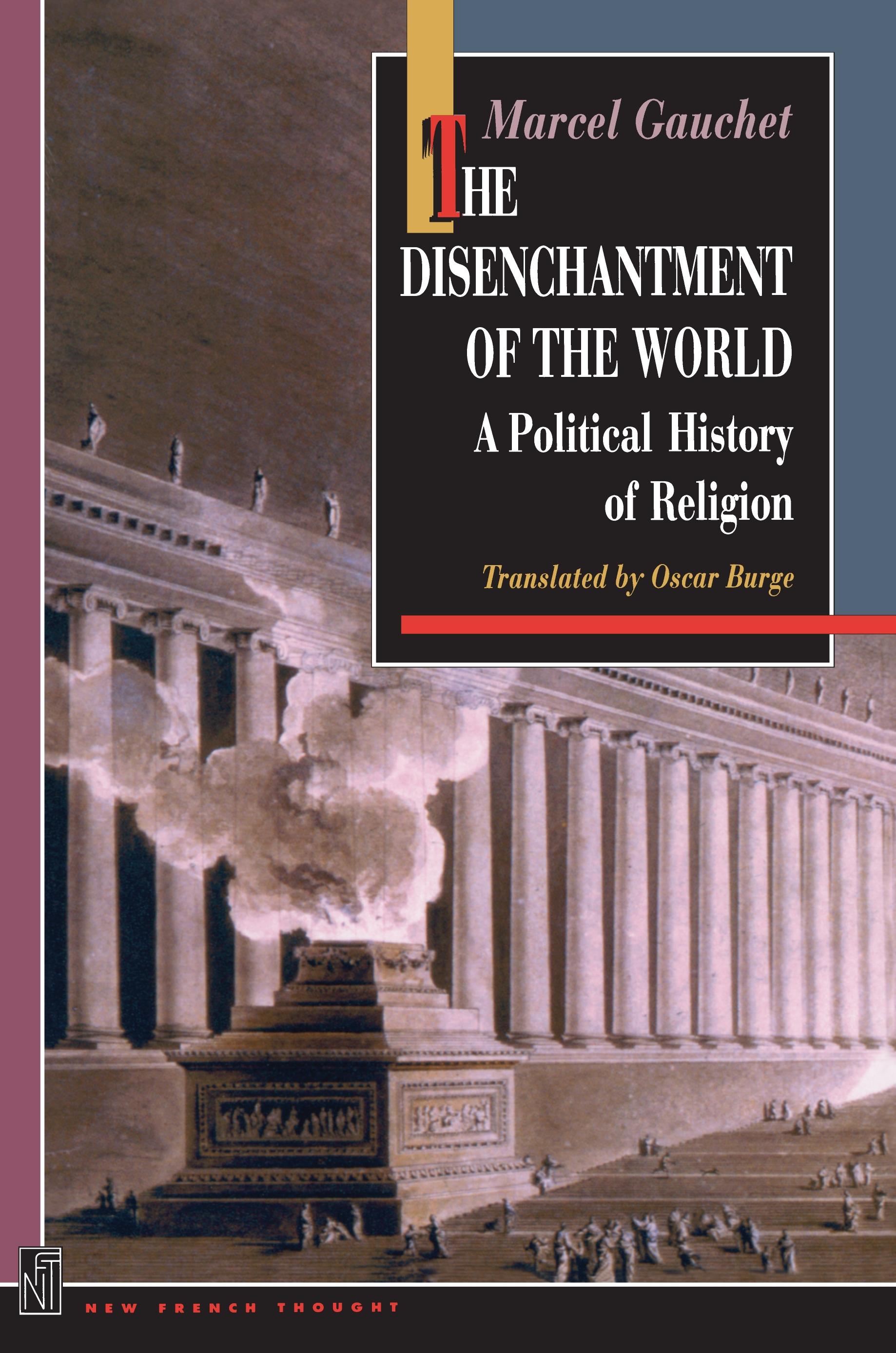
Marcel Gauchet has launched one of the most ambitious and controversial works of speculative history recently to appear, based on the contention that Christianity is "the religion of the end of religion." In The Disenchantment of the World, Gauchet reinterprets the development of the modern west, with all its political and psychological complexities, in terms of mankind's changing relation to religion. He views Western history as a movement away from religious society, beginning with prophetic Judaism, gaining tremendous momentum in Christianity, and eventually leading to the rise of the political state. Gauchet's view that monotheistic religion itself was a form of social revolution is rich with implications for readers in fields across the humanities and social sciences.
Life in religious society, Gauchet reminds us, involves a very different way of being than we know in our secular age: we must imagine prehistoric times where ever-present gods controlled every aspect of daily reality, and where ancestor worship grounded life's meaning in a far-off past. As prophecy-oriented religions shaped the concept of a single omnipotent God, one removed from the world and yet potentially knowable through prayer and reflection, human beings became increasingly free. Gauchet's paradoxical argument is that the development of human political and psychological autonomy must be understood against the backdrop of this double movement in religious consciousness--the growth of divine power and its increasing distance from human activity.
In a fitting tribute to this passionate and brilliantly argued book, Charles Taylor offers an equally provocative foreword. Offering interpretations of key concepts proposed by Gauchet, Taylor also explores an important question: Does religion have a place in the future of Western society? The book does not close the door on religion but rather invites us to explore its socially constructive powers, which continue to shape Western politics and conceptions of the state.
Before Memmo my notes were scattered across PDFs. Now a workspace pulls everything into one place — I see exactly what's still left to study.
Memmo's summaries are gold before exams. I don't have to re-read 800 pages two weeks before — just the important parts.
The AI chat has saved me the night before an exam more than once. I just keep asking until I get it — no waiting on a study group to reply.
The quizzes hit exactly what I need to know. Memmo tracks what I get stuck on — so I only practice what's worth it.
Flashcards with spaced repetition are magic. Memmo knows when I'm about to forget something and brings it back.
The AI podcasts are my favorite. I listen on my way to school and get a recap without sitting at a computer.

Handbok i kvalitativa metoder
281 kr

Hållbar utveckling: en introduktion för ingenjörer och andra problemlösare
334 kr

Brymans Samhällsvetenskapliga metoder
390 kr

Projektledning
491 kr

Den orättvisa hälsan: om socioekonomiska skillnader i hälsa och livslängd
326 kr

Vetenskapsteori för nybörjare
196 kr

Organizational Leadership
429 kr

På väg mot läraryrket
172 kr

Det sociala livet i skolan: Socialpsykologiska perspektiv
253 kr

Betygsättningens didaktik
151 kr

Personality
402 kr

Studying Leadership
404 kr

Managing Innovation
477 kr

Introduktion till samhällsvetenskaplig metod
347 kr

The Psychology of Sex and Gender
698 kr

Evidens och kunskap för socialt arbete
207 kr

Introduction to Leadership
605 kr