
Before Memmo my notes were scattered across PDFs. Now a workspace pulls everything into one place — I see exactly what's still left to study.
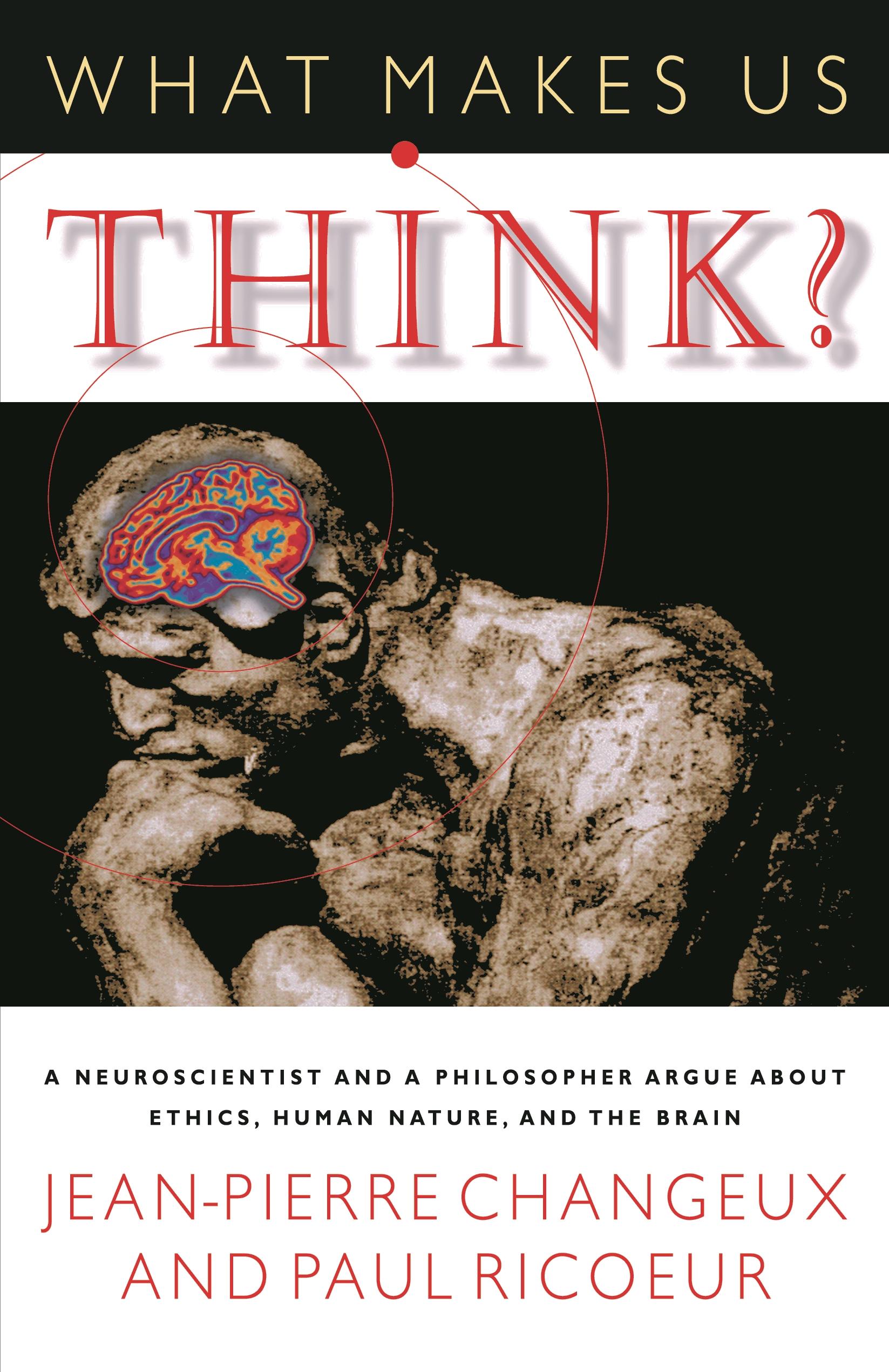
Will understanding our brains help us to know our minds? Or is there an unbridgeable distance between the work of neuroscience and the workings of human consciousness? In a remarkable exchange between neuroscientist Jean-Pierre Changeux and philosopher Paul Ricoeur, this book explores the vexed territory between these divergent approaches--and comes to a deeper, more complex perspective on human nature.
Ranging across diverse traditions, from phrenology to PET scans and from Spinoza to Charles Taylor, What Makes Us Think? revolves around a central issue: the relation between the facts (or "what is") of science and the prescriptions (or "what ought to be") of ethics. Changeux and Ricoeur ask: Will neuroscientific knowledge influence our moral conduct? Is a naturally based ethics possible? Pursuing these questions, they attack key topics at the intersection of philosophy and neuroscience: What are the relations between brain states and psychological experience? Between language and truth? Memory and culture? Behavior and action? What is a mental representation? How does a sign relate to what it signifies? How might subjective experience be constructed rather than discovered? And can biological or cultural evolution be considered progressive? Throughout, Changeux and Ricoeur provide unprecedented insight into what neuroscience can--and cannot--tell us about the nature of human experience.
Changeux and Ricoeur bring an unusual depth of engagement and breadth of knowledge to each other's subject. In doing so, they make two often hostile disciplines speak to one another in surprising and instructive ways--and speak with all the subtlety and passion of conversation at its very best.
Before Memmo my notes were scattered across PDFs. Now a workspace pulls everything into one place — I see exactly what's still left to study.
Memmo's summaries are gold before exams. I don't have to re-read 800 pages two weeks before — just the important parts.
The AI chat has saved me the night before an exam more than once. I just keep asking until I get it — no waiting on a study group to reply.
The quizzes hit exactly what I need to know. Memmo tracks what I get stuck on — so I only practice what's worth it.
Flashcards with spaced repetition are magic. Memmo knows when I'm about to forget something and brings it back.
The AI podcasts are my favorite. I listen on my way to school and get a recap without sitting at a computer.

Handbok i kvalitativa metoder
281 kr

Hållbar utveckling: en introduktion för ingenjörer och andra problemlösare
334 kr

Brymans Samhällsvetenskapliga metoder
390 kr

Projektledning
491 kr

Den orättvisa hälsan: om socioekonomiska skillnader i hälsa och livslängd
326 kr

Organizational Leadership
429 kr

Vetenskapsteori för nybörjare
196 kr

På väg mot läraryrket
172 kr

Det sociala livet i skolan: Socialpsykologiska perspektiv
253 kr

Betygsättningens didaktik
151 kr

Personality
402 kr

Studying Leadership
404 kr

Managing Innovation
477 kr

Introduktion till samhällsvetenskaplig metod
347 kr

The Psychology of Sex and Gender
698 kr

Evidens och kunskap för socialt arbete
207 kr

Introduction to Leadership
605 kr