
Before Memmo my notes were scattered across PDFs. Now a workspace pulls everything into one place — I see exactly what's still left to study.
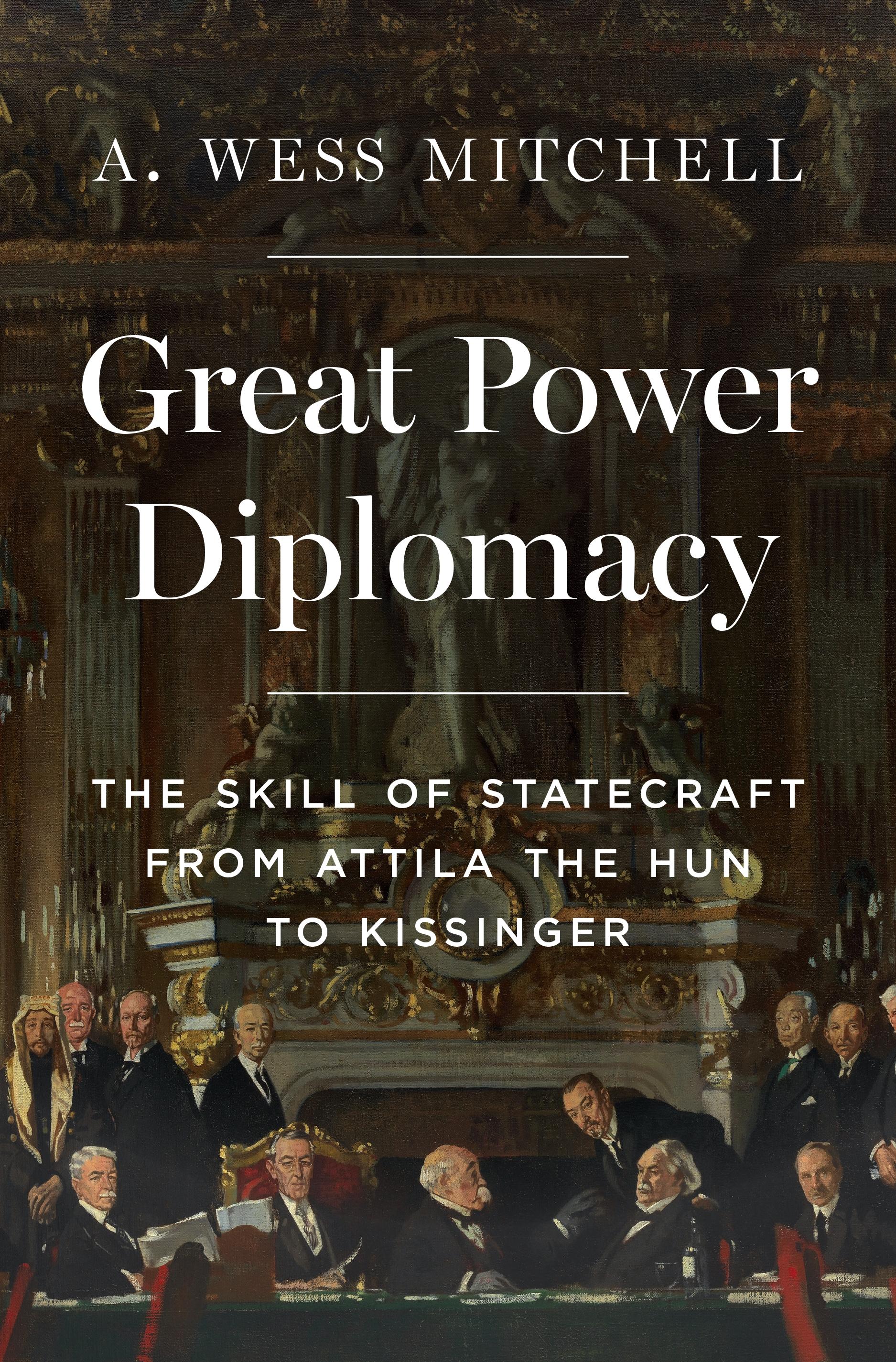
A captivating history of diplomacy—and an urgent reminder of why we need to revive its lost arts to survive in a dangerous era of great power competition
From the beginning of time, human societies have found themselves confronted by enemies too numerous or ferocious to defeat solely by force of arms. In these dramatic moments, wise leaders have turned to diplomacy to rearrange the gameboard in their favor and stymie seemingly unstoppable foes. In Great Power Diplomacy, American historian and diplomat A. Wess Mitchell recounts the forgotten story of how history’s most legendary empires have used diplomacy as a tool of grand strategy to outwit, outmaneuver, and outlast militarily superior opponents.
Through fifteen centuries of history, Great Power Diplomacy recreates the perilous junctures, colorful personalities, and intricate statecraft that led to some of history’s most stunning diplomatic achievements—and greatest disasters. The protagonists include giants like Richelieu, Metternich, Bismarck, and Kissinger, but also a lesser-known cast of scoundrels, eunuchs, drunkards, and fools. At every turn, fortune favored those great powers with the foresight and dexterity to build winning alliances, splinter enemy coalitions, and, when necessary, make peace with their bitterest foes.
Diplomacy of this kind has become a lost art in recent years as Western elites embraced the illusion that globalization and the spread of democracy would create a borderless world where nations would live in harmony and war would be abolished from the human story. But, as Great Power Diplomacy reveals, we will need to rediscover the secrets of skillful statecraft as the world enters an unstable new era in which continent-sized great powers compete for territory, resources, and prestige. By recalling diplomacy’s rich past, we can equip ourselves for a more dangerous future.
Before Memmo my notes were scattered across PDFs. Now a workspace pulls everything into one place — I see exactly what's still left to study.
Memmo's summaries are gold before exams. I don't have to re-read 800 pages two weeks before — just the important parts.
The AI chat has saved me the night before an exam more than once. I just keep asking until I get it — no waiting on a study group to reply.
The quizzes hit exactly what I need to know. Memmo tracks what I get stuck on — so I only practice what's worth it.
Flashcards with spaced repetition are magic. Memmo knows when I'm about to forget something and brings it back.
The AI podcasts are my favorite. I listen on my way to school and get a recap without sitting at a computer.

Handbok i kvalitativa metoder
281 kr

Hållbar utveckling: en introduktion för ingenjörer och andra problemlösare
334 kr

Brymans Samhällsvetenskapliga metoder
390 kr

Projektledning
491 kr

Den orättvisa hälsan: om socioekonomiska skillnader i hälsa och livslängd
326 kr

Organizational Leadership
429 kr

Vetenskapsteori för nybörjare
196 kr

På väg mot läraryrket
172 kr

Det sociala livet i skolan: Socialpsykologiska perspektiv
253 kr

Betygsättningens didaktik
151 kr

Personality
402 kr

Studying Leadership
404 kr

Managing Innovation
477 kr

Introduktion till samhällsvetenskaplig metod
347 kr

The Psychology of Sex and Gender
698 kr

Evidens och kunskap för socialt arbete
207 kr

Introduction to Leadership
605 kr