
Before Memmo my notes were scattered across PDFs. Now a workspace pulls everything into one place — I see exactly what's still left to study.
The strange and contested evolution of the management of banking risk
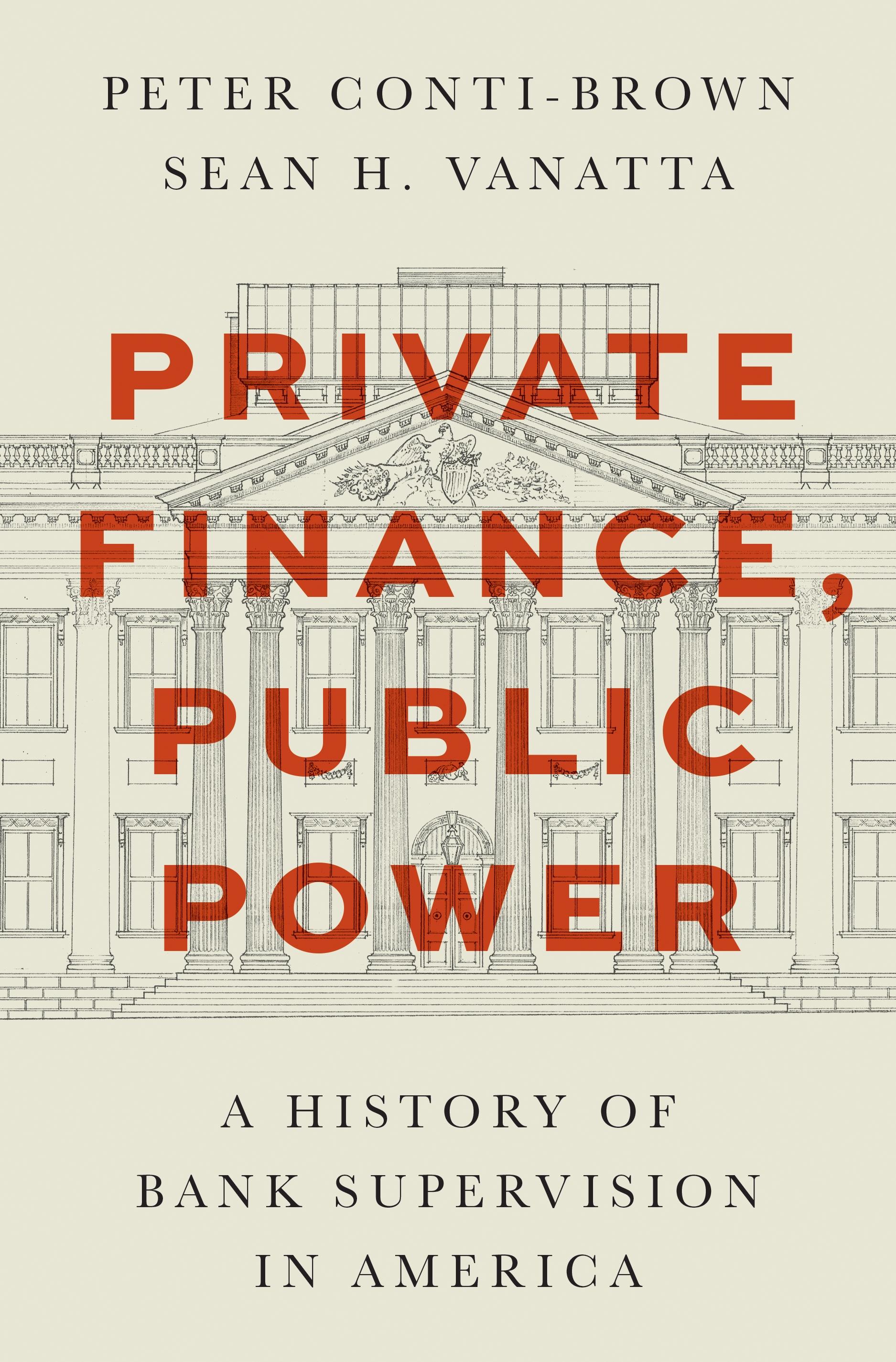
Banks in America are private institutions with private shareholders, boards of directors, profit motives, customers, and competitors. And yet the public plays a key role in deciding what risks are taken as well as how, when, and to what end. Public-private negotiations over financial governance has evolved into an essential ecosystem of banking risk management. In Private Finance, Public Power, Peter Conti-Brown and Sean Vanatta offer a new history of finance and public policy in the United States by examining the idiosyncratic way the nation manages financial risk across the public-private divide. Covering two centuries, from the founding of the Republic to the early 1980s, Conti-Brown and Vanatta describe the often-contested, sometimes chaotic, engagement of bankers, politicians, bureaucrats, and others in the overlapping spaces of the public-private system of bank supervision.
Conti-Brown and Vanatta trace the different supervisory frameworks that evolved over time, from the imposition of private liability on bank shareholders to the development of the central bank to the creation of federal deposit insurance. Negotiations took place at federal and state levels, but, over time, the federal government assumed most of the responsibility for managing financial risk. Moreover, federal supervisory officials began to undertake more varied tasks, including monitoring racial discrimination and managing financial concentration. Conti-Brown and Vanatta introduce a diverse cast of characters—bankers, politicians, bureaucrats, and others—and show how they navigated two hundred years of financial panics, scandals, and crises to build the system that structures modern America’s banking system.
Before Memmo my notes were scattered across PDFs. Now a workspace pulls everything into one place — I see exactly what's still left to study.
Memmo's summaries are gold before exams. I don't have to re-read 800 pages two weeks before — just the important parts.
The AI chat has saved me the night before an exam more than once. I just keep asking until I get it — no waiting on a study group to reply.
The quizzes hit exactly what I need to know. Memmo tracks what I get stuck on — so I only practice what's worth it.
Flashcards with spaced repetition are magic. Memmo knows when I'm about to forget something and brings it back.
The AI podcasts are my favorite. I listen on my way to school and get a recap without sitting at a computer.

Handbok i kvalitativa metoder
281 kr

Hållbar utveckling: en introduktion för ingenjörer och andra problemlösare
334 kr

Brymans Samhällsvetenskapliga metoder
390 kr

Projektledning
491 kr

Den orättvisa hälsan: om socioekonomiska skillnader i hälsa och livslängd
326 kr

Organizational Leadership
429 kr

Vetenskapsteori för nybörjare
196 kr

På väg mot läraryrket
172 kr

Det sociala livet i skolan: Socialpsykologiska perspektiv
253 kr

Betygsättningens didaktik
151 kr

Personality
402 kr

Studying Leadership
404 kr

Managing Innovation
477 kr

Introduktion till samhällsvetenskaplig metod
347 kr

The Psychology of Sex and Gender
698 kr

Evidens och kunskap för socialt arbete
207 kr

Introduction to Leadership
605 kr