
Before Memmo my notes were scattered across PDFs. Now a workspace pulls everything into one place — I see exactly what's still left to study.
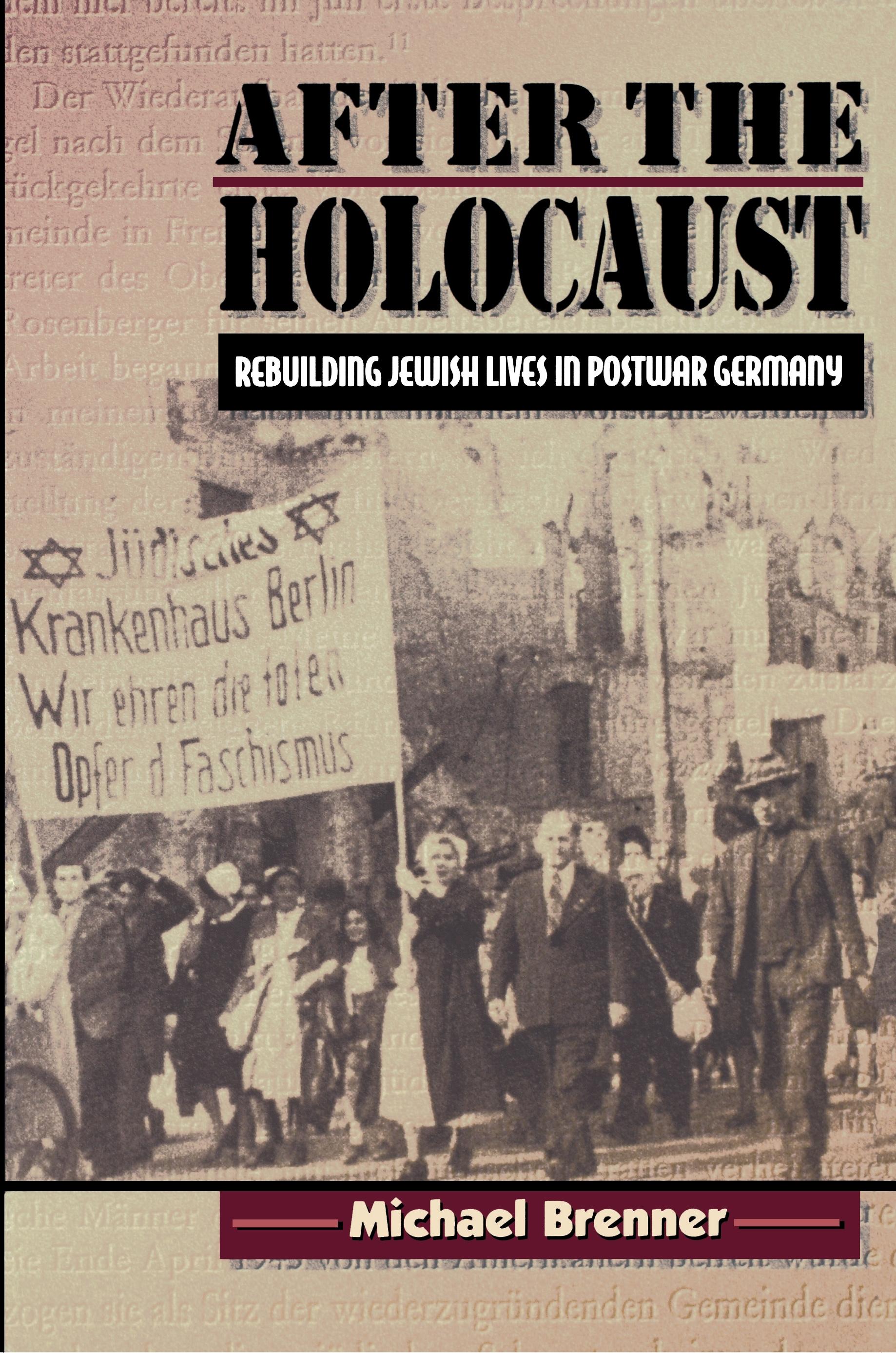
This landmark book is the first comprehensive account of the lives of the Jews who remained in Germany immediately following the war. Gathering never-before-published eyewitness accounts from Holocaust survivors, Michael Brenner presents a remarkable history of this period. While much has been written on the Holocaust itself, until now little has been known about the fate of those survivors who remained in Germany. Jews emerging from concentration camps would learn that most of their families had been murdered and their communities destroyed. Furthermore, all Jews in the country would face the stigma of living, as a 1948 resolution of the World Jewish Congress termed it, on "bloodsoaked German soil." Brenner brings to life the psychological, spiritual, and material obstacles they surmounted as they rebuilt their lives in Germany. At the heart of his narrative is a series of fifteen interviews Brenner conducted with some of the most important witnesses who played an active role in the reconstruction--including presidents of Jewish communities, rabbis, and journalists.
Based on the Yiddish and German press and unpublished archival material, the first part of this book provides a historical introduction to this fascinating topic. Here the author analyzes such diverse aspects as liberation from concentration camps, cultural and religious life among the Jewish Displaced Persons, antisemitism and philosemitism in post-war Germany, and the complex relationship between East European and German Jews. A second part consists of the fifteen interviews, conducted by Brenner, with witnesses representing the diverse background of the postwar Jewish community. While most of them were camp survivors, others returned from exile or came to Germany as soldiers of the Jewish Brigade or with international Jewish aid organizations. A third part, which covers the development of the Jewish community in Germany from the 1950s until today, concludes the book.
Before Memmo my notes were scattered across PDFs. Now a workspace pulls everything into one place — I see exactly what's still left to study.
Memmo's summaries are gold before exams. I don't have to re-read 800 pages two weeks before — just the important parts.
The AI chat has saved me the night before an exam more than once. I just keep asking until I get it — no waiting on a study group to reply.
The quizzes hit exactly what I need to know. Memmo tracks what I get stuck on — so I only practice what's worth it.
Flashcards with spaced repetition are magic. Memmo knows when I'm about to forget something and brings it back.
The AI podcasts are my favorite. I listen on my way to school and get a recap without sitting at a computer.

Handbok i kvalitativa metoder
281 kr

Hållbar utveckling: en introduktion för ingenjörer och andra problemlösare
334 kr

Brymans Samhällsvetenskapliga metoder
390 kr

Projektledning
491 kr

Den orättvisa hälsan: om socioekonomiska skillnader i hälsa och livslängd
326 kr

Vetenskapsteori för nybörjare
196 kr

Organizational Leadership
429 kr

På väg mot läraryrket
172 kr

Det sociala livet i skolan: Socialpsykologiska perspektiv
253 kr

Betygsättningens didaktik
151 kr

Personality
402 kr

Studying Leadership
404 kr

Managing Innovation
477 kr

Introduktion till samhällsvetenskaplig metod
347 kr

The Psychology of Sex and Gender
698 kr

Evidens och kunskap för socialt arbete
207 kr

Introduction to Leadership
605 kr