
Before Memmo my notes were scattered across PDFs. Now a workspace pulls everything into one place — I see exactly what's still left to study.
Why some of Asia’s authoritarian regimes have democratized as they have grown richer—and why others haven’t
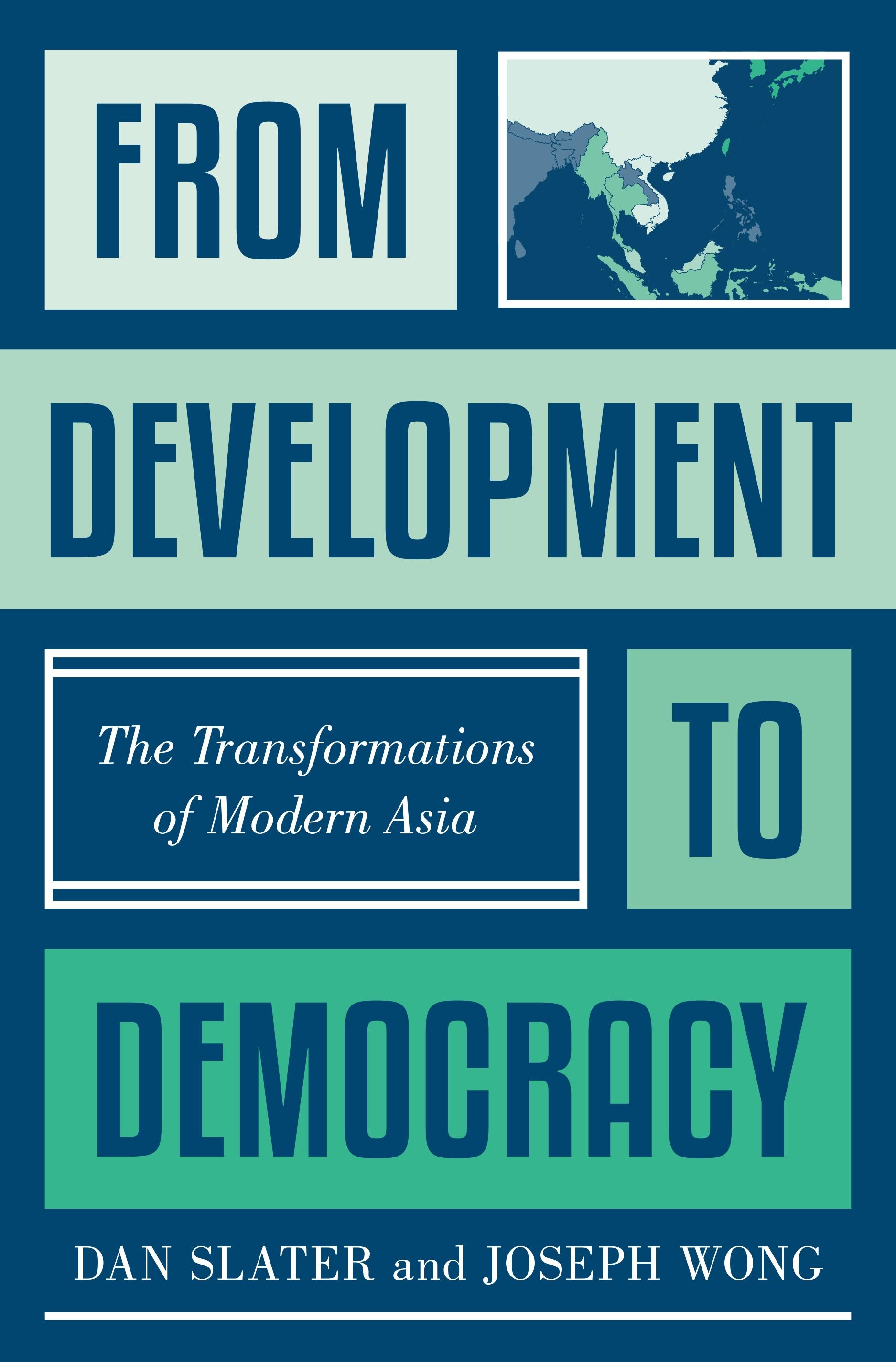
Over the past century, Asia has been transformed by rapid economic growth, industrialization, and urbanization—a spectacular record of development that has turned one of the world’s poorest regions into one of its richest. Yet Asia’s record of democratization has been much more uneven, despite the global correlation between development and democracy. Why have some Asian countries become more democratic as they have grown richer, while others—most notably China—haven’t? In From Development to Democracy, Dan Slater and Joseph Wong offer a sweeping and original answer to this crucial question.
Slater and Wong demonstrate that Asia defies the conventional expectation that authoritarian regimes concede democratization only as a last resort, during times of weakness. Instead, Asian dictators have pursued democratic reforms as a proactive strategy to revitalize their power from a position of strength. Of central importance is whether authoritarians are confident of victory and stability. In Japan, South Korea, and Taiwan these factors fostered democracy through strength, while democratic experiments in Indonesia, Thailand, and Myanmar were less successful and more reversible. At the same time, resistance to democratic reforms has proven intractable in Singapore, Malaysia, Hong Kong, China, Vietnam, and Cambodia. Reconsidering China’s 1989 crackdown, Slater and Wong argue that it was the action of a regime too weak to concede, not too strong to fail, and they explain why China can allow democracy without inviting instability.
The result is a comprehensive regional history that offers important new insights about when and how democratic transitions happen—and what the future of Asia might be.
Before Memmo my notes were scattered across PDFs. Now a workspace pulls everything into one place — I see exactly what's still left to study.
Memmo's summaries are gold before exams. I don't have to re-read 800 pages two weeks before — just the important parts.
The AI chat has saved me the night before an exam more than once. I just keep asking until I get it — no waiting on a study group to reply.
The quizzes hit exactly what I need to know. Memmo tracks what I get stuck on — so I only practice what's worth it.
Flashcards with spaced repetition are magic. Memmo knows when I'm about to forget something and brings it back.
The AI podcasts are my favorite. I listen on my way to school and get a recap without sitting at a computer.

Handbok i kvalitativa metoder
281 kr

Hållbar utveckling: en introduktion för ingenjörer och andra problemlösare
334 kr

Brymans Samhällsvetenskapliga metoder
390 kr

Projektledning
491 kr

Den orättvisa hälsan: om socioekonomiska skillnader i hälsa och livslängd
326 kr

Organizational Leadership
429 kr

Vetenskapsteori för nybörjare
196 kr

På väg mot läraryrket
172 kr

Det sociala livet i skolan: Socialpsykologiska perspektiv
253 kr

Betygsättningens didaktik
151 kr

Personality
402 kr

Studying Leadership
404 kr

Managing Innovation
477 kr

Introduktion till samhällsvetenskaplig metod
347 kr

The Psychology of Sex and Gender
698 kr

Evidens och kunskap för socialt arbete
207 kr

Introduction to Leadership
605 kr