
Before Memmo my notes were scattered across PDFs. Now a workspace pulls everything into one place — I see exactly what's still left to study.
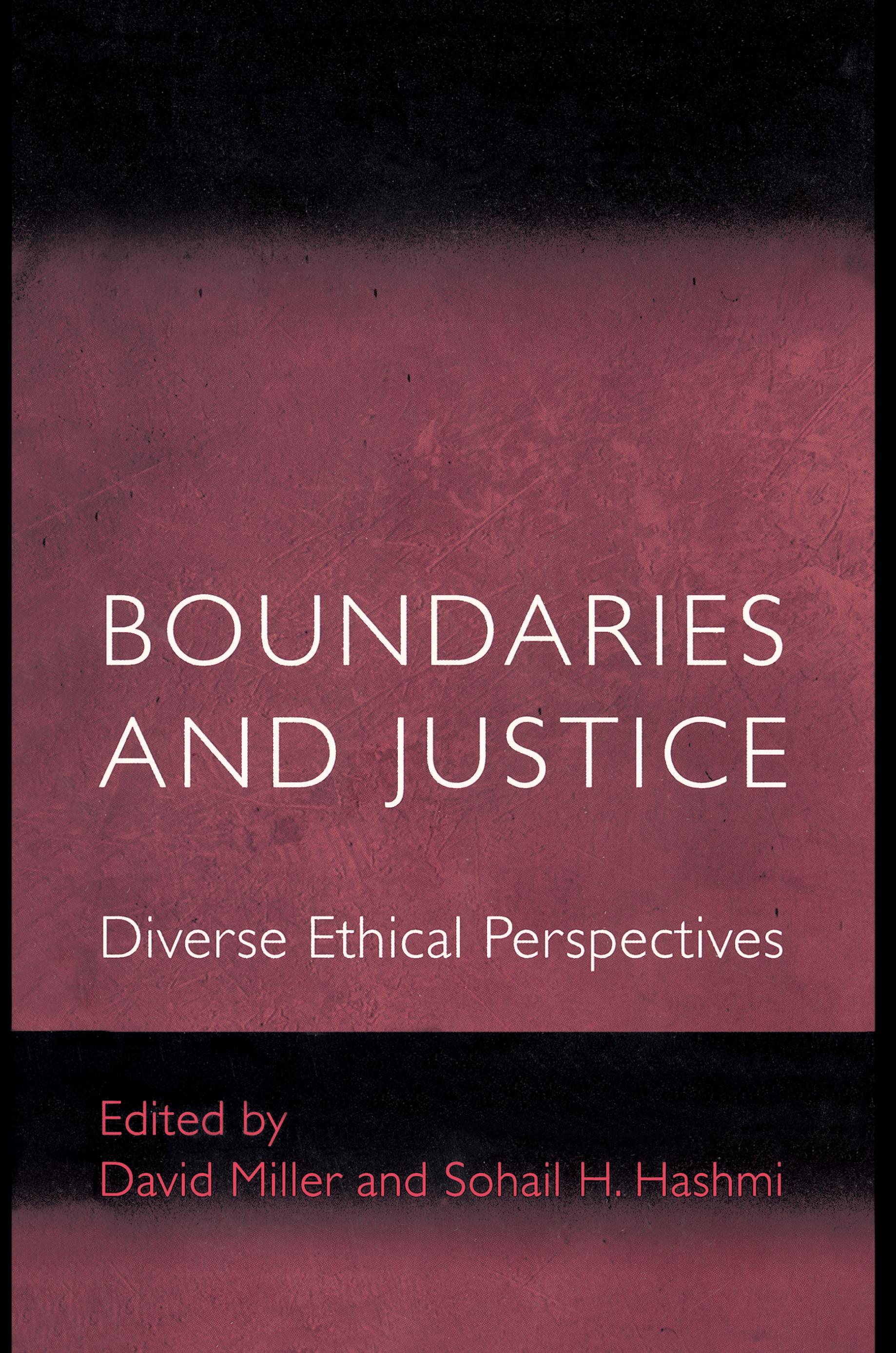
Despite the supreme political and economic significance of boundaries--and ongoing challenges to existing national boundaries--scant attention has been paid to their ethics. This volume explores how diverse ethical traditions understand the political and property rights reflected in territorial and jurisdictional boundaries. It is the first book to bring together thinkers from a range of traditions, both religious and secular, to discuss the ethics of boundaries.
Each contributor represents a tradition's views on questions surrounding the use of boundaries to delimit property and political rights. What does it mean to own something? What resources should not be privately owned? What justifies the erection of political boundaries between one people and another? How ''hard'' should such boundaries be? What rights extend to minorities within a state? Should territorial boundaries coincide with social ones? Does national autonomy have an ethical basis, or is it an aspect of modern power politics? Should we aim for a more inclusive community than that afforded by modern nation-states? Cross-chapter dialogue and a substantive conclusion draw out similarities and differences among the traditions represented, traditions that include Christianity, classical liberalism, Confucianism, international law, Islam, Judaism, liberal egalitarianism, and natural law.
In addition to the editors, the contributors are Nigel Biggar, Joseph Boyle, Joseph Chan, Russell Hardin, Will Kymlicka, Loren Lomasky, Robert McCorquodale, Richard B. Miller, David Novak, Sulayman Nyang, Michael Nylan, Raul C. Pangalangan, Daniel Philpott, Jeremy Rabkin, Hillel Steiner, M. Raquibuz Zaman, and Noam J. Zohar.
Before Memmo my notes were scattered across PDFs. Now a workspace pulls everything into one place — I see exactly what's still left to study.
Memmo's summaries are gold before exams. I don't have to re-read 800 pages two weeks before — just the important parts.
The AI chat has saved me the night before an exam more than once. I just keep asking until I get it — no waiting on a study group to reply.
The quizzes hit exactly what I need to know. Memmo tracks what I get stuck on — so I only practice what's worth it.
Flashcards with spaced repetition are magic. Memmo knows when I'm about to forget something and brings it back.
The AI podcasts are my favorite. I listen on my way to school and get a recap without sitting at a computer.

Handbok i kvalitativa metoder
281 kr

Hållbar utveckling: en introduktion för ingenjörer och andra problemlösare
334 kr

Brymans Samhällsvetenskapliga metoder
390 kr

Projektledning
491 kr

Den orättvisa hälsan: om socioekonomiska skillnader i hälsa och livslängd
326 kr

Organizational Leadership
429 kr

Vetenskapsteori för nybörjare
196 kr

På väg mot läraryrket
172 kr

Det sociala livet i skolan: Socialpsykologiska perspektiv
253 kr

Betygsättningens didaktik
151 kr

Personality
402 kr

Studying Leadership
404 kr

Managing Innovation
477 kr

Introduktion till samhällsvetenskaplig metod
347 kr

The Psychology of Sex and Gender
698 kr

Evidens och kunskap för socialt arbete
207 kr

Introduction to Leadership
605 kr