
Before Memmo my notes were scattered across PDFs. Now a workspace pulls everything into one place — I see exactly what's still left to study.
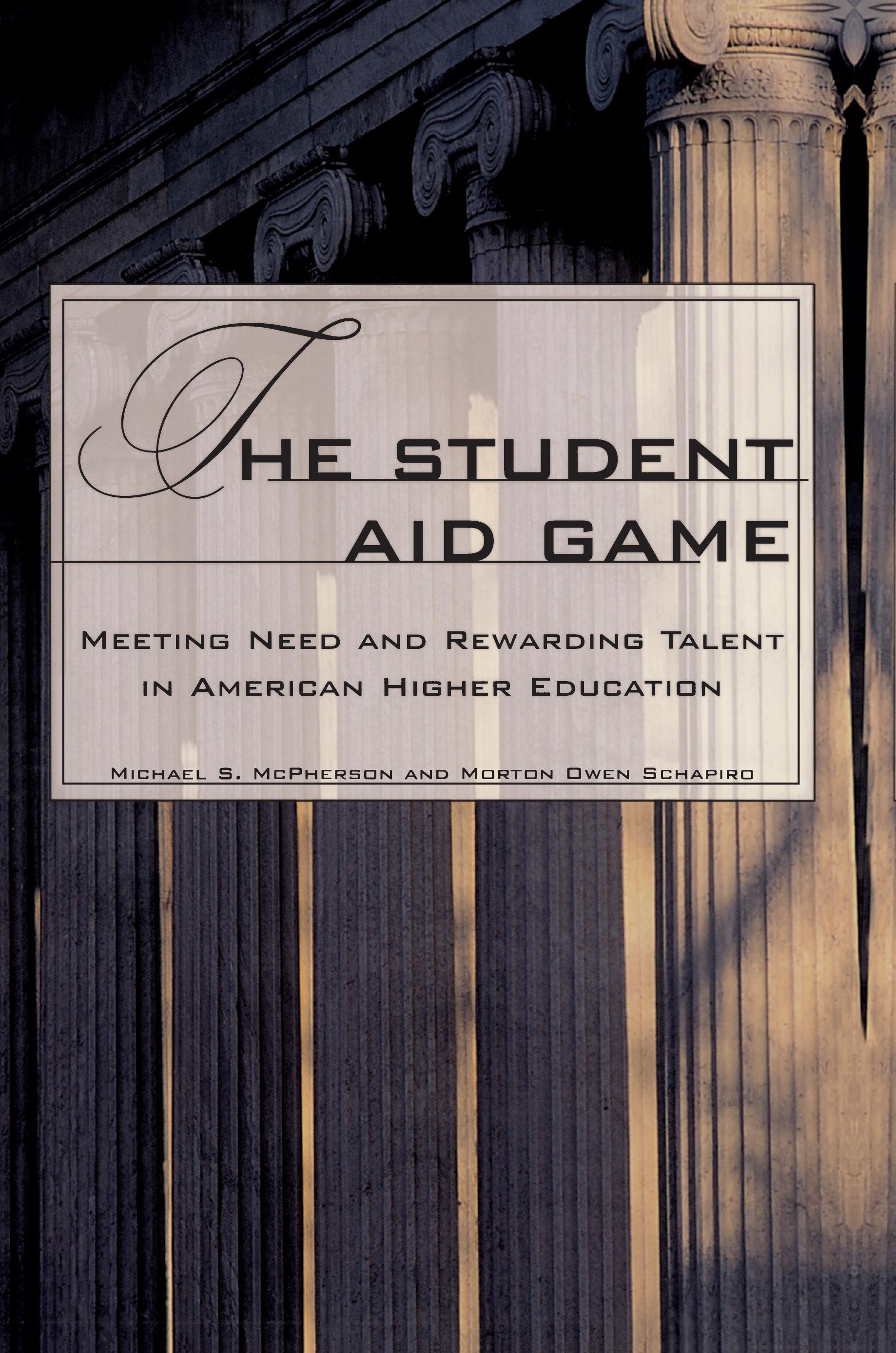
Student aid in higher education has recently become a hot-button issue. Parents trying to pay for their children's education, college administrators competing for students, and even President Bill Clinton, whose recently proposed tax breaks for college would change sharply the federal government's financial commitment to higher education, have staked a claim in its resolution. In The Student Aid Game, Michael McPherson and Morton Owen Schapiro explain how both colleges and governments are struggling to cope with a rapidly changing marketplace, and show how sound policies can help preserve the strengths and remedy some emerging weaknesses of American higher education.
McPherson and Schapiro offer a detailed look at how undergraduate education is financed in the United States, highlighting differences across sectors and for students of differing family backgrounds. They review the implications of recent financing trends for access to and choice of undergraduate college and gauge the implications of these national trends for the future of college opportunity. The authors examine how student aid fits into college budgets, how aid and pricing decisions are shaped by government higher education policies, and how competition has radically reshaped the way colleges think about the strategic role of student aid. Of particular interest is the issue of merit aid. McPherson and Schapiro consider the attractions and pitfalls of merit aid from the viewpoint of students, institutions, and society.
The Student Aid Game concludes with an examination of policy options for both government and individual institutions. McPherson and Schapiro argue that the federal government needs to keep its attention focused on providing access to college for needy students, while colleges themselves need to constrain their search for strategic advantage by sticking to aid and admission policies they are willing to articulate and defend publicly.
Before Memmo my notes were scattered across PDFs. Now a workspace pulls everything into one place — I see exactly what's still left to study.
Memmo's summaries are gold before exams. I don't have to re-read 800 pages two weeks before — just the important parts.
The AI chat has saved me the night before an exam more than once. I just keep asking until I get it — no waiting on a study group to reply.
The quizzes hit exactly what I need to know. Memmo tracks what I get stuck on — so I only practice what's worth it.
Flashcards with spaced repetition are magic. Memmo knows when I'm about to forget something and brings it back.
The AI podcasts are my favorite. I listen on my way to school and get a recap without sitting at a computer.

Handbok i kvalitativa metoder
281 kr

Hållbar utveckling: en introduktion för ingenjörer och andra problemlösare
334 kr

Brymans Samhällsvetenskapliga metoder
390 kr

Projektledning
491 kr

Den orättvisa hälsan: om socioekonomiska skillnader i hälsa och livslängd
326 kr

Vetenskapsteori för nybörjare
196 kr

Organizational Leadership
429 kr

På väg mot läraryrket
172 kr

Det sociala livet i skolan: Socialpsykologiska perspektiv
253 kr

Betygsättningens didaktik
151 kr

Personality
402 kr

Studying Leadership
404 kr

Managing Innovation
477 kr

Introduktion till samhällsvetenskaplig metod
347 kr

The Psychology of Sex and Gender
698 kr

Evidens och kunskap för socialt arbete
207 kr

Introduction to Leadership
605 kr