
Before Memmo my notes were scattered across PDFs. Now a workspace pulls everything into one place — I see exactly what's still left to study.
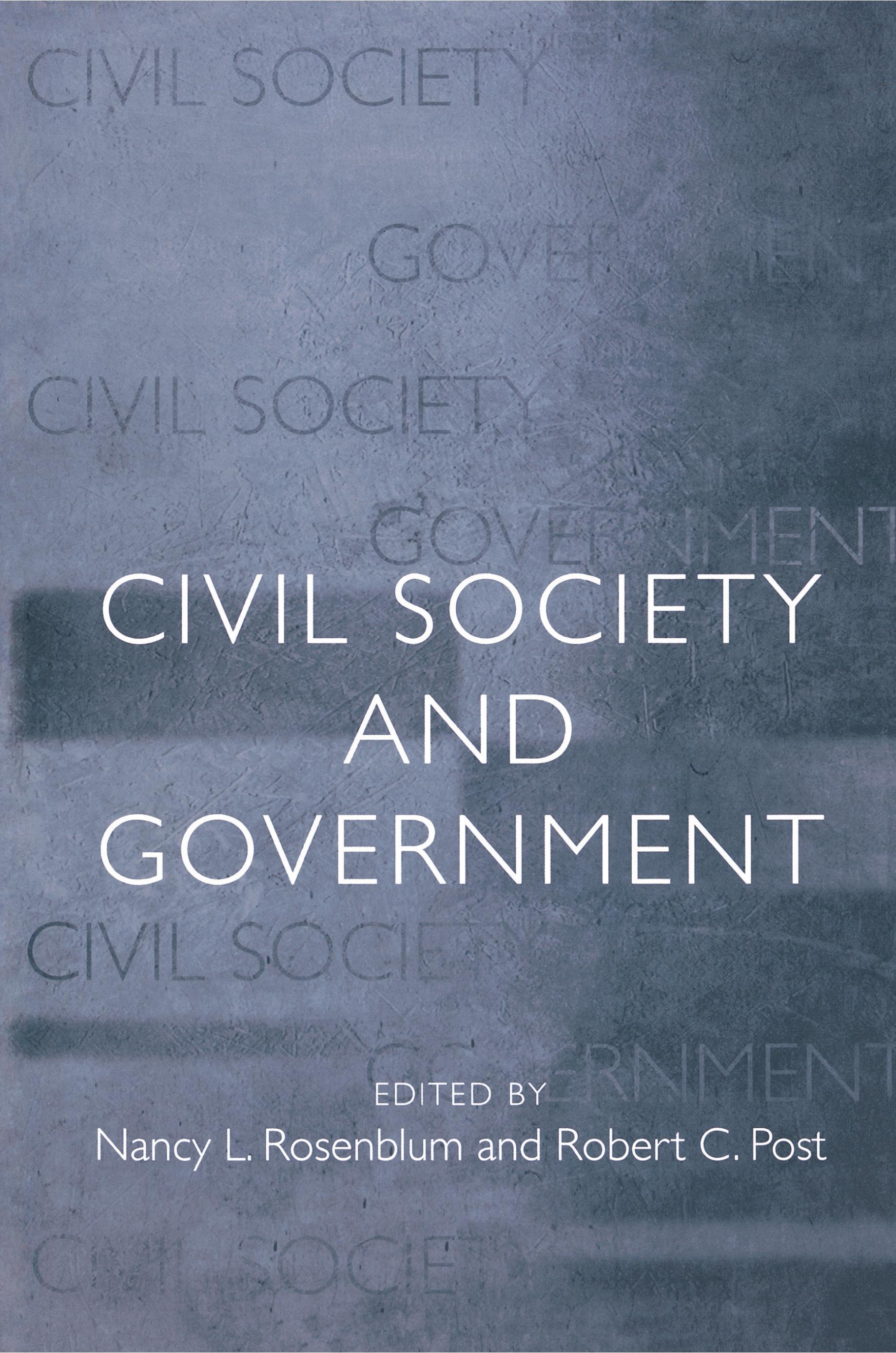
Civil Society and Government brings together an unprecedented array of political, ethical, and religious perspectives to shed light on the complex and much-debated relationship between civil society and the state. Some argue that civil society is a bulwark against government; others see it as an indispensable support for government. Civil society has been portrayed both as a independent of the state and as dependent upon it. This book reveals the extraordinary diversity of views on the subject by examining how civil society has been treated in classical liberalism, liberal egalitarianism, critical theory, feminism, natural law, Christianity, Judaism, Islam, and Confucianism.
The volume draws on the work of eminent scholars to address six questions: In terms of function and consequences, does it matter where the line is drawn between civil society and the state? What is the relationship of civil society to the state? In what contexts and under what conditions should government interact with individuals directly or instead indirectly through communal associations? What are the prerogatives and duties of citizenship, and what is the role of civil society in forming good citizens? How should a society handle the conflicts that sometimes arise between the demands of citizenship and those of membership in the non-governmental associations of civil society?
A theoretical introduction by the editors--political theorist Nancy Rosenblum and legal scholar Robert Post--and a conclusion by religious ethicist Richard Miller, tie the book together. In addition to Rosenblum, the contributors are Kenneth Baynes, David Biale, John Coleman, Farhad Kazemi, John Kelsay, William Galston, Will Kymlicka, Tom Palmer, Fred Miller, Susan Moller Okin, Peter Nosco, Henry Rosemont, Steven Scalet, David Schmidtz, William Sullivan, Max Stackhouse, Stephen White, and Noam Zohar.
Before Memmo my notes were scattered across PDFs. Now a workspace pulls everything into one place — I see exactly what's still left to study.
Memmo's summaries are gold before exams. I don't have to re-read 800 pages two weeks before — just the important parts.
The AI chat has saved me the night before an exam more than once. I just keep asking until I get it — no waiting on a study group to reply.
The quizzes hit exactly what I need to know. Memmo tracks what I get stuck on — so I only practice what's worth it.
Flashcards with spaced repetition are magic. Memmo knows when I'm about to forget something and brings it back.
The AI podcasts are my favorite. I listen on my way to school and get a recap without sitting at a computer.

Handbok i kvalitativa metoder
281 kr

Hållbar utveckling: en introduktion för ingenjörer och andra problemlösare
334 kr

Brymans Samhällsvetenskapliga metoder
390 kr

Projektledning
491 kr

Den orättvisa hälsan: om socioekonomiska skillnader i hälsa och livslängd
326 kr

Vetenskapsteori för nybörjare
196 kr

Organizational Leadership
429 kr

På väg mot läraryrket
172 kr

Det sociala livet i skolan: Socialpsykologiska perspektiv
253 kr

Betygsättningens didaktik
151 kr

Personality
402 kr

Studying Leadership
404 kr

Managing Innovation
477 kr

Introduktion till samhällsvetenskaplig metod
347 kr

The Psychology of Sex and Gender
698 kr

Evidens och kunskap för socialt arbete
207 kr

Introduction to Leadership
605 kr