
Before Memmo my notes were scattered across PDFs. Now a workspace pulls everything into one place — I see exactly what's still left to study.
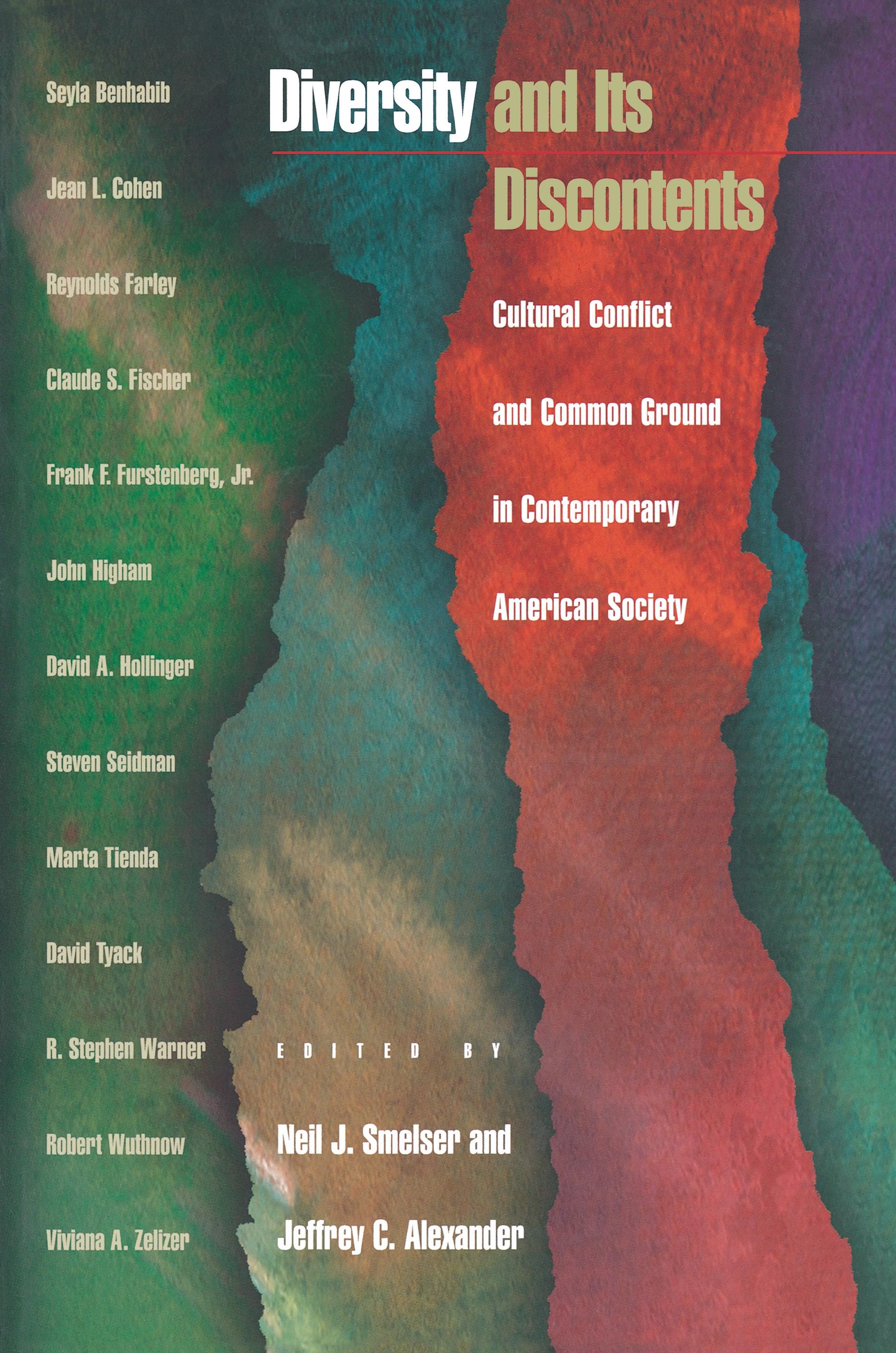
Never before has the legitimacy of a dominant American culture been so hotly contested as over the past two decades. Familiar terms such as culture wars, multiculturalism, moral majority, and family values all suggest a society fragmented by the issue of cultural diversity. So does any social solidarity exist among Americans? In Diversity and Its Discontents, a group of leading sociologists, political theorists, and social historians seek to answer this question empirically by exploring ideological differences, theoretical disputes, social processes, and institutional change. Together they present a broad yet penetrating look at American life in which cultural conflict has always played a part. Many of the findings reveal that this conflict is no more or less rampant now than in the past, and that the terms of social solidarity in the United States have changed as the society itself has changed.
The volume begins with reflections on the sources of the current "culture wars" and goes on to show a number of parallel situations throughout American history--some more profound than today's conflicts. The contributors identify political vicissitudes and social changes in the late twentieth century that have formed the backdrop to the "wars," including changes in immigration, marriage, family structure, urban and residential life, and expression of sexuality. Points of agreement are revealed between the left and the right in their diagnoses of American culture and society, but the essays also show how the claims of both sides have been overdrawn and polarized. The volume concludes that above all, the antagonists of the culture wars have failed to appreciate the powerful cohesive forces in Americans' outlooks and institutions, forces that have, in fact, institutionalized many of the "radical" changes proposed in the 1960s. Diversity and Its Discontents brings sound empirical evidence, theoretical sophistication, and tempered judgment to a cultural episode in American history that has for too long been clouded by ideological rhetoric.
In addition to the editors, the contributors are Seyla Benhabib, Jean L. Cohen, Reynolds Farley, Claude S. Fischer, Frank F. Furstenberg, Jr., John Higham, David A. Hollinger, Steven Seidman, Marta Tienda, David Tyack, R. Stephen Warner, Robert Wuthnow, and Viviana A. Zelizer.
Before Memmo my notes were scattered across PDFs. Now a workspace pulls everything into one place — I see exactly what's still left to study.
Memmo's summaries are gold before exams. I don't have to re-read 800 pages two weeks before — just the important parts.
The AI chat has saved me the night before an exam more than once. I just keep asking until I get it — no waiting on a study group to reply.
The quizzes hit exactly what I need to know. Memmo tracks what I get stuck on — so I only practice what's worth it.
Flashcards with spaced repetition are magic. Memmo knows when I'm about to forget something and brings it back.
The AI podcasts are my favorite. I listen on my way to school and get a recap without sitting at a computer.

Handbok i kvalitativa metoder
281 kr

Hållbar utveckling: en introduktion för ingenjörer och andra problemlösare
334 kr

Brymans Samhällsvetenskapliga metoder
390 kr

Projektledning
491 kr

Den orättvisa hälsan: om socioekonomiska skillnader i hälsa och livslängd
326 kr

Vetenskapsteori för nybörjare
196 kr

Organizational Leadership
429 kr

På väg mot läraryrket
172 kr

Det sociala livet i skolan: Socialpsykologiska perspektiv
253 kr

Betygsättningens didaktik
151 kr

Personality
402 kr

Studying Leadership
404 kr

Managing Innovation
477 kr

Introduktion till samhällsvetenskaplig metod
347 kr

The Psychology of Sex and Gender
698 kr

Evidens och kunskap för socialt arbete
207 kr

Introduction to Leadership
605 kr