
Before Memmo my notes were scattered across PDFs. Now a workspace pulls everything into one place — I see exactly what's still left to study.
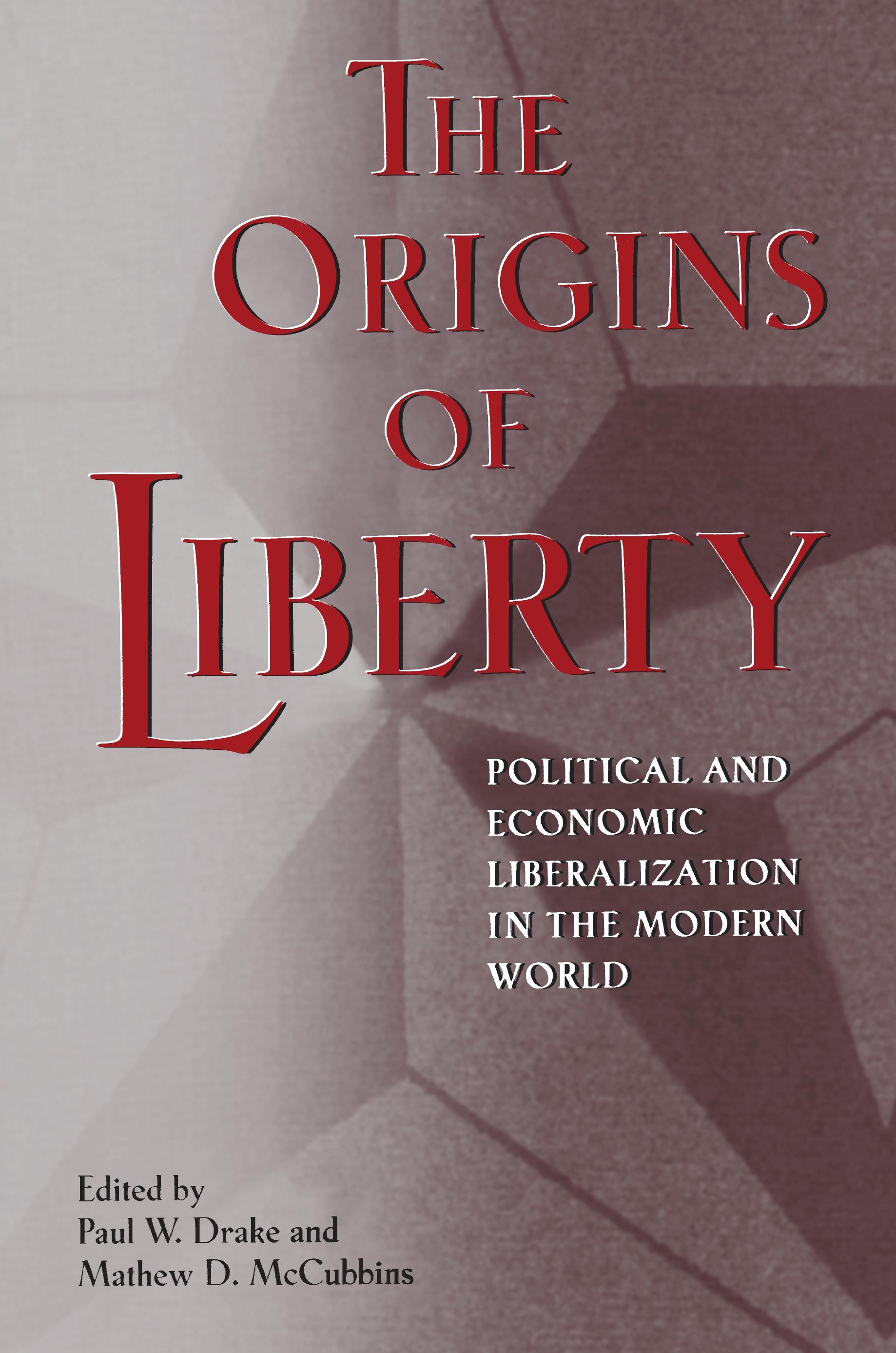
Why would sovereigns ever grant political or economic liberty to their subjects? Under what conditions would rational rulers who possess ultimate authority and who seek to maximize power and wealth ever give up any of that authority? This book draws on a wide array of empirical and theoretical approaches to answer these questions, investigating both why sovereign powers might liberalize and when.
The contributors to this volume argue that liberalization or democratization will only occur when those in power calculate that the expected benefits to them will exceed the costs. More specifically, rulers take five main concerns into account in their cost-benefit analysis as they decide to reinforce or relax controls: personal welfare, personal power, internal order, external order, and control over policy--particularly economic policy. The book shows that repression is a tempting first option for rulers seeking to maximize their benefits, but that liberalization becomes more attractive as a means of minimizing losses when it becomes increasingly certain that the alternatives are chaos, deposition, or even death. Chapters cover topics as diverse as the politics of seventeenth-century England and of twentieth-century Chile; why so many countries have liberalized in recent decades; and why even democratic governments see a need to reduce state power. The book makes use of formal modeling, statistical analysis, and traditional historical analysis.
The contributors are Paul Drake, Stephen Haggard, William Heller, Robert Kaufman, Phil Keefer, Brian Loveman, Mathew McCubbins, Douglass North, Ronald Rogowski, and Barry Weingast.
Before Memmo my notes were scattered across PDFs. Now a workspace pulls everything into one place — I see exactly what's still left to study.
Memmo's summaries are gold before exams. I don't have to re-read 800 pages two weeks before — just the important parts.
The AI chat has saved me the night before an exam more than once. I just keep asking until I get it — no waiting on a study group to reply.
The quizzes hit exactly what I need to know. Memmo tracks what I get stuck on — so I only practice what's worth it.
Flashcards with spaced repetition are magic. Memmo knows when I'm about to forget something and brings it back.
The AI podcasts are my favorite. I listen on my way to school and get a recap without sitting at a computer.

Handbok i kvalitativa metoder
281 kr

Hållbar utveckling: en introduktion för ingenjörer och andra problemlösare
334 kr

Brymans Samhällsvetenskapliga metoder
390 kr

Projektledning
491 kr

Den orättvisa hälsan: om socioekonomiska skillnader i hälsa och livslängd
326 kr

Vetenskapsteori för nybörjare
196 kr

Organizational Leadership
429 kr

På väg mot läraryrket
172 kr

Det sociala livet i skolan: Socialpsykologiska perspektiv
253 kr

Betygsättningens didaktik
151 kr

Personality
402 kr

Studying Leadership
404 kr

Managing Innovation
477 kr

Introduktion till samhällsvetenskaplig metod
347 kr

The Psychology of Sex and Gender
698 kr

Evidens och kunskap för socialt arbete
207 kr

Introduction to Leadership
605 kr