
Before Memmo my notes were scattered across PDFs. Now a workspace pulls everything into one place — I see exactly what's still left to study.
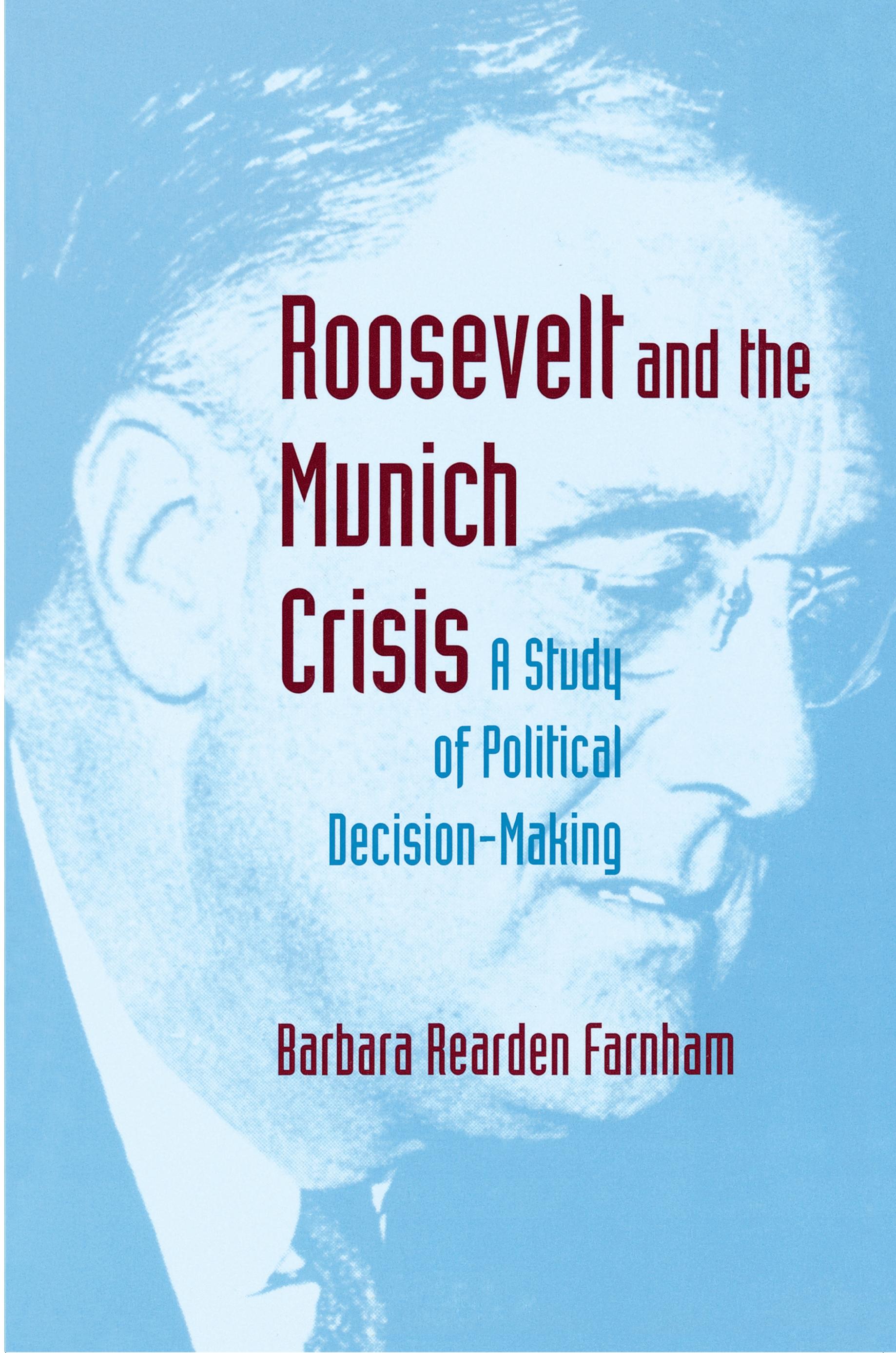
Franklin Roosevelt's intentions during the three years between Munich and Pearl Harbor have been a source of controversy among historians for decades. Barbara Farnham offers both a theory of how the domestic political context affects foreign policy decisions in general and a fresh interpretation of FDR's post-Munich policies based on the insights that the theory provides. Between 1936 and 1938, Roosevelt searched for ways to influence the deteriorating international situation. When Hitler's behavior during the Munich crisis showed him to be incorrigibly aggressive, FDR settled on aiding the democracies, a course to which he adhered until America's entry into the war. This policy attracted him because it allowed him to deal with a serious problem: the conflict between the need to stop Hitler and the domestic imperative to avoid any risk of American involvement in a war.
Because existing theoretical approaches to value conflict ignore the influence of political factors on decision-making, they offer little help in explaining Roosevelt's behavior. As an alternative, this book develops a political approach to decision-making which focuses on the impact that awareness of the imperatives of the political context can have on decision-making processes and, through them, policy outcomes. It suggests that in the face of a clash of central values decision-makers who are aware of the demands of the political context are likely to be reluctant to make trade-offs, seeking instead a solution that gives some measure of satisfaction to all the values implicated in the decision.
Before Memmo my notes were scattered across PDFs. Now a workspace pulls everything into one place — I see exactly what's still left to study.
Memmo's summaries are gold before exams. I don't have to re-read 800 pages two weeks before — just the important parts.
The AI chat has saved me the night before an exam more than once. I just keep asking until I get it — no waiting on a study group to reply.
The quizzes hit exactly what I need to know. Memmo tracks what I get stuck on — so I only practice what's worth it.
Flashcards with spaced repetition are magic. Memmo knows when I'm about to forget something and brings it back.
The AI podcasts are my favorite. I listen on my way to school and get a recap without sitting at a computer.

Handbok i kvalitativa metoder
281 kr

Hållbar utveckling: en introduktion för ingenjörer och andra problemlösare
334 kr

Brymans Samhällsvetenskapliga metoder
390 kr

Projektledning
491 kr

Den orättvisa hälsan: om socioekonomiska skillnader i hälsa och livslängd
326 kr

Organizational Leadership
429 kr

Vetenskapsteori för nybörjare
196 kr

På väg mot läraryrket
172 kr

Det sociala livet i skolan: Socialpsykologiska perspektiv
253 kr

Betygsättningens didaktik
151 kr

Personality
402 kr

Studying Leadership
404 kr

Managing Innovation
477 kr

Introduktion till samhällsvetenskaplig metod
347 kr

The Psychology of Sex and Gender
698 kr

Evidens och kunskap för socialt arbete
207 kr

Introduction to Leadership
605 kr