
Before Memmo my notes were scattered across PDFs. Now a workspace pulls everything into one place — I see exactly what's still left to study.
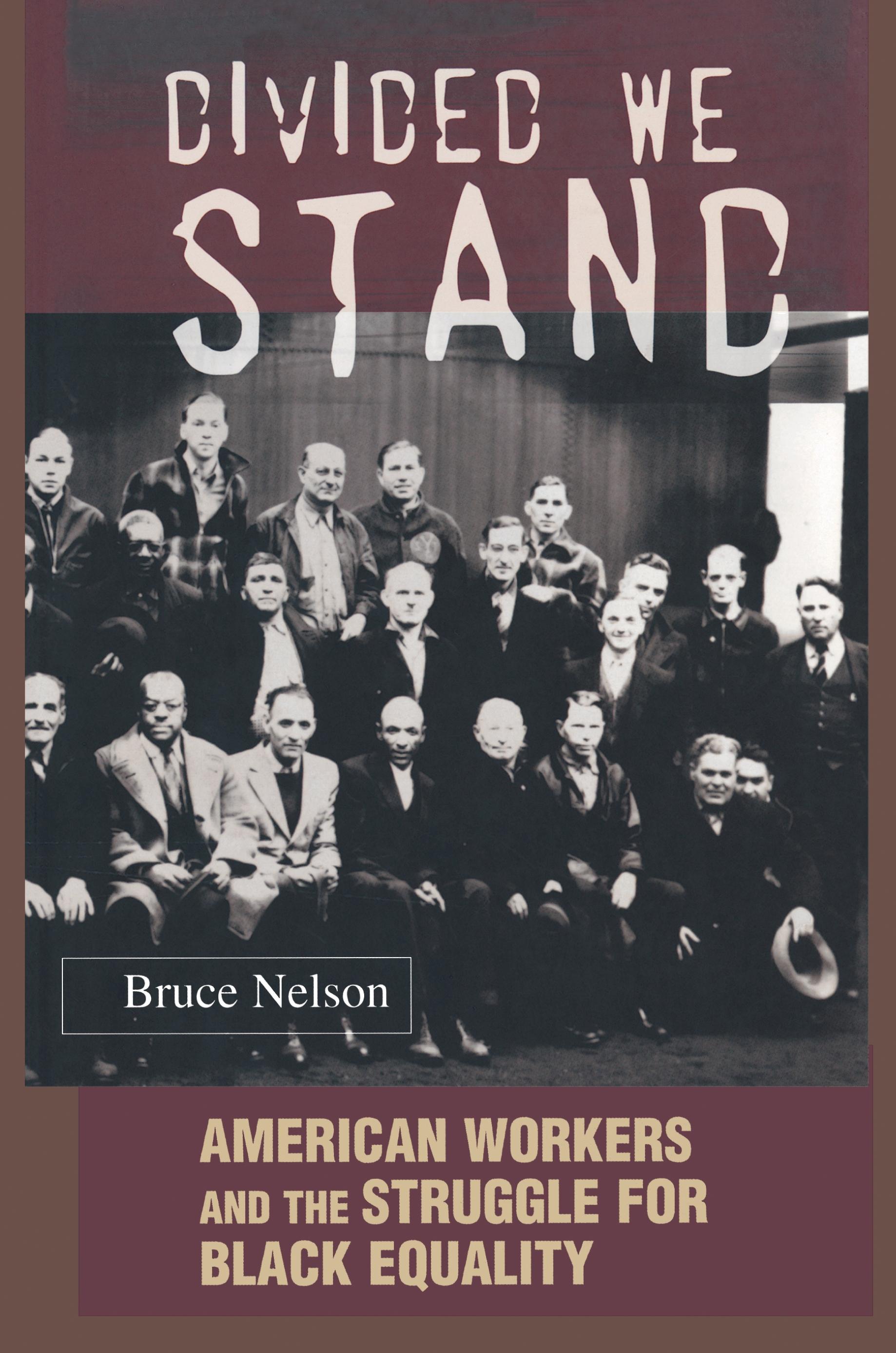
Divided We Stand is a study of how class and race have intersected in American society--above all, in the "making" and remaking of the American working class in the nineteenth and twentieth centuries. Focusing mainly on longshoremen in the ports of New York, New Orleans, and Los Angeles, and on steelworkers in many of the nation's steel towns, it examines how European immigrants became American and "white" in the crucible of the industrial workplace and the ethnic and working-class neighborhood.
As workers organized on the job, especially during the overlapping CIO and civil rights eras in the middle third of the twentieth century, trade unions became a vital arena in which "old" and "new" immigrants and black migrants forged new alliances and identities and tested the limits not only of class solidarity but of American democracy. The most volatile force in this regard was the civil rights movement. As it crested in the 1950s and '60s, "the Movement" confronted unions anew with the question, "Which side are you on?" This book demonstrates the complex ways in which labor organizations answered that question and the complex relationships between union leaders and diverse rank-and-file constituencies in addressing it.
Divided We Stand includes vivid examples of white working-class "agency" in the construction of racially discriminatory employment structures. But Nelson is less concerned with racism as such than with the concrete historical circumstances in which racialized class identities emerged and developed. This leads him to a detailed and often fascinating consideration of white, working-class ethnicity but also to a careful analysis of black workers--their conditions of work, their aspirations and identities, their struggles for equality. Making its case with passion and clarity, Divided We Stand will be a compelling and controversial book.
Before Memmo my notes were scattered across PDFs. Now a workspace pulls everything into one place — I see exactly what's still left to study.
Memmo's summaries are gold before exams. I don't have to re-read 800 pages two weeks before — just the important parts.
The AI chat has saved me the night before an exam more than once. I just keep asking until I get it — no waiting on a study group to reply.
The quizzes hit exactly what I need to know. Memmo tracks what I get stuck on — so I only practice what's worth it.
Flashcards with spaced repetition are magic. Memmo knows when I'm about to forget something and brings it back.
The AI podcasts are my favorite. I listen on my way to school and get a recap without sitting at a computer.

Handbok i kvalitativa metoder
281 kr

Hållbar utveckling: en introduktion för ingenjörer och andra problemlösare
334 kr

Brymans Samhällsvetenskapliga metoder
390 kr

Projektledning
491 kr

Den orättvisa hälsan: om socioekonomiska skillnader i hälsa och livslängd
326 kr

Vetenskapsteori för nybörjare
196 kr

Organizational Leadership
429 kr

På väg mot läraryrket
172 kr

Det sociala livet i skolan: Socialpsykologiska perspektiv
253 kr

Betygsättningens didaktik
151 kr

Personality
402 kr

Studying Leadership
404 kr

Managing Innovation
477 kr

Introduktion till samhällsvetenskaplig metod
347 kr

The Psychology of Sex and Gender
698 kr

Evidens och kunskap för socialt arbete
207 kr

Introduction to Leadership
605 kr