
Before Memmo my notes were scattered across PDFs. Now a workspace pulls everything into one place — I see exactly what's still left to study.
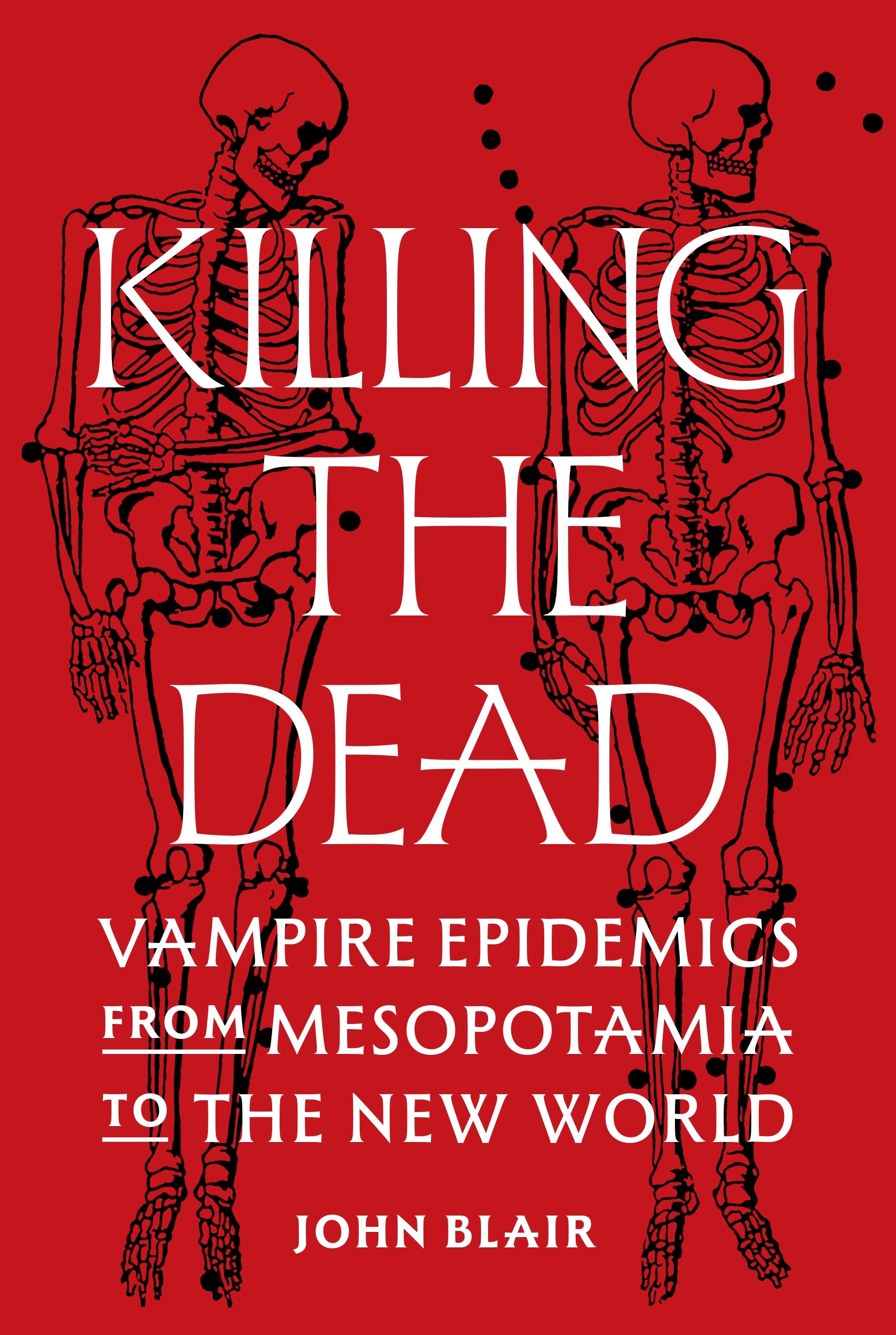
A riveting history of vampire panics across cultures and down through the millennia—and why killing the dead is better than killing the living
Killing the Dead provides the first in-depth, global account of one of the world’s most widespread yet misunderstood forms of mass hysteria—the vampire epidemic. In a spellbinding narrative, John Blair takes readers from ancient Mesopotamia to present-day Haiti to explore a macabre frontier of life and death where corpses are believed to wander or do harm from the grave, and where the vampire is a physical expression of society’s inexplicable terrors and anxieties.
In 1732, the British public opened their morning papers to read of lurid happenings in eastern Europe. Serbian villagers had dug up several corpses and had found them to be undecayed and bloated with blood. Recognizing the marks of vampirism, they mutilated and burned them. Centuries earlier, the English themselves engaged in the same behavior. In fact, vampire epidemics have flared up throughout history—in ancient Assyria, China, and Rome, medieval and early modern Europe, and the Americas. Blair blends the latest findings in archaeology, anthropology, and psychology with vampire lore from literature and popular culture to show how these episodes occur at traumatic moments in societies that upend all sense of security, and how the European vampire is just one species in a larger family of predatory supernatural entities that includes the female flying demons of Southeast Asia and the lustful yoginīs of India.
Richly illustrated, Killing the Dead provocatively argues that corpse-killing, far from being pathological or unhealthy, served as a therapeutic and largely harmless outlet for fear, hatred, and paranoia that would otherwise result in violence against marginalized groups and individuals.
Before Memmo my notes were scattered across PDFs. Now a workspace pulls everything into one place — I see exactly what's still left to study.
Memmo's summaries are gold before exams. I don't have to re-read 800 pages two weeks before — just the important parts.
The AI chat has saved me the night before an exam more than once. I just keep asking until I get it — no waiting on a study group to reply.
The quizzes hit exactly what I need to know. Memmo tracks what I get stuck on — so I only practice what's worth it.
Flashcards with spaced repetition are magic. Memmo knows when I'm about to forget something and brings it back.
The AI podcasts are my favorite. I listen on my way to school and get a recap without sitting at a computer.

Handbok i kvalitativa metoder
281 kr

Hållbar utveckling: en introduktion för ingenjörer och andra problemlösare
334 kr

Brymans Samhällsvetenskapliga metoder
390 kr

Projektledning
491 kr

Den orättvisa hälsan: om socioekonomiska skillnader i hälsa och livslängd
326 kr

Vetenskapsteori för nybörjare
196 kr

Organizational Leadership
429 kr

På väg mot läraryrket
172 kr

Det sociala livet i skolan: Socialpsykologiska perspektiv
253 kr

Betygsättningens didaktik
151 kr

Personality
402 kr

Studying Leadership
404 kr

Managing Innovation
477 kr

Introduktion till samhällsvetenskaplig metod
347 kr

The Psychology of Sex and Gender
698 kr

Evidens och kunskap för socialt arbete
207 kr

Introduction to Leadership
605 kr