
Before Memmo my notes were scattered across PDFs. Now a workspace pulls everything into one place — I see exactly what's still left to study.
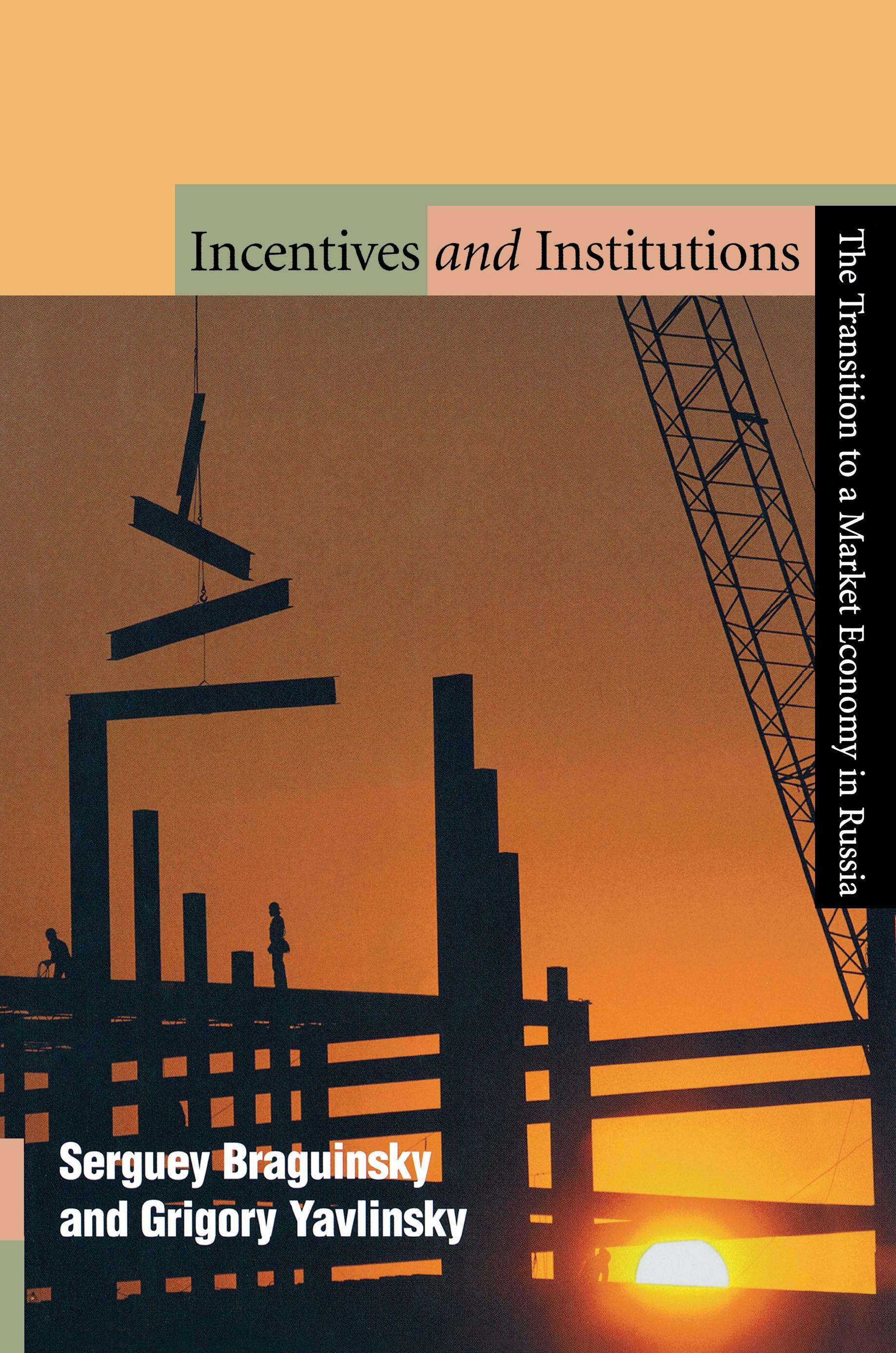
Here, for the first time, two of Russia's leading economists provide an authoritative analysis of the transition to a democratic market economy that has taken place in Russia since 1990. Serguey Braguinsky, a Russian economist with extensive international experience, and Grigory Yavlinsky, leader of the liberal "Yabloko" party and a major public figure in Russia, focus on the institutions that are critical to a successful transition and the economic incentives needed to make these institutions work. Finally, they discuss in detail the specific components of the economic processes that are necessary for economic transition in general and they draw lessons that can be applied to other nations dealing with similar transitions.
In 1989, Grigory Yavlinsky became a member of the Commission for Economic Reform and wrote the groundbreaking "500 Day Plan," which outlined the first program of transition to a market economy. Two years later, he co-wrote the program of strategic cooperation between the Soviet government and the West (known as the "Grand Bargain"). Here he and Serguey Braguinsky examine what went wrong with the Russian plan--and what is needed to put the economy back on the road to becoming a fully functioning market economy.
The first section of the book presents a new interpretation of the political economy of the socialist state and the incentives and institutions that underpin it, with an emphasis on the present Russian situation. The second part deals with the political economy of "spontaneous transition" and the inefficiencies inherent in economies that lack the organizations and institutions that inhere in established Western democratic economies. In the final section, the authors present a program of actions to put the economic transition in Russia back on track, based on their assessment of the actual current state of both the economy and the government. Their approach is unique in emphasizing organizational evolution at the microeconomic level instead of stressing macroeconomic issues such as money and inflation that are at the heart of most arguments.
This is a thoughtful and thought-provoking book and one that will be widely discussed and debated.
Before Memmo my notes were scattered across PDFs. Now a workspace pulls everything into one place — I see exactly what's still left to study.
Memmo's summaries are gold before exams. I don't have to re-read 800 pages two weeks before — just the important parts.
The AI chat has saved me the night before an exam more than once. I just keep asking until I get it — no waiting on a study group to reply.
The quizzes hit exactly what I need to know. Memmo tracks what I get stuck on — so I only practice what's worth it.
Flashcards with spaced repetition are magic. Memmo knows when I'm about to forget something and brings it back.
The AI podcasts are my favorite. I listen on my way to school and get a recap without sitting at a computer.

Handbok i kvalitativa metoder
281 kr

Hållbar utveckling: en introduktion för ingenjörer och andra problemlösare
334 kr

Brymans Samhällsvetenskapliga metoder
390 kr

Projektledning
491 kr

Den orättvisa hälsan: om socioekonomiska skillnader i hälsa och livslängd
326 kr

Vetenskapsteori för nybörjare
196 kr

Organizational Leadership
429 kr

På väg mot läraryrket
172 kr

Det sociala livet i skolan: Socialpsykologiska perspektiv
253 kr

Betygsättningens didaktik
151 kr

Personality
402 kr

Studying Leadership
404 kr

Managing Innovation
477 kr

Introduktion till samhällsvetenskaplig metod
347 kr

The Psychology of Sex and Gender
698 kr

Evidens och kunskap för socialt arbete
207 kr

Introduction to Leadership
605 kr