
Before Memmo my notes were scattered across PDFs. Now a workspace pulls everything into one place — I see exactly what's still left to study.
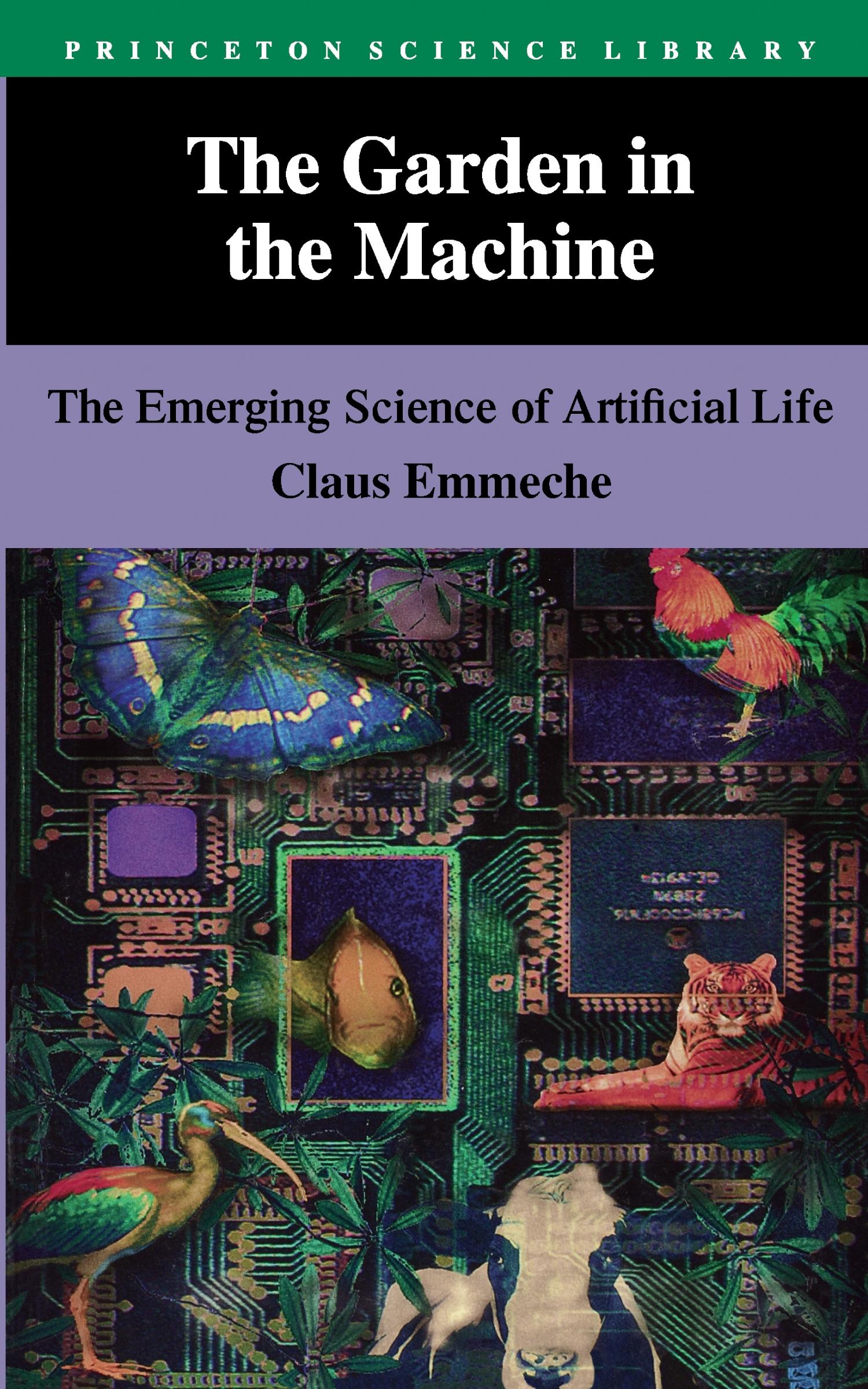
What is life? Is it just the biologically familiar--birds, trees, snails, people--or is it an infinitely complex set of patterns that a computer could simulate? What role does intelligence play in separating the organic from the inorganic, the living from the inert? Does life evolve along a predestined path, or does it suddenly emerge from what appeared lifeless and programmatic?
In this easily accessible and wide-ranging survey, Claus Emmeche outlines many of the challenges and controversies involved in the dynamic and curious science of artificial life. Emmeche describes the work being done by an international network of biologists, computer scientists, and physicists who are using computers to study life as it could be, or as it might evolve under conditions different from those on earth.
Many artificial-life researchers believe that they can create new life in the computer by simulating the processes observed in traditional, biological life-forms. The flight of a flock of birds, for example, can be reproduced faithfully and in all its complexity by a relatively simple computer program that is designed to generate electronic "boids." Are these "boids" then alive? The central problem, Emmeche notes, lies in defining the salient differences between biological life and computer simulations of its processes. And yet, if we can breathe life into a computer, what might this mean for our other assumptions about what it means to be alive?
The Garden in the Machine touches on every aspect of this complex and rapidly developing discipline, including its connections to artificial intelligence, chaos theory, computational theory, and studies of emergence. Drawing on the most current work in the field, this book is a major overview of artificial life. Professionals and nonscientists alike will find it an invaluable guide to concepts and technologies that may forever change our definition of life.
Before Memmo my notes were scattered across PDFs. Now a workspace pulls everything into one place — I see exactly what's still left to study.
Memmo's summaries are gold before exams. I don't have to re-read 800 pages two weeks before — just the important parts.
The AI chat has saved me the night before an exam more than once. I just keep asking until I get it — no waiting on a study group to reply.
The quizzes hit exactly what I need to know. Memmo tracks what I get stuck on — so I only practice what's worth it.
Flashcards with spaced repetition are magic. Memmo knows when I'm about to forget something and brings it back.
The AI podcasts are my favorite. I listen on my way to school and get a recap without sitting at a computer.

Handbok i kvalitativa metoder
281 kr

Hållbar utveckling: en introduktion för ingenjörer och andra problemlösare
334 kr

Brymans Samhällsvetenskapliga metoder
390 kr

Projektledning
491 kr

Den orättvisa hälsan: om socioekonomiska skillnader i hälsa och livslängd
326 kr

Vetenskapsteori för nybörjare
196 kr

Organizational Leadership
429 kr

På väg mot läraryrket
172 kr

Det sociala livet i skolan: Socialpsykologiska perspektiv
253 kr

Betygsättningens didaktik
151 kr

Personality
402 kr

Studying Leadership
404 kr

Managing Innovation
477 kr

Introduktion till samhällsvetenskaplig metod
347 kr

The Psychology of Sex and Gender
698 kr

Evidens och kunskap för socialt arbete
207 kr

Introduction to Leadership
605 kr