
Before Memmo my notes were scattered across PDFs. Now a workspace pulls everything into one place — I see exactly what's still left to study.
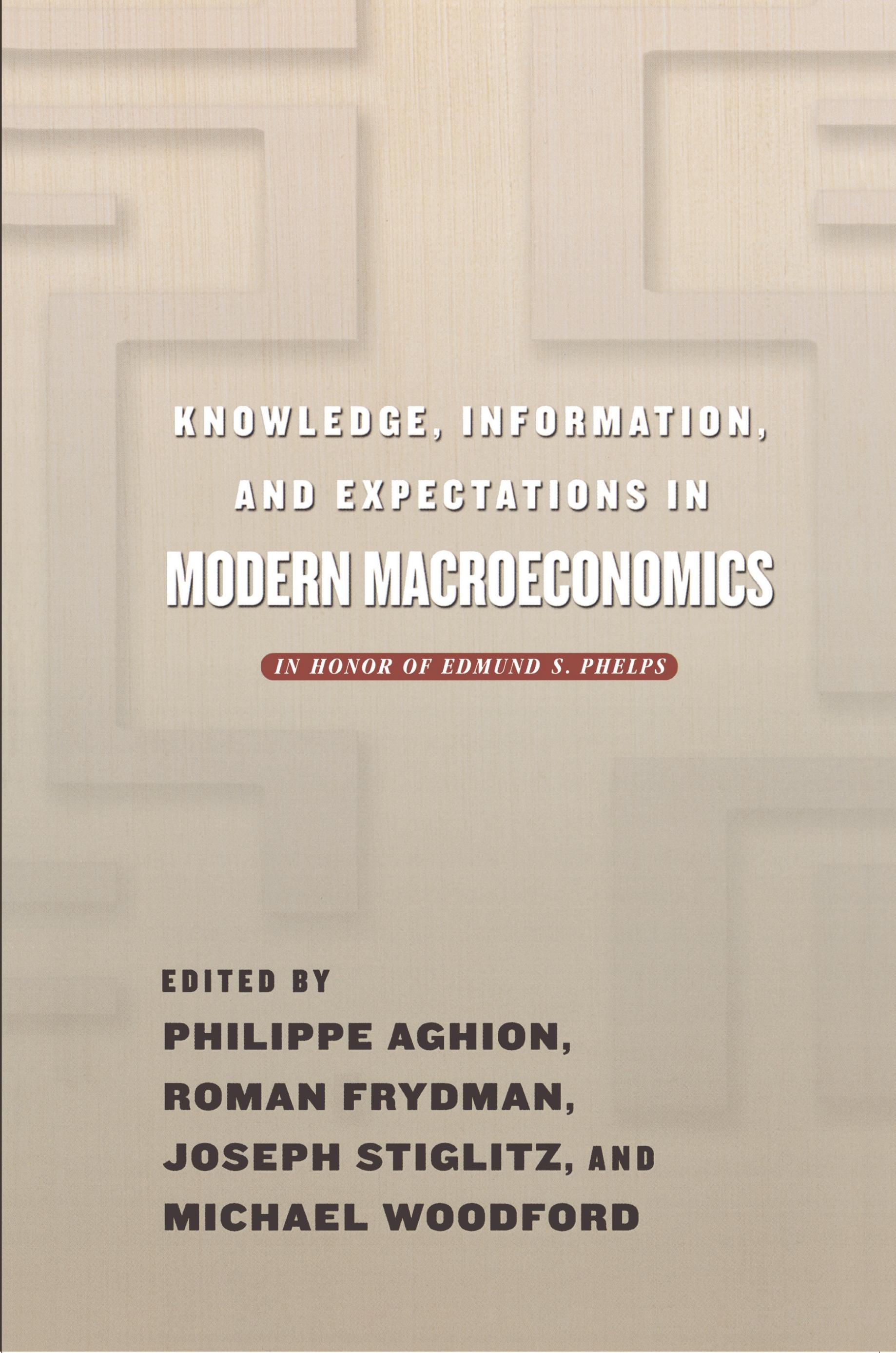
Macroeconomics would not be what it is today without Edmund Phelps. This book assembles the field's leading figures to highlight the continuing influence of his ideas from the past four decades. Addressing the most important current debates in macroeconomic theory, it focuses on the rates at which new technologies arise and information about markets is dispersed, information imperfections, and the heterogeneity of beliefs as determinants of an economy's performance. The contributions, which represent a breadth of contemporary theoretical approaches, cover topics including the real effects of monetary disturbances, difficulties in expectations formation, structural factors in unemployment, and sources of technical progress. Based on an October 2001 conference honoring Phelps, this incomparable volume provides the most comprehensive and authoritative account in years of the present state of macroeconomics while also pointing to its future.
The fifteen chapters are by the editors and by Daron Acemoglu, Jess Benhabib, Guillermo A. Calvo, Oya Celasun, Michael D. Goldberg, Bruce Greenwald, James J. Heckman, Bart Hobijn, Peter Howitt, Hehui Jin, Charles I. Jones, Michael Kumhof, Mordecai Kurz, David Laibson, Lars Ljungqvist, N. Gregory Mankiw, Dale T. Mortensen, Maurizio Motolese, Stephen Nickell, Luca Nunziata, Wolfgang Ochel, Christopher A. Pissarides, Glenda Quintini, Ricardo Reis, Andrea Repetto, Thomas J. Sargent, Jeremy Tobacman, and Gianluca Violante. Commenting are Olivier J. Blanchard, Jean-Paul Fitoussi, Mark Gertler, Robert E. Hall, Robert E. Lucas, Jr., David H. Papell, Robert A. Pollak, Robert M. Solow, Nancy L. Stokey, and Lars E. O. Svensson. Also included are reflections by Phelps, a preface by Paul A. Samuelson, and the editors' introduction.
Before Memmo my notes were scattered across PDFs. Now a workspace pulls everything into one place — I see exactly what's still left to study.
Memmo's summaries are gold before exams. I don't have to re-read 800 pages two weeks before — just the important parts.
The AI chat has saved me the night before an exam more than once. I just keep asking until I get it — no waiting on a study group to reply.
The quizzes hit exactly what I need to know. Memmo tracks what I get stuck on — so I only practice what's worth it.
Flashcards with spaced repetition are magic. Memmo knows when I'm about to forget something and brings it back.
The AI podcasts are my favorite. I listen on my way to school and get a recap without sitting at a computer.

Handbok i kvalitativa metoder
281 kr

Hållbar utveckling: en introduktion för ingenjörer och andra problemlösare
334 kr

Brymans Samhällsvetenskapliga metoder
390 kr

Projektledning
491 kr

Den orättvisa hälsan: om socioekonomiska skillnader i hälsa och livslängd
326 kr

Vetenskapsteori för nybörjare
196 kr

Organizational Leadership
429 kr

På väg mot läraryrket
172 kr

Det sociala livet i skolan: Socialpsykologiska perspektiv
253 kr

Betygsättningens didaktik
151 kr

Personality
402 kr

Studying Leadership
404 kr

Managing Innovation
477 kr

Introduktion till samhällsvetenskaplig metod
347 kr

The Psychology of Sex and Gender
698 kr

Evidens och kunskap för socialt arbete
207 kr

Introduction to Leadership
605 kr