
Before Memmo my notes were scattered across PDFs. Now a workspace pulls everything into one place — I see exactly what's still left to study.
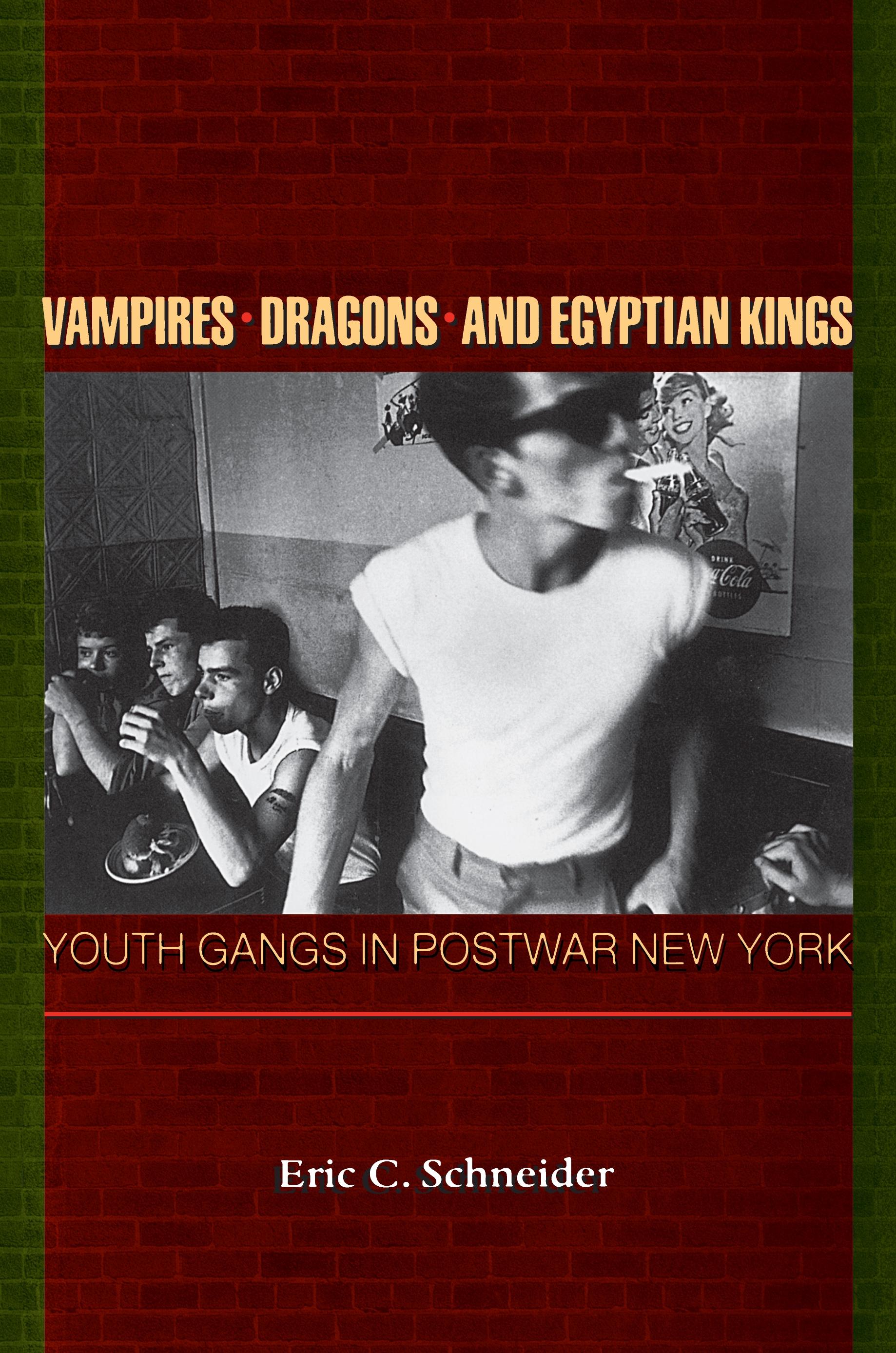
They called themselves "Vampires," "Dragons," and "Egyptian Kings." They were divided by race, ethnicity, and neighborhood boundaries, but united by common styles, slang, and codes of honor. They fought--and sometimes killed--to protect and expand their territories. In postwar New York, youth gangs were a colorful and controversial part of the urban landscape, made famous by West Side Story and infamous by the media. This is the first historical study to explore fully the culture of these gangs. Eric Schneider takes us into a world of switchblades and slums, zoot suits and bebop music to explain why youth gangs emerged, how they evolved, and why young men found membership and the violence it involved so attractive.
Schneider begins by describing how postwar urban renewal, slum clearances, and ethnic migration pitted African-American, Puerto Rican, and Euro-American youths against each other in battles to dominate changing neighborhoods. But he argues that young men ultimately joined gangs less because of ethnicity than because membership and gang violence offered rare opportunities for adolescents alienated from school, work, or the family to win prestige, power, adulation from girls, and a masculine identity. In the course of the book, Schneider paints a rich and detailed portrait of everyday life in gangs, drawing on personal interviews with former members to re-create for us their language, music, clothing, and social mores. We learn what it meant to be a "down bopper" or a "jive stud," to "fish" with a beautiful "deb" to the sounds of the Jesters, and to wear gang sweaters, wildly colored zoot suits, or the "Ivy League look." He outlines the unwritten rules of gang behavior, the paths members followed to adulthood, and the effects of gang intervention programs, while also providing detailed analyses of such notorious gang-related crimes as the murders committed by the "Capeman," Salvador Agron.
Schneider focuses on the years from 1940 to 1975, but takes us up to the present in his conclusion, showing how youth gangs are no longer social organizations but economic units tied to the underground economy. Written with a profound understanding of adolescent culture and the street life of New York, this is a powerful work of history and a compelling story for a general audience.
Before Memmo my notes were scattered across PDFs. Now a workspace pulls everything into one place — I see exactly what's still left to study.
Memmo's summaries are gold before exams. I don't have to re-read 800 pages two weeks before — just the important parts.
The AI chat has saved me the night before an exam more than once. I just keep asking until I get it — no waiting on a study group to reply.
The quizzes hit exactly what I need to know. Memmo tracks what I get stuck on — so I only practice what's worth it.
Flashcards with spaced repetition are magic. Memmo knows when I'm about to forget something and brings it back.
The AI podcasts are my favorite. I listen on my way to school and get a recap without sitting at a computer.

Handbok i kvalitativa metoder
281 kr

Hållbar utveckling: en introduktion för ingenjörer och andra problemlösare
334 kr

Brymans Samhällsvetenskapliga metoder
390 kr

Projektledning
491 kr

Den orättvisa hälsan: om socioekonomiska skillnader i hälsa och livslängd
326 kr

Vetenskapsteori för nybörjare
196 kr

Organizational Leadership
429 kr

På väg mot läraryrket
172 kr

Det sociala livet i skolan: Socialpsykologiska perspektiv
253 kr

Betygsättningens didaktik
151 kr

Personality
402 kr

Studying Leadership
404 kr

Managing Innovation
477 kr

Introduktion till samhällsvetenskaplig metod
347 kr

The Psychology of Sex and Gender
698 kr

Evidens och kunskap för socialt arbete
207 kr

Introduction to Leadership
605 kr