
Before Memmo my notes were scattered across PDFs. Now a workspace pulls everything into one place — I see exactly what's still left to study.
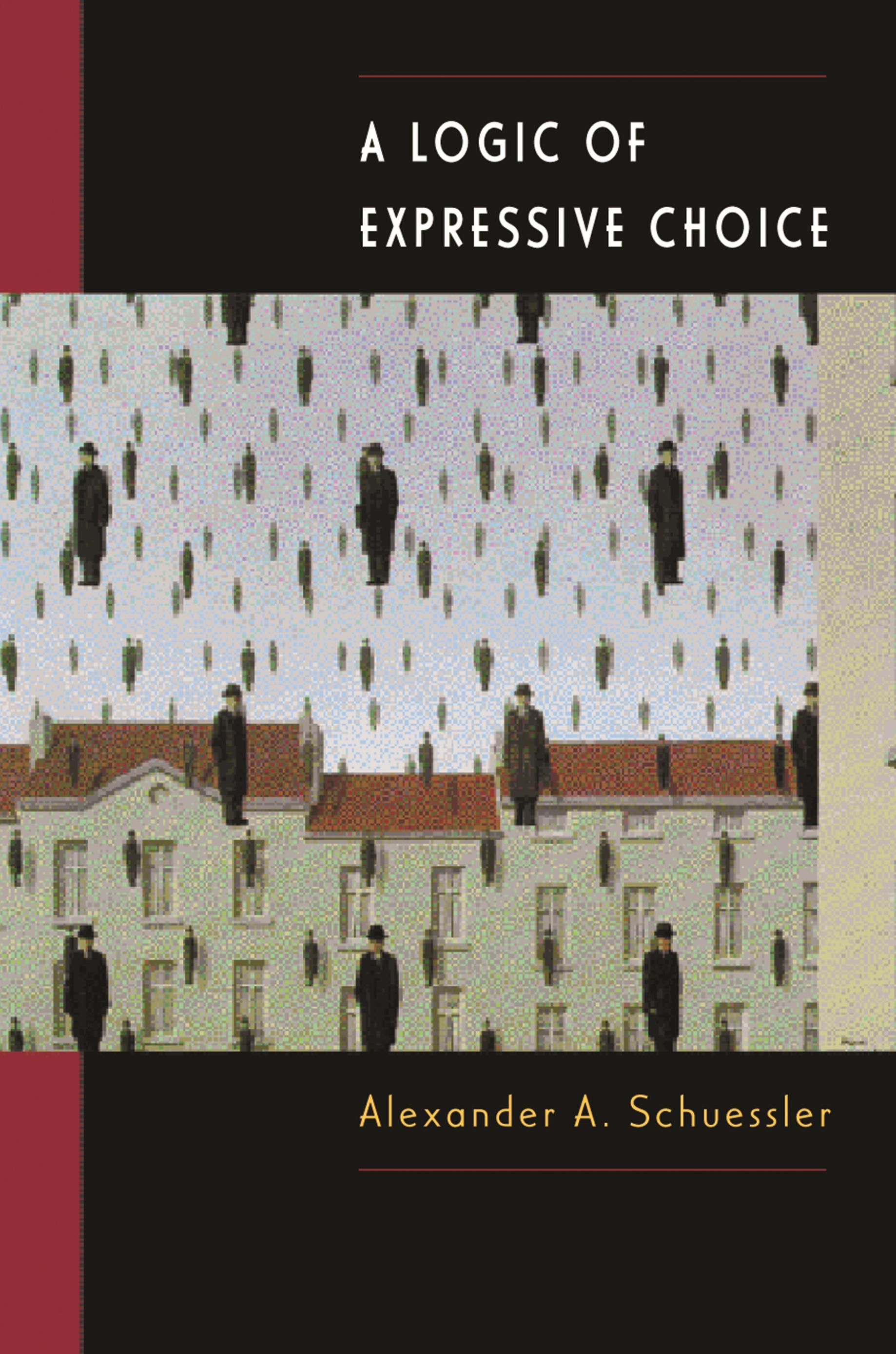
Alexander Schuessler has done what many deemed impossible: he has wedded rational choice theory and the concerns of social theory and anthropology to explain why people vote. The "paradox of participation"--why individuals cast ballots when they have virtually no effect on electoral outcomes--has long puzzled social scientists. And it has particularly troubled rational choice theorists, who like to describe political activity in terms of incentives. Schuessler's ingenious solution is a "logic of expressive choice." He argues in incentive-based (or "economic") terms that individuals vote not because of how they believe their vote matters in the final tally but rather to express their preferences, allegiances, and thus themselves.
Through a comparative history of marketing and campaigning, Schuessler generates a "jukebox model" of participation and shows that expressive choice has become a target for those eliciting mass participation and public support. Political advisers, for example, have learned to target voters' desire to express--to themselves and to others--who they are. Candidates, using tactics such as claiming popularity, invoking lifestyle, using ambiguous campaign themes, and shielding supporters from one another can get out their vote even when it is clear that an election is already lost or won.
This important work, the first of its kind, will appeal to anyone seeking to decipher voter choice and turnout, social movements, political identification, collective action, and consumer behavior, including scholars, graduate students, and upper-level undergraduates in political science, economics, sociology, anthropology, and marketing. It will contribute greatly to our understanding and prediction of democratic participation patterns and their consequences.
Before Memmo my notes were scattered across PDFs. Now a workspace pulls everything into one place — I see exactly what's still left to study.
Memmo's summaries are gold before exams. I don't have to re-read 800 pages two weeks before — just the important parts.
The AI chat has saved me the night before an exam more than once. I just keep asking until I get it — no waiting on a study group to reply.
The quizzes hit exactly what I need to know. Memmo tracks what I get stuck on — so I only practice what's worth it.
Flashcards with spaced repetition are magic. Memmo knows when I'm about to forget something and brings it back.
The AI podcasts are my favorite. I listen on my way to school and get a recap without sitting at a computer.

Handbok i kvalitativa metoder
281 kr

Hållbar utveckling: en introduktion för ingenjörer och andra problemlösare
334 kr

Brymans Samhällsvetenskapliga metoder
390 kr

Projektledning
491 kr

Den orättvisa hälsan: om socioekonomiska skillnader i hälsa och livslängd
326 kr

Vetenskapsteori för nybörjare
196 kr

Organizational Leadership
429 kr

På väg mot läraryrket
172 kr

Det sociala livet i skolan: Socialpsykologiska perspektiv
253 kr

Betygsättningens didaktik
151 kr

Personality
402 kr

Studying Leadership
404 kr

Managing Innovation
477 kr

Introduktion till samhällsvetenskaplig metod
347 kr

The Psychology of Sex and Gender
698 kr

Evidens och kunskap för socialt arbete
207 kr

Introduction to Leadership
605 kr