
Before Memmo my notes were scattered across PDFs. Now a workspace pulls everything into one place — I see exactly what's still left to study.
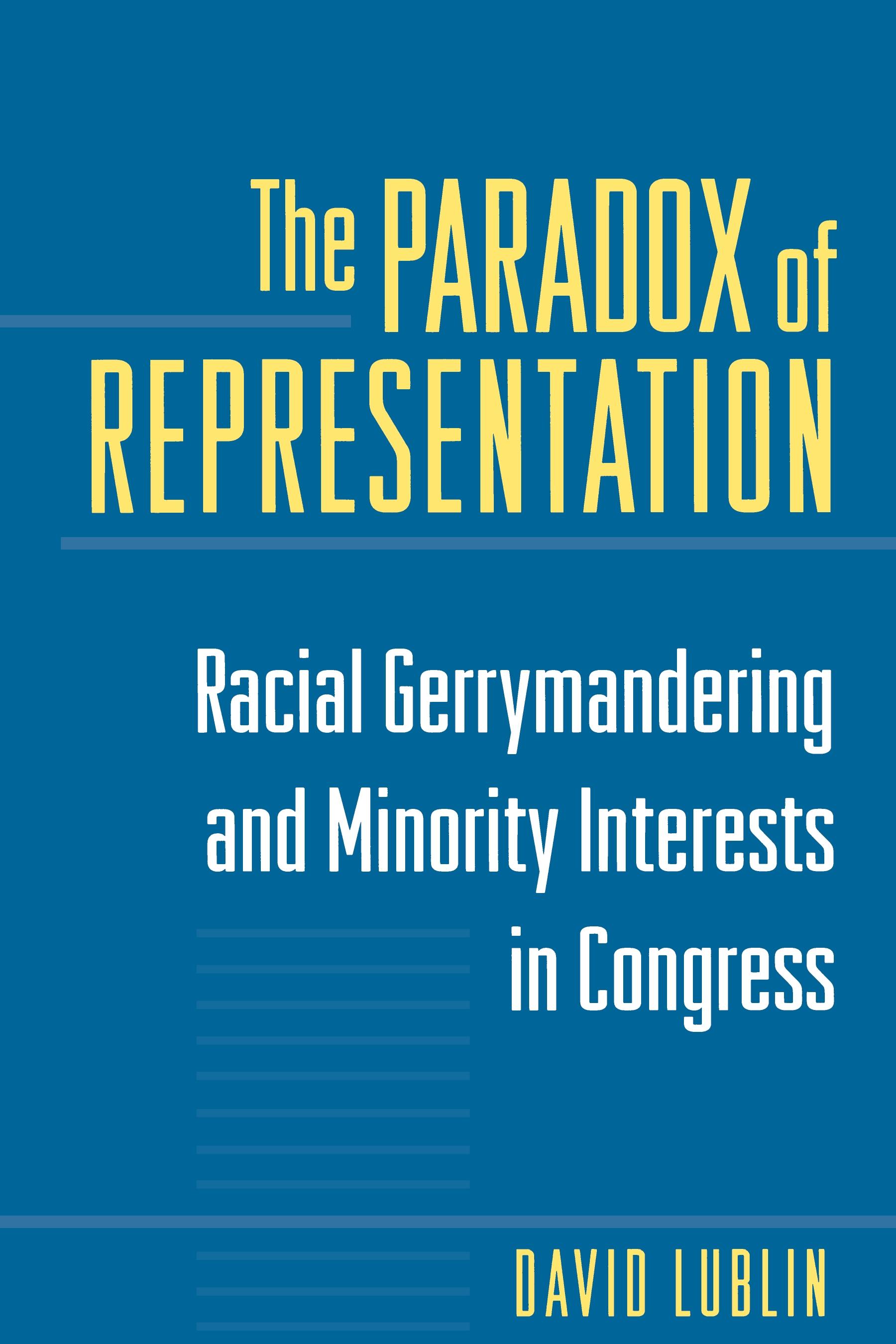
In The Paradox of Representation David Lublin offers an unprecedented analysis of a vast range of rigorous, empirical evidence that exposes the central paradox of racial representation: Racial redistricting remains vital to the election of African Americans and Latinos but makes Congress less likely to adopt policies favored by blacks. Lublin's evidence, together with policy recommendations for improving minority representation, will make observers of the political scene reconsider the avenues to fair representation.
Using data on all representatives elected to Congress between 1972 and 1994, Lublin examines the link between the racial composition of a congressional district and its representative's race as well as ideology. The author confirms the view that specially drawn districts must exist to ensure the election of African Americans and Latinos. He also shows, however, that a relatively small number of minorities in a district can lead to the election of a representative attentive to their interests. When African Americans and Latinos make up 40 percent of a district, according to Lublin's findings, they have a strong liberalizing influence on representatives of both parties; when they make up 55 percent, the district is almost certain to elect a minority representative.
Lublin notes that particularly in the South, the practice of concentrating minority populations into a small number of districts decreases the liberal influence in the remaining areas. Thus, a handful of minority representatives, almost invariably Democrats, win elections, but so do a greater number of conservative Republicans. The author proposes that establishing a balance between majority-minority districts and districts where the minority population would be slightly more dispersed, making up 40 percent of a total district, would allow more African Americans to exercise more influence over their representatives.
Before Memmo my notes were scattered across PDFs. Now a workspace pulls everything into one place — I see exactly what's still left to study.
Memmo's summaries are gold before exams. I don't have to re-read 800 pages two weeks before — just the important parts.
The AI chat has saved me the night before an exam more than once. I just keep asking until I get it — no waiting on a study group to reply.
The quizzes hit exactly what I need to know. Memmo tracks what I get stuck on — so I only practice what's worth it.
Flashcards with spaced repetition are magic. Memmo knows when I'm about to forget something and brings it back.
The AI podcasts are my favorite. I listen on my way to school and get a recap without sitting at a computer.

Handbok i kvalitativa metoder
281 kr

Hållbar utveckling: en introduktion för ingenjörer och andra problemlösare
334 kr

Brymans Samhällsvetenskapliga metoder
390 kr

Projektledning
491 kr

Den orättvisa hälsan: om socioekonomiska skillnader i hälsa och livslängd
326 kr

Vetenskapsteori för nybörjare
196 kr

Organizational Leadership
429 kr

På väg mot läraryrket
172 kr

Det sociala livet i skolan: Socialpsykologiska perspektiv
253 kr

Betygsättningens didaktik
151 kr

Personality
402 kr

Studying Leadership
404 kr

Managing Innovation
477 kr

Introduktion till samhällsvetenskaplig metod
347 kr

The Psychology of Sex and Gender
698 kr

Evidens och kunskap för socialt arbete
207 kr

Introduction to Leadership
605 kr