
Before Memmo my notes were scattered across PDFs. Now a workspace pulls everything into one place — I see exactly what's still left to study.
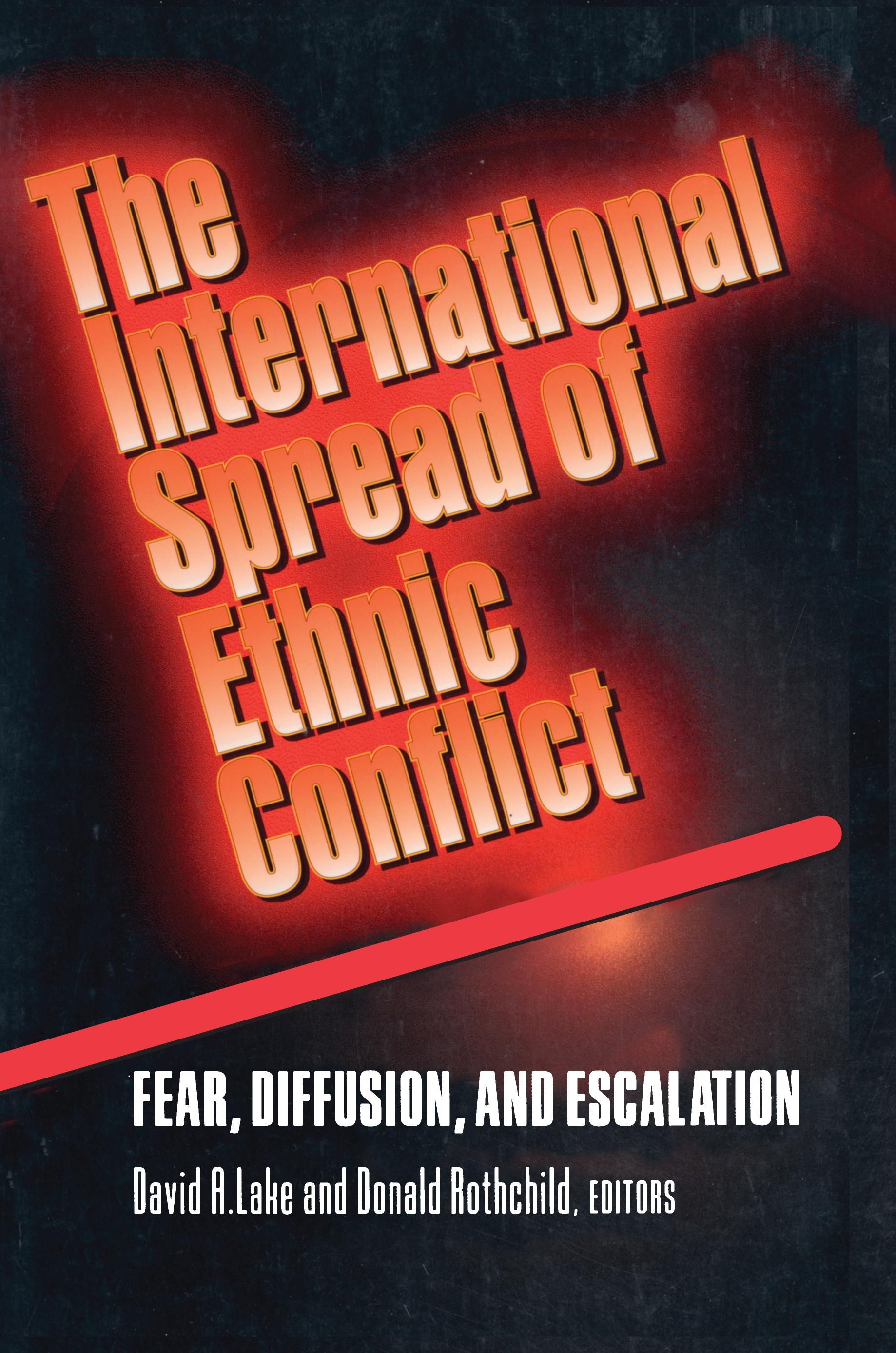
The wave of ethnic conflict that has recently swept across parts of Eastern Europe, the former Soviet Union, and Africa has led many political observers to fear that these conflicts are contagious. Initial outbreaks in such places as Bosnia, Chechnya, and Rwanda, if not contained, appear capable of setting off epidemics of catastrophic proportions. In this volume, David Lake and Donald Rothchild have organized an ambitious, sophisticated exploration of both the origins and spread of ethnic conflict, one that will be useful to policymakers and theorists alike.
The editors and contributors argue that ethnic conflict is not caused directly by intergroup differences or centuries-old feuds and that the collapse of the Soviet Union did not simply uncork ethnic passions long suppressed. They look instead at how anxieties over security, competition for resources, breakdown in communication with the government, and the inability to make enduring commitments lead ethnic groups into conflict, and they consider the strategic interactions that underlie ethnic conflict and its effective management.
How, why, and when do ethnic conflicts either diffuse by precipitating similar conflicts elsewhere or escalate by bringing in outside parties? How can such transnational ethnic conflicts best be managed? Following an introduction by the editors, which lays a strong theoretical foundation for approaching these questions, Timur Kuran, Stuart Hill, Donald Rothchild, Colin Cameron, Will H. Moore, and David R. Davis examine the diffusion of ideas across national borders and ethnic alliances. Without disputing that conflict can spread, James D. Fearon, Stephen M. Saideman, Sandra Halperin, and Paula Garb argue that ethnic conflict today is primarily a local phenomenon and that it is breaking out in many places simultaneously for similar but largely independent reasons. Stephen D. Krasner, Daniel T. Froats, Cynthia S. Kaplan, Edmond J. Keller, Bruce W. Jentleson, and I. William Zartman focus on the management of transnational ethnic conflicts and emphasize the importance of domestic confidence-building measures, international intervention, and preventive diplomacy.
Before Memmo my notes were scattered across PDFs. Now a workspace pulls everything into one place — I see exactly what's still left to study.
Memmo's summaries are gold before exams. I don't have to re-read 800 pages two weeks before — just the important parts.
The AI chat has saved me the night before an exam more than once. I just keep asking until I get it — no waiting on a study group to reply.
The quizzes hit exactly what I need to know. Memmo tracks what I get stuck on — so I only practice what's worth it.
Flashcards with spaced repetition are magic. Memmo knows when I'm about to forget something and brings it back.
The AI podcasts are my favorite. I listen on my way to school and get a recap without sitting at a computer.

Handbok i kvalitativa metoder
281 kr

Hållbar utveckling: en introduktion för ingenjörer och andra problemlösare
334 kr

Brymans Samhällsvetenskapliga metoder
390 kr

Projektledning
491 kr

Den orättvisa hälsan: om socioekonomiska skillnader i hälsa och livslängd
326 kr

Vetenskapsteori för nybörjare
196 kr

Organizational Leadership
429 kr

På väg mot läraryrket
172 kr

Det sociala livet i skolan: Socialpsykologiska perspektiv
253 kr

Betygsättningens didaktik
151 kr

Personality
402 kr

Studying Leadership
404 kr

Managing Innovation
477 kr

Introduktion till samhällsvetenskaplig metod
347 kr

The Psychology of Sex and Gender
698 kr

Evidens och kunskap för socialt arbete
207 kr

Introduction to Leadership
605 kr