
Before Memmo my notes were scattered across PDFs. Now a workspace pulls everything into one place — I see exactly what's still left to study.
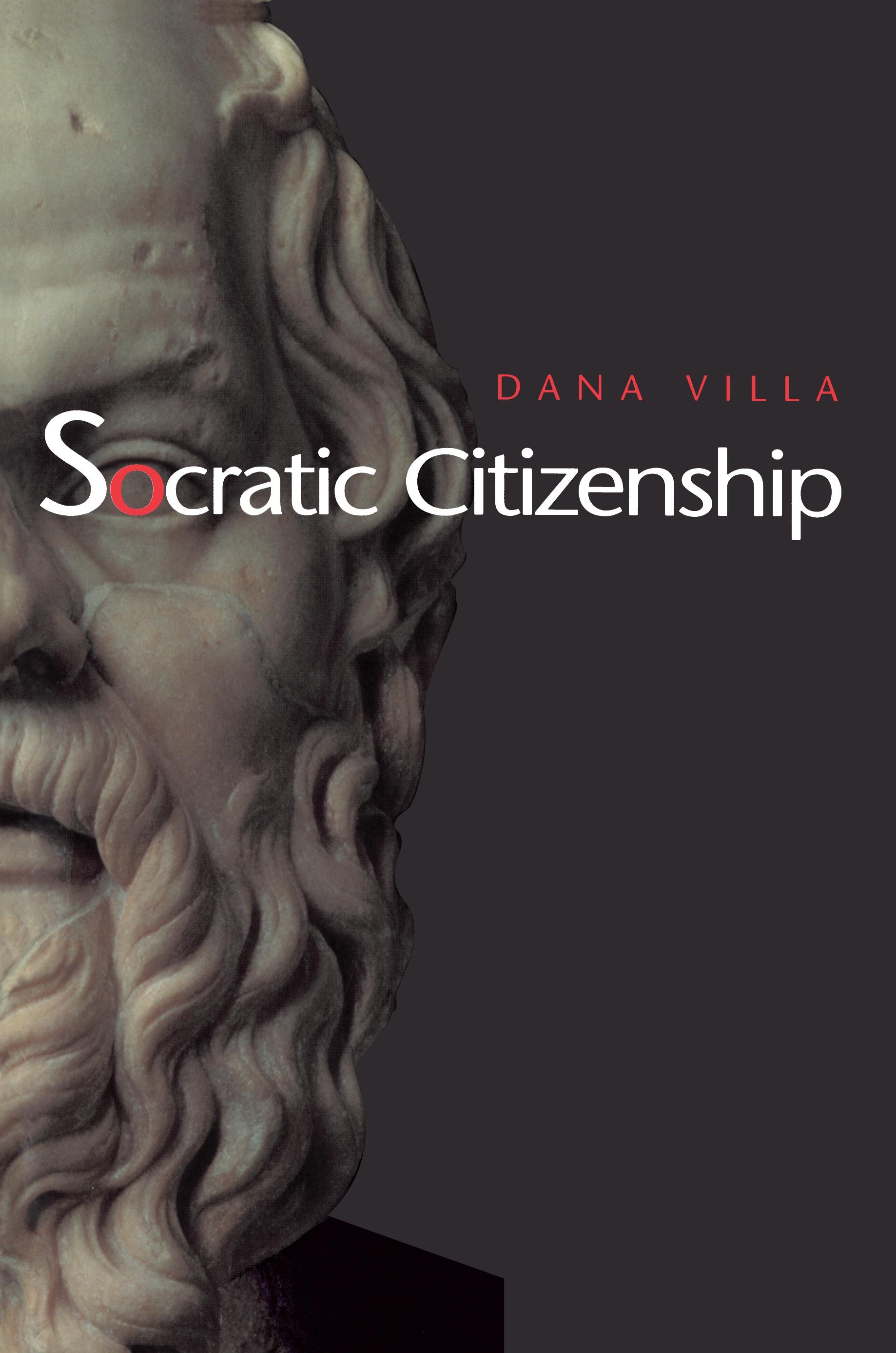
Many critics bemoan the lack of civic engagement in America. Tocqueville's ''nation of joiners'' seems to have become a nation of alienated individuals, disinclined to fulfill the obligations of citizenship or the responsibilities of self-government. In response, the critics urge community involvement and renewed education in the civic virtues. But what kind of civic engagement do we want, and what sort of citizenship should we encourage? In Socratic Citizenship, Dana Villa takes issue with those who would reduce citizenship to community involvement or to political participation for its own sake. He argues that we need to place more value on a form of conscientious, moderately alienated citizenship invented by Socrates, one that is critical in orientation and dissident in practice.
Taking Plato's Apology of Socrates as his starting point, Villa argues that Socrates was the first to show, in his words and deeds, how moral and intellectual integrity can go hand in hand, and how they can constitute importantly civic--and not just philosophical or moral--virtues. More specifically, Socrates urged that good citizens should value this sort of integrity more highly than such apparent virtues as patriotism, political participation, piety, and unwavering obedience to the law. Yet Socrates' radical redefinition of citizenship has had relatively little influence on Western political thought. Villa considers how the Socratic idea of the thinking citizen is treated by five of the most influential political thinkers of the past two centuries--John Stuart Mill, Friedrich Nietzsche, Max Weber, Hannah Arendt, and Leo Strauss. In doing so, he not only deepens our understanding of these thinkers' work and of modern ideas of citizenship, he also shows how the fragile Socratic idea of citizenship has been lost through a persistent devaluation of independent thought and action in public life.
Engaging current debates among political and social theorists, this insightful book shows how we must reconceive the idea of good citizenship if we are to begin to address the shaky fundamentals of civic culture in America today.
Before Memmo my notes were scattered across PDFs. Now a workspace pulls everything into one place — I see exactly what's still left to study.
Memmo's summaries are gold before exams. I don't have to re-read 800 pages two weeks before — just the important parts.
The AI chat has saved me the night before an exam more than once. I just keep asking until I get it — no waiting on a study group to reply.
The quizzes hit exactly what I need to know. Memmo tracks what I get stuck on — so I only practice what's worth it.
Flashcards with spaced repetition are magic. Memmo knows when I'm about to forget something and brings it back.
The AI podcasts are my favorite. I listen on my way to school and get a recap without sitting at a computer.

Handbok i kvalitativa metoder
281 kr

Hållbar utveckling: en introduktion för ingenjörer och andra problemlösare
334 kr

Brymans Samhällsvetenskapliga metoder
390 kr

Projektledning
491 kr

Den orättvisa hälsan: om socioekonomiska skillnader i hälsa och livslängd
326 kr

Vetenskapsteori för nybörjare
196 kr

Organizational Leadership
429 kr

På väg mot läraryrket
172 kr

Det sociala livet i skolan: Socialpsykologiska perspektiv
253 kr

Betygsättningens didaktik
151 kr

Personality
402 kr

Studying Leadership
404 kr

Managing Innovation
477 kr

Introduktion till samhällsvetenskaplig metod
347 kr

The Psychology of Sex and Gender
698 kr

Evidens och kunskap för socialt arbete
207 kr

Introduction to Leadership
605 kr