
Before Memmo my notes were scattered across PDFs. Now a workspace pulls everything into one place — I see exactly what's still left to study.
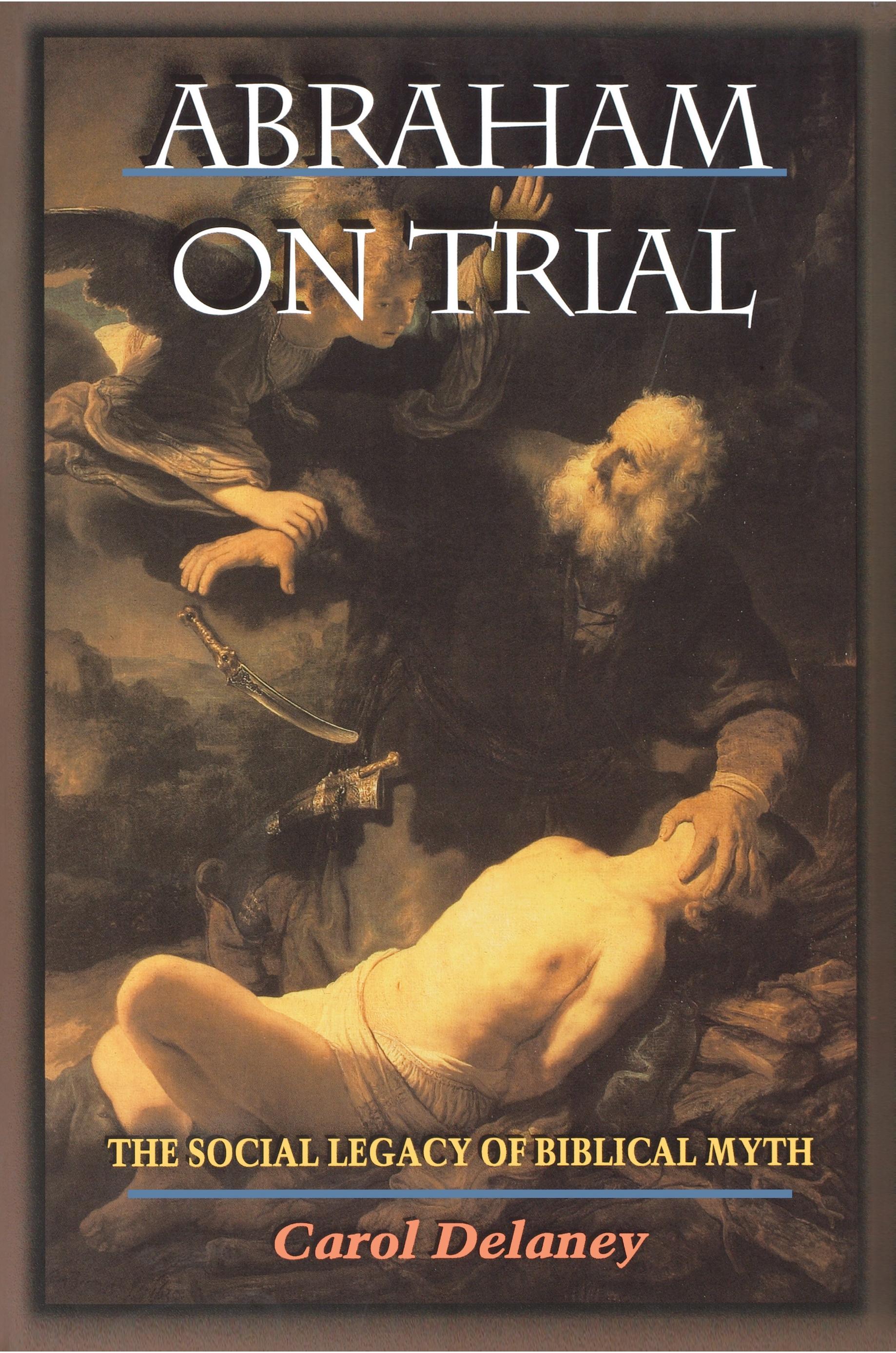
Abraham on Trial questions the foundations of faith that have made a virtue out of the willingness to sacrifice a child. Through his desire to obey God at all costs, even if it meant sacrificing his son, Abraham became the definitive model of faith for the major world religions of Judaism, Christianity, and Islam. In this bold look at the legacy of this biblical and qur'anic story, Carol Delaney explores how the sacrifice rather than the protection of children became the focus of faith, to the point where the abuse and betrayal of children has today become widespread and sometimes institutionalized. Her strikingly original analysis also offers a new perspective on what unites and divides the peoples of the sibling religions derived from Abraham and, implicitly, a way to overcome the increasing violence among them.
Delaney critically examines evidence from Jewish, Christian, and Muslim interpretations, from archaeology and Freudian theory, as well as a recent trial in which a father sacrificed his child in obedience to God's voice, and shows how the meaning of Abraham's story is bound up with a specific notion of fatherhood. The preeminence of the father (which is part of the meaning of the name Abraham) comes from the still operative theory of procreation in which men transmit life by means of their "seed," an image that encapsulates the generative, creative power that symbolically allies men with God. The communities of faith argue interminably about who is the true seed of Abraham, who can claim the patrimony, but until now, no one has asked what is this seed.
Kinship and origin myths, the cultural construction of fatherhood and motherhood, suspicions of actual child sacrifices in ancient times, and a revisiting of Freud's Oedipus complex all contribute to Delaney's remarkably rich discussion. She shows how the story of Abraham legitimates a hierarchical structure of authority, a specific form of family, definitions of gender, and the value of obedience that have become the bedrock of society. The question she leaves us with is whether we should perpetuate this story and the lessons it teaches.
Before Memmo my notes were scattered across PDFs. Now a workspace pulls everything into one place — I see exactly what's still left to study.
Memmo's summaries are gold before exams. I don't have to re-read 800 pages two weeks before — just the important parts.
The AI chat has saved me the night before an exam more than once. I just keep asking until I get it — no waiting on a study group to reply.
The quizzes hit exactly what I need to know. Memmo tracks what I get stuck on — so I only practice what's worth it.
Flashcards with spaced repetition are magic. Memmo knows when I'm about to forget something and brings it back.
The AI podcasts are my favorite. I listen on my way to school and get a recap without sitting at a computer.

Handbok i kvalitativa metoder
281 kr

Hållbar utveckling: en introduktion för ingenjörer och andra problemlösare
334 kr

Brymans Samhällsvetenskapliga metoder
390 kr

Projektledning
491 kr

Den orättvisa hälsan: om socioekonomiska skillnader i hälsa och livslängd
326 kr

Vetenskapsteori för nybörjare
196 kr

Organizational Leadership
429 kr

På väg mot läraryrket
172 kr

Det sociala livet i skolan: Socialpsykologiska perspektiv
253 kr

Betygsättningens didaktik
151 kr

Personality
402 kr

Studying Leadership
404 kr

Managing Innovation
477 kr

Introduktion till samhällsvetenskaplig metod
347 kr

The Psychology of Sex and Gender
698 kr

Evidens och kunskap för socialt arbete
207 kr

Introduction to Leadership
605 kr