
Before Memmo my notes were scattered across PDFs. Now a workspace pulls everything into one place — I see exactly what's still left to study.
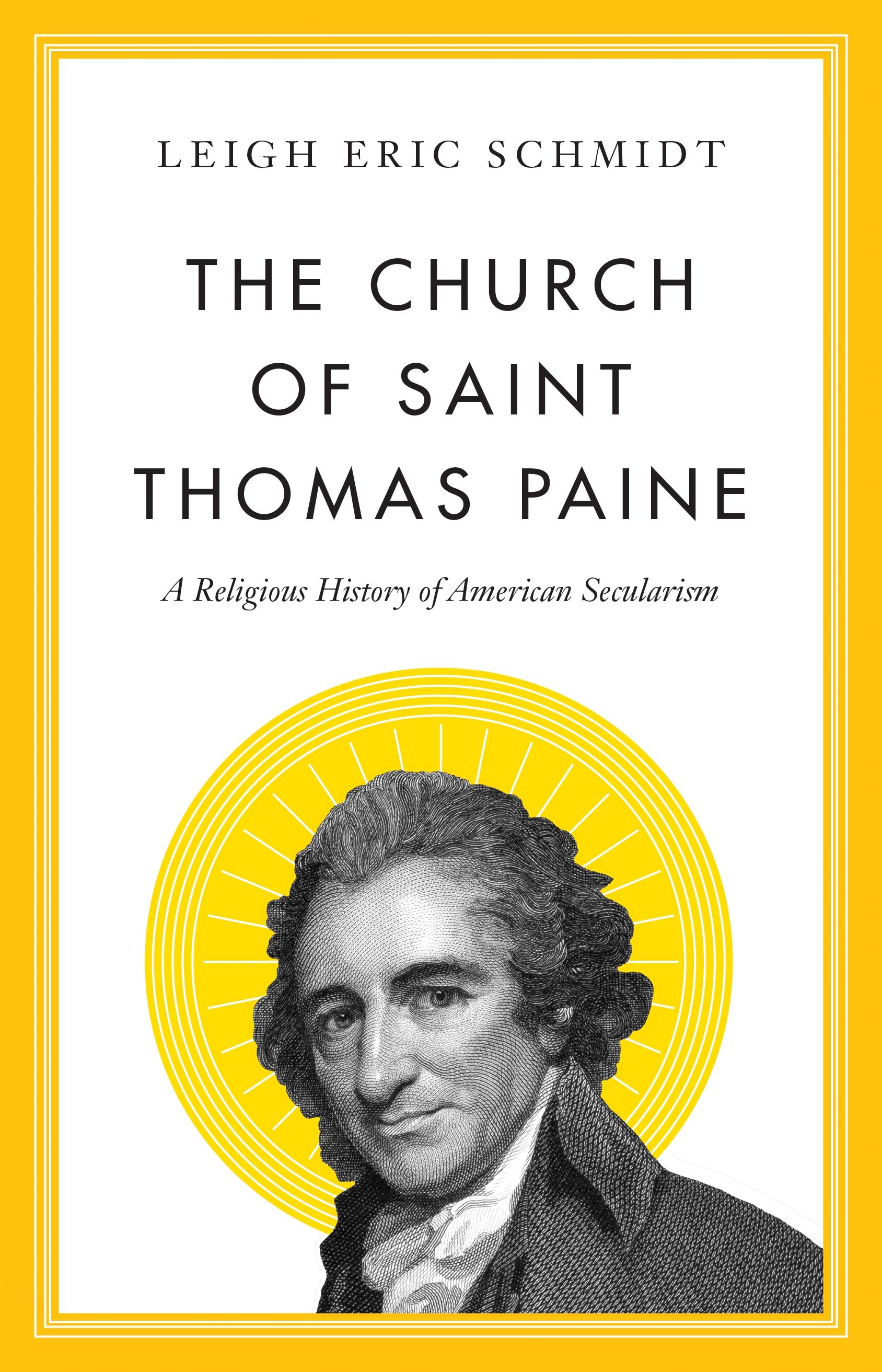
The forgotten story of the nineteenth-century freethinkers and twentieth-century humanists who tried to build their own secular religion
In The Church of Saint Thomas Paine, Leigh Eric Schmidt tells the surprising story of how freethinking liberals in nineteenth-century America promoted a secular religion of humanity centered on the deistic revolutionary Thomas Paine (1737–1809) and how their descendants eventually became embroiled in the culture wars of the late twentieth century.
After Paine’s remains were stolen from his grave in New Rochelle, New York, and shipped to England in 1819, the reverence of his American disciples took a material turn in a long search for his relics. Paine’s birthday was always a red-letter day for these believers in democratic cosmopolitanism and philanthropic benevolence, but they expanded their program to include a broader array of rites and ceremonies, particularly funerals free of Christian supervision. They also worked to establish their own churches and congregations in which to practice their religion of secularism.
All of these activities raised serious questions about the very definition of religion and whether it included nontheistic fellowships and humanistic associations—a dispute that erupted again in the second half of the twentieth century. As right-wing Christians came to see secular humanism as the most dangerous religion imaginable, small communities of religious humanists, the heirs of Paine’s followers, were swept up in new battles about religion’s public contours and secularism’s moral perils.
An engrossing account of an important but little-known chapter in American history, The Church of Saint Thomas Paine reveals why the lines between religion and secularism are often much blurrier than we imagine.
Before Memmo my notes were scattered across PDFs. Now a workspace pulls everything into one place — I see exactly what's still left to study.
Memmo's summaries are gold before exams. I don't have to re-read 800 pages two weeks before — just the important parts.
The AI chat has saved me the night before an exam more than once. I just keep asking until I get it — no waiting on a study group to reply.
The quizzes hit exactly what I need to know. Memmo tracks what I get stuck on — so I only practice what's worth it.
Flashcards with spaced repetition are magic. Memmo knows when I'm about to forget something and brings it back.
The AI podcasts are my favorite. I listen on my way to school and get a recap without sitting at a computer.

Handbok i kvalitativa metoder
281 kr

Hållbar utveckling: en introduktion för ingenjörer och andra problemlösare
334 kr

Brymans Samhällsvetenskapliga metoder
390 kr

Projektledning
491 kr

Den orättvisa hälsan: om socioekonomiska skillnader i hälsa och livslängd
326 kr

Vetenskapsteori för nybörjare
196 kr

Organizational Leadership
429 kr

På väg mot läraryrket
172 kr

Det sociala livet i skolan: Socialpsykologiska perspektiv
253 kr

Betygsättningens didaktik
151 kr

Personality
402 kr

Studying Leadership
404 kr

Managing Innovation
477 kr

Introduktion till samhällsvetenskaplig metod
347 kr

The Psychology of Sex and Gender
698 kr

Evidens och kunskap för socialt arbete
207 kr

Introduction to Leadership
605 kr