
Before Memmo my notes were scattered across PDFs. Now a workspace pulls everything into one place — I see exactly what's still left to study.
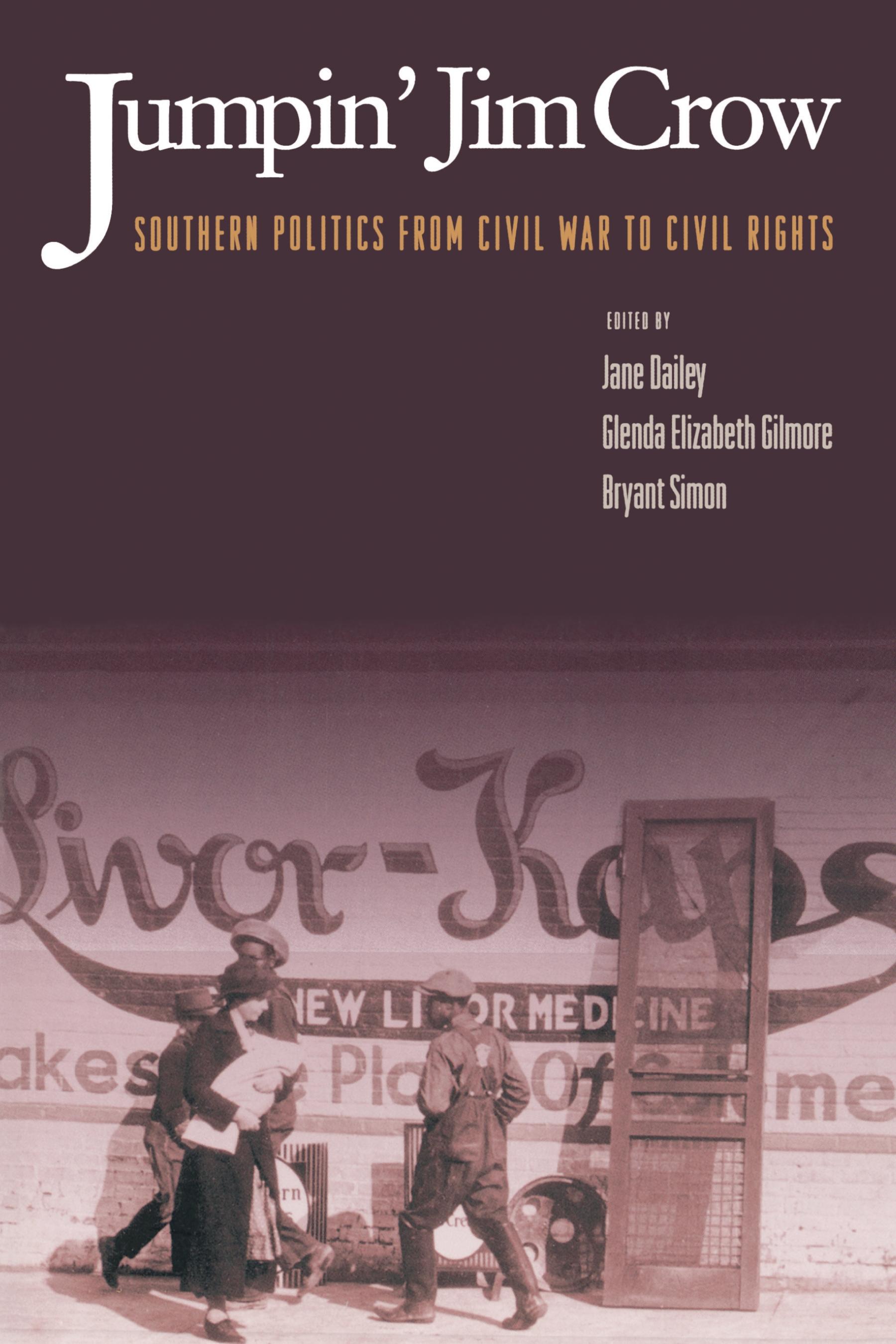
White supremacy shaped all aspects of post-Civil War southern life, yet its power was never complete or total. The form of segregation and subjection nicknamed Jim Crow constantly had to remake itself over time even as white southern politicians struggled to extend its grip. Here, some of the most innovative scholars of southern history question Jim Crow's sway, evolution, and methods over the course of a century. These essays bring to life the southern men and women--some heroic and decent, others mean and sinister, most a mixture of both--who supported and challenged Jim Crow, showing that white supremacy always had to prove its power.
Jim Crow was always in motion, always adjusting to meet resistance and defiance by both African Americans and whites. Sometimes white supremacists responded with increased ferocity, sometimes with more subtle political and legal ploys. Jumpin' Jim Crow presents a clear picture of this complex negotiation. For example, even as some black and white women launched the strongest attacks on the system, other white women nurtured myths glorifying white supremacy. Even as elite whites blamed racial violence on poor whites, they used Jim Crow to dominate poor whites as well as blacks. Most important, the book portrays change over time, suggesting that Strom Thurmond is not a simple reincarnation of Ben Tillman and that Rosa Parks was not the first black woman to say no to Jim Crow.
From a study of the segregation of household consumption to a fresh look at critical elections, from an examination of an unlikely antilynching campaign to an analysis of how miscegenation laws tried to sexualize black political power, these essays about specific southern times and places exemplify the latest trends in historical research. Its rich, accessible content makes Jumpin' Jim Crow an ideal undergraduate reader on American history, while its methodological innovations will be emulated by scholars of political history generally. In addition to the editors, the contributors are Edward L. Ayers, Elsa Barkley Brown, W. Fitzhugh Brundage, Laura F. Edwards, Kari Frederickson, David F. Godshalk, Grace Elizabeth Hale, Jacquelyn Dowd Hall, Stephen Kantrowitz, Nancy MacLean, Nell Irwin Painter, and Timothy B. Tyson.
Before Memmo my notes were scattered across PDFs. Now a workspace pulls everything into one place — I see exactly what's still left to study.
Memmo's summaries are gold before exams. I don't have to re-read 800 pages two weeks before — just the important parts.
The AI chat has saved me the night before an exam more than once. I just keep asking until I get it — no waiting on a study group to reply.
The quizzes hit exactly what I need to know. Memmo tracks what I get stuck on — so I only practice what's worth it.
Flashcards with spaced repetition are magic. Memmo knows when I'm about to forget something and brings it back.
The AI podcasts are my favorite. I listen on my way to school and get a recap without sitting at a computer.

Handbok i kvalitativa metoder
281 kr

Hållbar utveckling: en introduktion för ingenjörer och andra problemlösare
334 kr

Brymans Samhällsvetenskapliga metoder
390 kr

Projektledning
491 kr

Den orättvisa hälsan: om socioekonomiska skillnader i hälsa och livslängd
326 kr

Organizational Leadership
429 kr

Vetenskapsteori för nybörjare
196 kr

På väg mot läraryrket
172 kr

Det sociala livet i skolan: Socialpsykologiska perspektiv
253 kr

Betygsättningens didaktik
151 kr

Personality
402 kr

Studying Leadership
404 kr

Managing Innovation
477 kr

Introduktion till samhällsvetenskaplig metod
347 kr

The Psychology of Sex and Gender
698 kr

Evidens och kunskap för socialt arbete
207 kr

Introduction to Leadership
605 kr