
Before Memmo my notes were scattered across PDFs. Now a workspace pulls everything into one place — I see exactly what's still left to study.
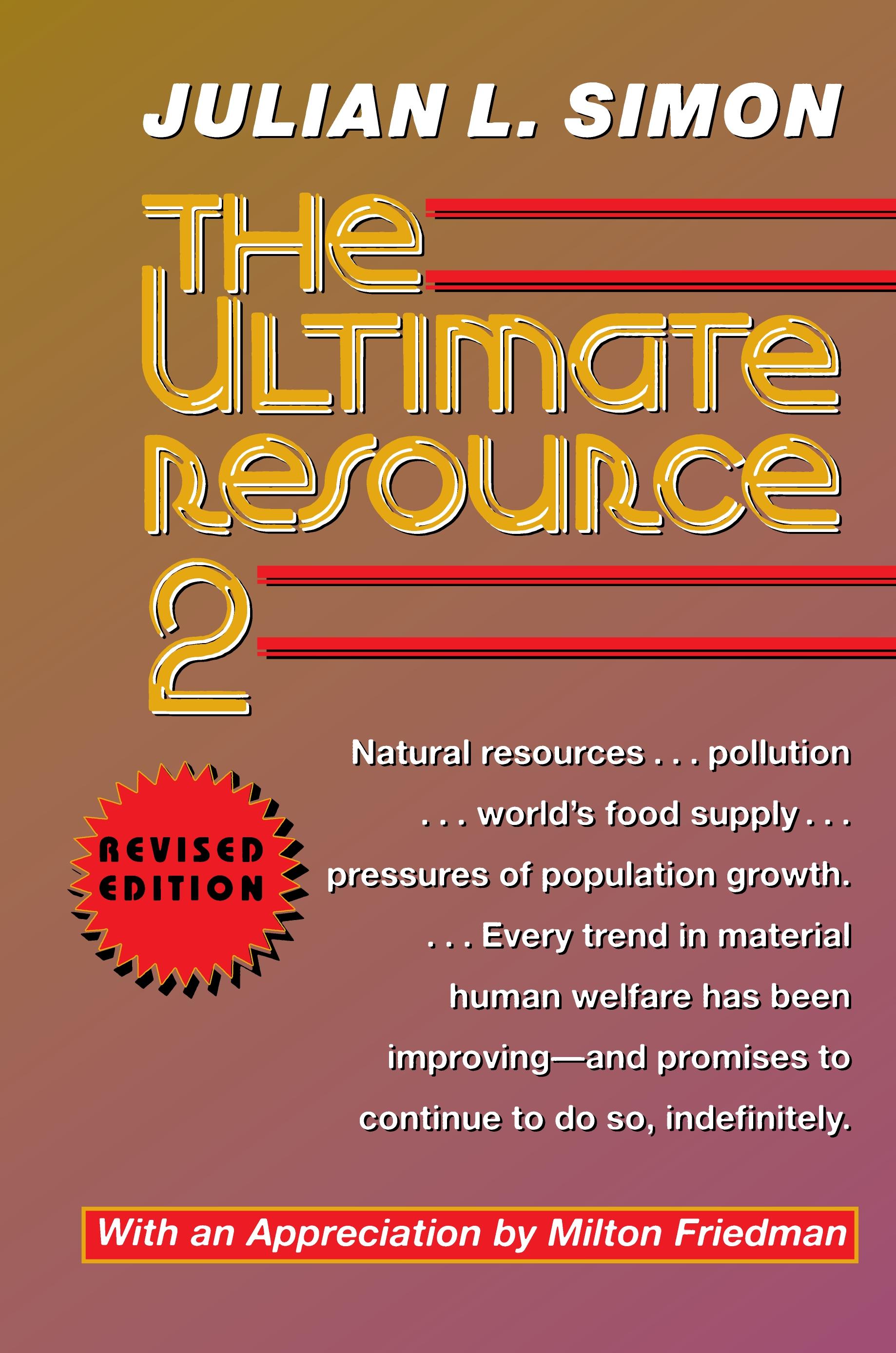
Arguing that the ultimate resource is the human imagination coupled to the human spirit, Julian Simon led a vigorous challenge to conventional beliefs about scarcity of energy and natural resources, pollution of the environment, the effects of immigration, and the "perils of overpopulation." The comprehensive data, careful quantitative research, and economic logic contained in the first edition of The Ultimate Resource questioned widely held professional judgments about the threat of overpopulation, and Simon's celebrated bet with Paul Ehrlich about resource prices in the 1980s enhanced the public attention--both pro and con--that greeted this controversial book.
Now Princeton University Press presents a revised and expanded edition of The Ultimate Resource. The new volume is thoroughly updated and provides a concise theory for the observed trends: Population growth and increased income put pressure on supplies of resources. This increases prices, which provides opportunity and incentive for innovation. Eventually the innovative responses are so successful that prices end up below what they were before the shortages occurred. The book also tackles timely issues such as the supposed rate of species extinction, the "vanishing farmland crisis," and the wastefulness of coercive recycling.
In Simon's view, the key factor in natural and world economic growth is our capacity for the creation of new ideas and contributions to knowledge. The more people alive who can be trained to help solve the problems that confront us, the faster we can remove obstacles, and the greater the economic inheritance we shall bequeath to our descendants. In conjunction with the size of the educated population, the key constraint on human progress is the nature of the economic-political system: talented people need economic freedom and security to bring their talents to fruition.
Before Memmo my notes were scattered across PDFs. Now a workspace pulls everything into one place — I see exactly what's still left to study.
Memmo's summaries are gold before exams. I don't have to re-read 800 pages two weeks before — just the important parts.
The AI chat has saved me the night before an exam more than once. I just keep asking until I get it — no waiting on a study group to reply.
The quizzes hit exactly what I need to know. Memmo tracks what I get stuck on — so I only practice what's worth it.
Flashcards with spaced repetition are magic. Memmo knows when I'm about to forget something and brings it back.
The AI podcasts are my favorite. I listen on my way to school and get a recap without sitting at a computer.

Handbok i kvalitativa metoder
281 kr

Hållbar utveckling: en introduktion för ingenjörer och andra problemlösare
334 kr

Brymans Samhällsvetenskapliga metoder
390 kr

Projektledning
491 kr

Den orättvisa hälsan: om socioekonomiska skillnader i hälsa och livslängd
326 kr

Organizational Leadership
429 kr

Vetenskapsteori för nybörjare
196 kr

På väg mot läraryrket
172 kr

Det sociala livet i skolan: Socialpsykologiska perspektiv
253 kr

Betygsättningens didaktik
151 kr

Personality
402 kr

Studying Leadership
404 kr

Managing Innovation
477 kr

Introduktion till samhällsvetenskaplig metod
347 kr

The Psychology of Sex and Gender
698 kr

Evidens och kunskap för socialt arbete
207 kr

Introduction to Leadership
605 kr