
Before Memmo my notes were scattered across PDFs. Now a workspace pulls everything into one place — I see exactly what's still left to study.
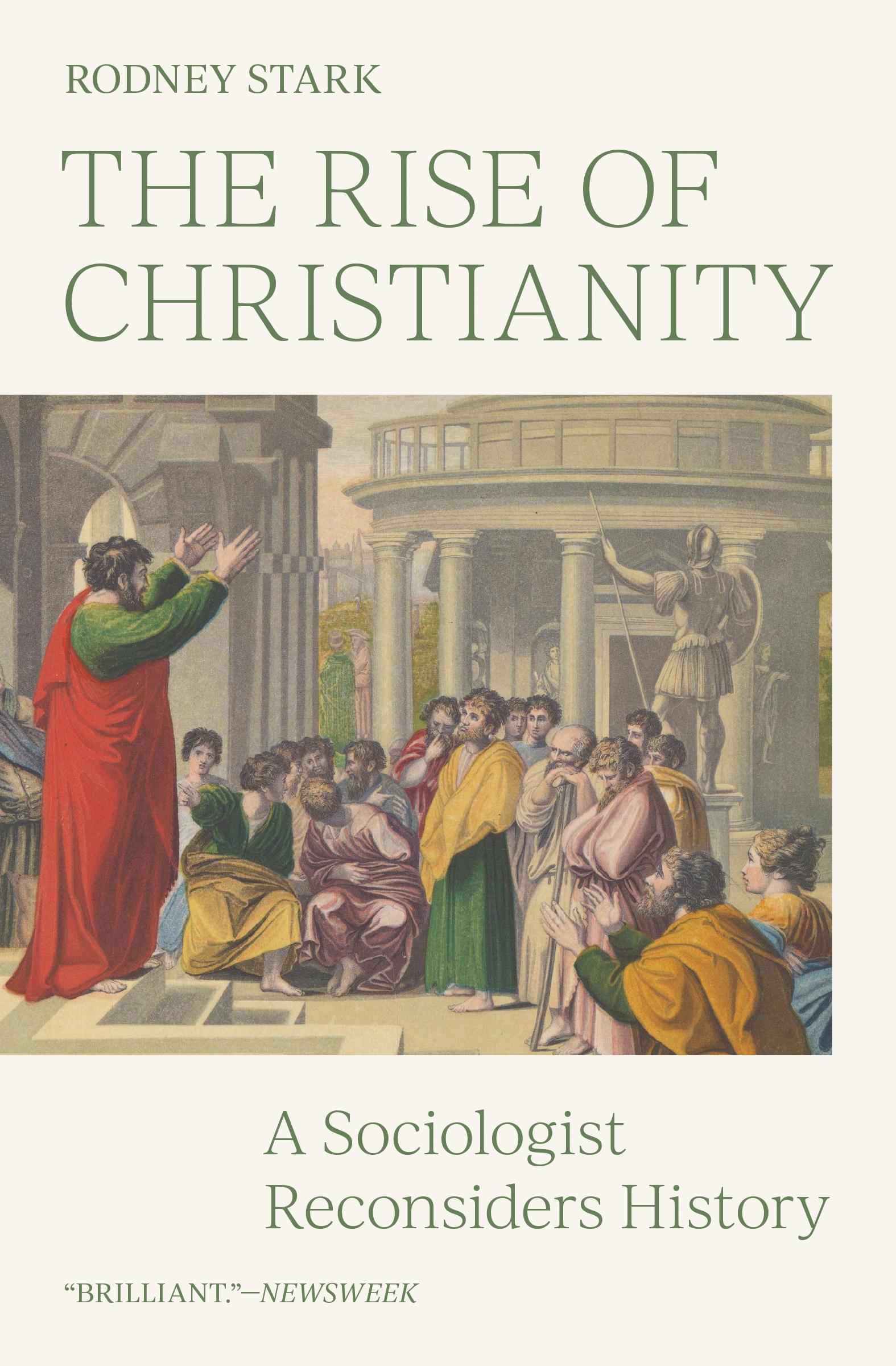
A landmark reinterpretation of why Christianity became the dominant faith of the West
The idea that Christianity started as a clandestine movement among the poor is a widely accepted notion. Yet it is one of many myths that must be discarded if we are to understand just how a tiny messianic movement on the edge of the Roman Empire became the dominant faith of Western civilization. In a fast-paced, highly readable book that addresses beliefs as well as historical facts, Rodney Stark brings a sociologist's perspective to bear on the puzzle behind the success of early Christianity. He comes equipped not only with the logic and methods of social science but also with insights gathered firsthand into why people convert and how new religious groups recruit members. He digs deep into the historical evidence on many issues—such as the social background of converts, the mission to the Jews, the status of women in the church, the role of martyrdom—to provide a vivid and unconventional account of early Christianity.
The author plots the most plausible curve of Christian growth from the year 40 to 300. By the time of Constantine, Christianity had become a considerable force, with growth patterns very similar to those of modern-day successful religious movements. An unusual number of Christian converts, for example, came from the educated, cosmopolitan classes. Because it offered a new perspective on familiar concepts and was not linked to ethnicity, Christianity had a large following among persons seeking to assimilate into the dominant culture, mainly Hellenized Jews. The oversupply of women in Christian communities—due partly to the respect and protection they received—led to intermarriages with pagans, hence more conversions, and to a high fertility rate. Stark points out, too, the role played by selflessness and faith. Amidst the epidemics, fires, and other disasters that beleaguered Greco-Roman cities, Christian communities were a stronghold of mutual aid, which resulted in a survival rate far greater than that of the pagans. In the meantime, voluntary martyrdom, especially a generation after the death of Christ, reinforced the commitment of the Christian rank and file. What Stark ultimately offers is a multifaceted portrait of early Christianity, one that appeals to practical reasoning, historical curiosity, and personal reflection.
Before Memmo my notes were scattered across PDFs. Now a workspace pulls everything into one place — I see exactly what's still left to study.
Memmo's summaries are gold before exams. I don't have to re-read 800 pages two weeks before — just the important parts.
The AI chat has saved me the night before an exam more than once. I just keep asking until I get it — no waiting on a study group to reply.
The quizzes hit exactly what I need to know. Memmo tracks what I get stuck on — so I only practice what's worth it.
Flashcards with spaced repetition are magic. Memmo knows when I'm about to forget something and brings it back.
The AI podcasts are my favorite. I listen on my way to school and get a recap without sitting at a computer.

Handbok i kvalitativa metoder
281 kr

Hållbar utveckling: en introduktion för ingenjörer och andra problemlösare
334 kr

Brymans Samhällsvetenskapliga metoder
390 kr

Projektledning
491 kr

Den orättvisa hälsan: om socioekonomiska skillnader i hälsa och livslängd
326 kr

Vetenskapsteori för nybörjare
196 kr

Organizational Leadership
429 kr

På väg mot läraryrket
172 kr

Det sociala livet i skolan: Socialpsykologiska perspektiv
253 kr

Betygsättningens didaktik
151 kr

Personality
402 kr

Studying Leadership
404 kr

Managing Innovation
477 kr

Introduktion till samhällsvetenskaplig metod
347 kr

The Psychology of Sex and Gender
698 kr

Evidens och kunskap för socialt arbete
207 kr

Introduction to Leadership
605 kr