
Before Memmo my notes were scattered across PDFs. Now a workspace pulls everything into one place — I see exactly what's still left to study.
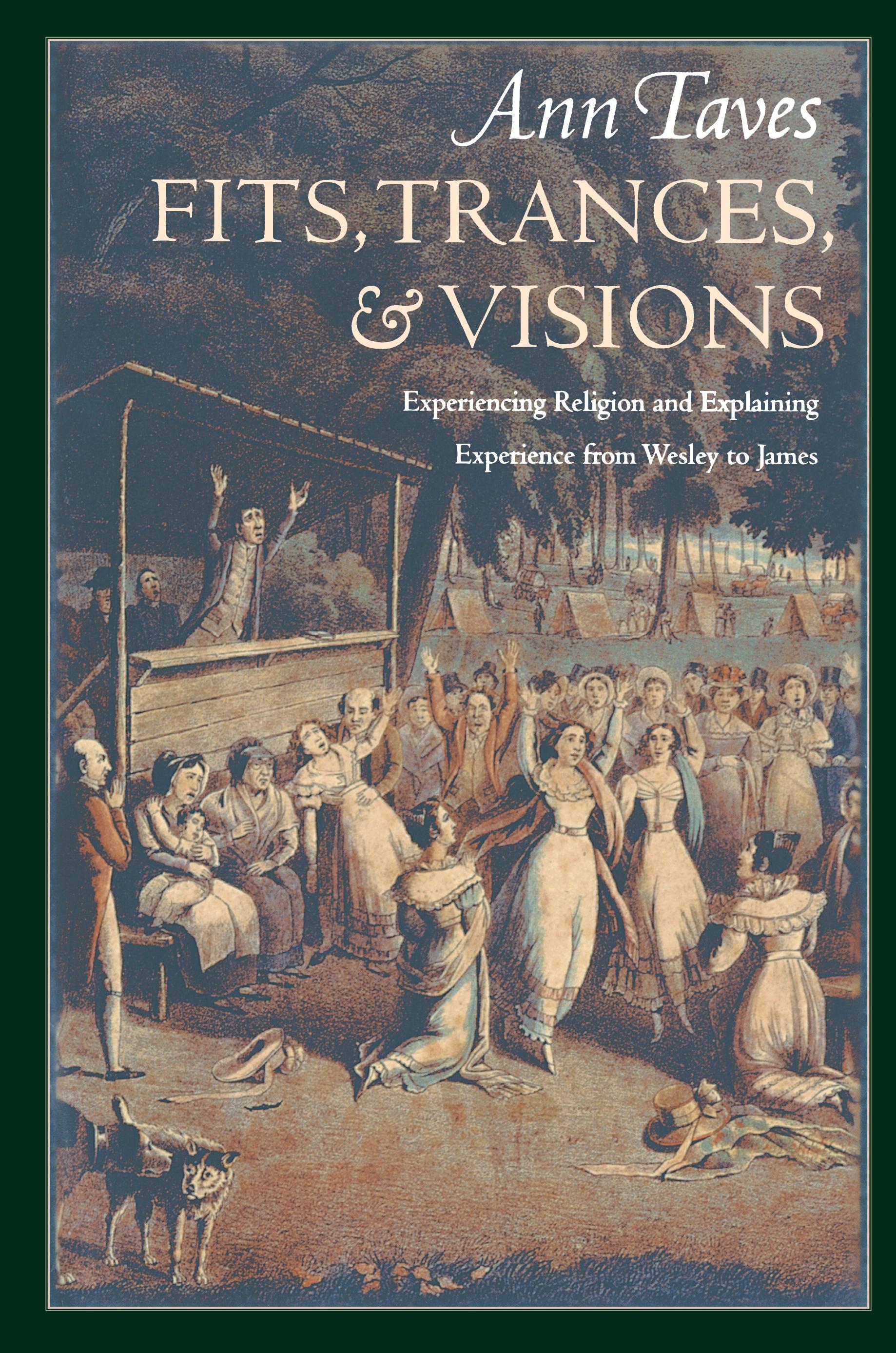
Fits, trances, visions, speaking in tongues, clairvoyance, out-of-body experiences, possession. Believers have long viewed these and similar involuntary experiences as religious--as manifestations of God, the spirits, or the Christ within. Skeptics, on the other hand, have understood them as symptoms of physical disease, mental disorder, group dynamics, or other natural causes. In this sweeping work of religious and psychological history, Ann Taves explores the myriad ways in which believers and detractors interpreted these complex experiences in Anglo-American culture between the mid-eighteenth and early-twentieth centuries.
Taves divides the book into three sections. In the first, ranging from 1740 to 1820, she examines the debate over trances, visions, and other involuntary experiences against the politically charged backdrop of Anglo-American evangelicalism, established churches, Enlightenment thought, and a legacy of religious warfare. In the second part, covering 1820 to 1890, she highlights the interplay between popular psychology--particularly the ideas of "animal magnetism" and mesmerism--and movements in popular religion: the disestablishment of churches, the decline of Calvinist orthodoxy, the expansion of Methodism, and the birth of new religious movements. In the third section, Taves traces the emergence of professional psychology between 1890 and 1910 and explores the implications of new ideas about the subconscious mind, hypnosis, hysteria, and dissociation for the understanding of religious experience.
Throughout, Taves follows evolving debates about whether fits, trances, and visions are natural (and therefore not religious) or supernatural (and therefore religious). She pays particular attention to a third interpretation, proposed by such "mediators" as William James, according to which these experiences are natural and religious. Taves shows that ordinary people as well as educated elites debated the meaning of these experiences and reveals the importance of interactions between popular and elite culture in accounting for how people experienced religion and explained experience.
Combining rich detail with clear and rigorous argument, this is a major contribution to our understanding of Protestant revivalism and the historical interplay between religion and psychology.
Before Memmo my notes were scattered across PDFs. Now a workspace pulls everything into one place — I see exactly what's still left to study.
Memmo's summaries are gold before exams. I don't have to re-read 800 pages two weeks before — just the important parts.
The AI chat has saved me the night before an exam more than once. I just keep asking until I get it — no waiting on a study group to reply.
The quizzes hit exactly what I need to know. Memmo tracks what I get stuck on — so I only practice what's worth it.
Flashcards with spaced repetition are magic. Memmo knows when I'm about to forget something and brings it back.
The AI podcasts are my favorite. I listen on my way to school and get a recap without sitting at a computer.

Handbok i kvalitativa metoder
281 kr

Hållbar utveckling: en introduktion för ingenjörer och andra problemlösare
334 kr

Brymans Samhällsvetenskapliga metoder
390 kr

Projektledning
491 kr

Den orättvisa hälsan: om socioekonomiska skillnader i hälsa och livslängd
326 kr

Organizational Leadership
429 kr

Vetenskapsteori för nybörjare
196 kr

På väg mot läraryrket
172 kr

Det sociala livet i skolan: Socialpsykologiska perspektiv
253 kr

Betygsättningens didaktik
151 kr

Personality
402 kr

Studying Leadership
404 kr

Managing Innovation
477 kr

Introduktion till samhällsvetenskaplig metod
347 kr

The Psychology of Sex and Gender
698 kr

Evidens och kunskap för socialt arbete
207 kr

Introduction to Leadership
605 kr