
Before Memmo my notes were scattered across PDFs. Now a workspace pulls everything into one place — I see exactly what's still left to study.
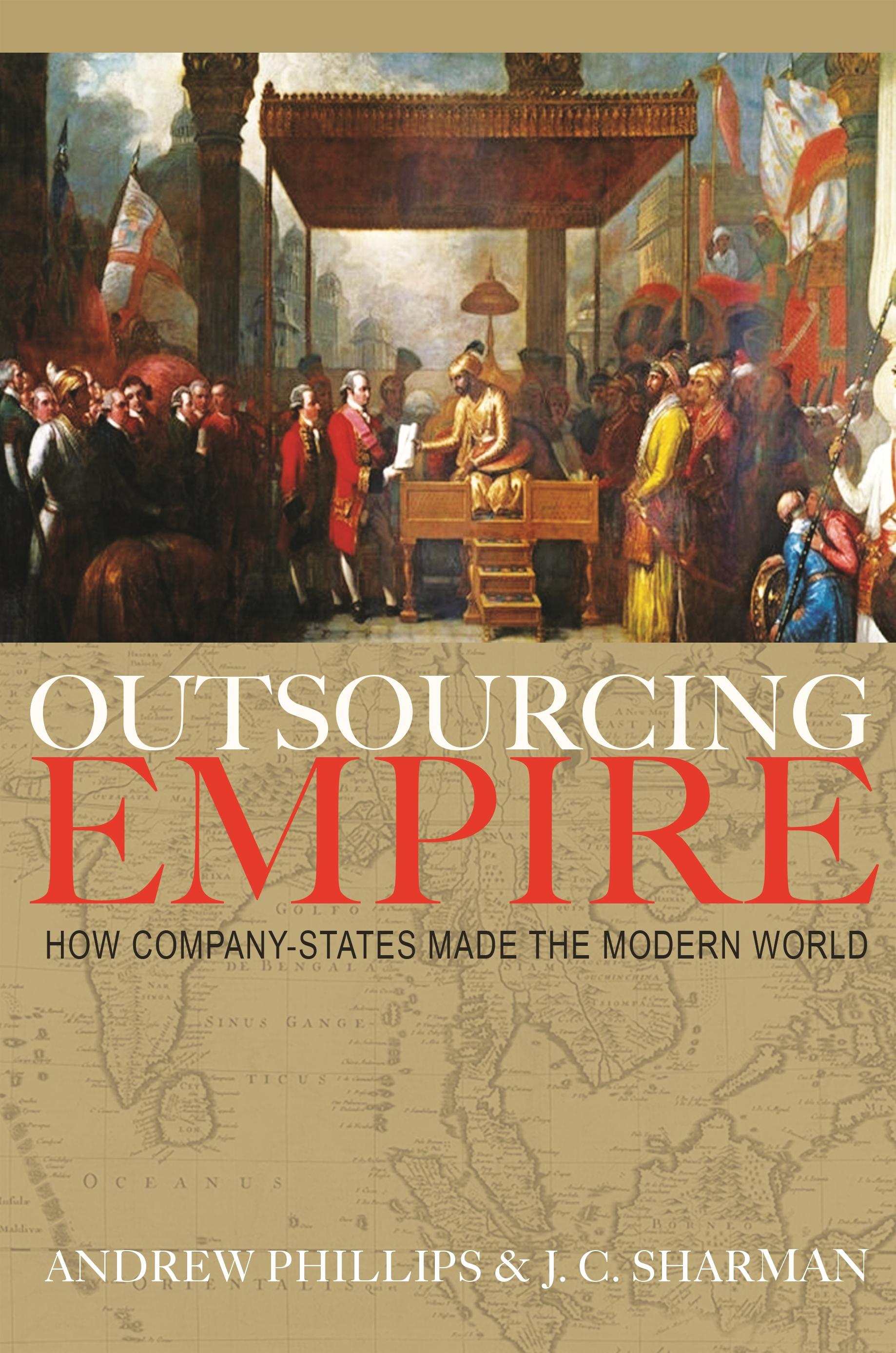
How chartered company-states spearheaded European expansion and helped create the world’s first genuinely global order
From Spanish conquistadors to British colonialists, the prevailing story of European empire-building has focused on the rival ambitions of competing states. But as Outsourcing Empire shows, from the seventeenth to the twentieth centuries, company-states—not sovereign states—drove European expansion, building the world’s first genuinely international system. Company-states were hybrid ventures: pioneering multinational trading firms run for profit, with founding charters that granted them sovereign powers of war, peace, and rule. Those like the English and Dutch East India Companies carved out corporate empires in Asia, while other company-states pushed forward European expansion through North America, Africa, and the South Pacific. In this comparative exploration, Andrew Phillips and J. C. Sharman explain the rise and fall of company-states, why some succeeded while others failed, and their role as vanguards of capitalism and imperialism.
In dealing with alien civilizations to the East and West, Europeans relied primarily on company-states to mediate geographic and cultural distances in trade and diplomacy. Emerging as improvised solutions to bridge the gap between European rulers’ expansive geopolitical ambitions and their scarce means, company-states succeeded best where they could balance the twin imperatives of power and profit. Yet as European states strengthened from the late eighteenth century onward, and a sense of separate public and private spheres grew, the company-states lost their usefulness and legitimacy.
Bringing a fresh understanding to the ways cross-cultural relations were handled across the oceans, Outsourcing Empire examines the significance of company-states as key progenitors of the globalized world.
Before Memmo my notes were scattered across PDFs. Now a workspace pulls everything into one place — I see exactly what's still left to study.
Memmo's summaries are gold before exams. I don't have to re-read 800 pages two weeks before — just the important parts.
The AI chat has saved me the night before an exam more than once. I just keep asking until I get it — no waiting on a study group to reply.
The quizzes hit exactly what I need to know. Memmo tracks what I get stuck on — so I only practice what's worth it.
Flashcards with spaced repetition are magic. Memmo knows when I'm about to forget something and brings it back.
The AI podcasts are my favorite. I listen on my way to school and get a recap without sitting at a computer.

Handbok i kvalitativa metoder
281 kr

Hållbar utveckling: en introduktion för ingenjörer och andra problemlösare
334 kr

Brymans Samhällsvetenskapliga metoder
390 kr

Projektledning
491 kr

Den orättvisa hälsan: om socioekonomiska skillnader i hälsa och livslängd
326 kr

Organizational Leadership
429 kr

Vetenskapsteori för nybörjare
196 kr

På väg mot läraryrket
172 kr

Det sociala livet i skolan: Socialpsykologiska perspektiv
253 kr

Betygsättningens didaktik
151 kr

Personality
402 kr

Studying Leadership
404 kr

Managing Innovation
477 kr

Introduktion till samhällsvetenskaplig metod
347 kr

The Psychology of Sex and Gender
698 kr

Evidens och kunskap för socialt arbete
207 kr

Introduction to Leadership
605 kr