
Before Memmo my notes were scattered across PDFs. Now a workspace pulls everything into one place — I see exactly what's still left to study.
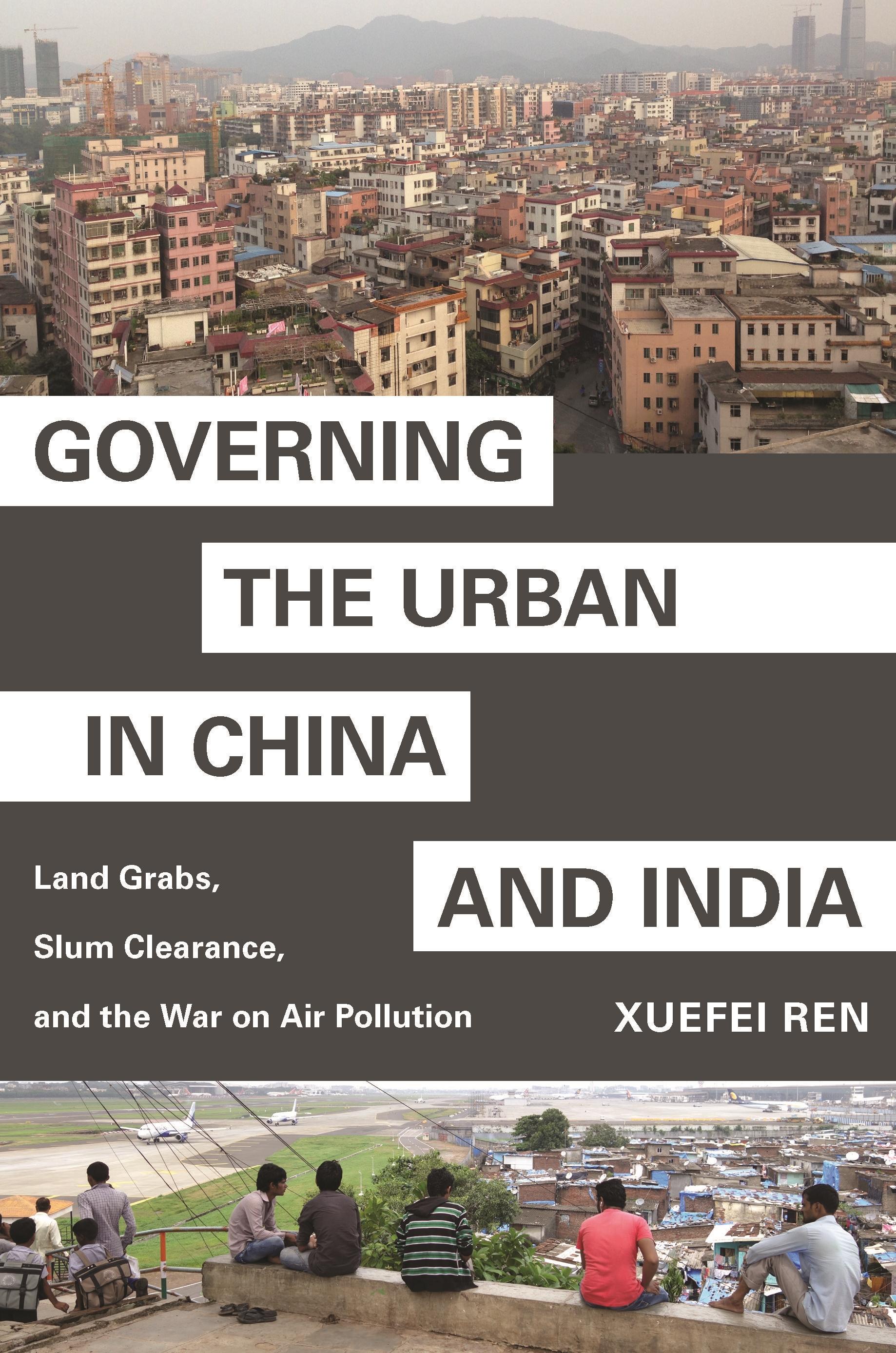
An in-depth look at the distinctly different ways that China and India govern their cities and how this impacts their residents
Urbanization is rapidly overtaking China and India, the two most populous countries in the world. One-sixth of humanity now lives in either a Chinese or Indian city. This transformation has unleashed enormous pressures on land use, housing, and the environment. Despite the stakes, the workings of urban governance in China and India remain obscure and poorly understood.
In this book, Xuefei Ren explores how China and India govern their cities and how their different styles of governance produce inequality and exclusion. Drawing upon historical-comparative analyses and extensive fieldwork (in Beijing, Guangzhou, Wukan, Delhi, Mumbai, and Kolkata), Ren investigates the ways that Chinese and Indian cities manage land acquisition, slum clearance, and air pollution. She discovers that the two countries address these issues through radically different approaches. In China, urban governance centers on territorial institutions, such as hukou and the cadre evaluation system. In India, urban governance centers on associational politics, encompassing contingent alliances formed among state actors, the private sector, and civil society groups. Ren traces the origins of territorial and associational forms of governance to late imperial China and precolonial India. She then shows how these forms have evolved to shape urban growth and residents’ struggles today.
As the number of urban residents in China and India reaches beyond a billion, Governing the Urban in China and India makes clear that the development of cities in these two nations will have profound consequences well beyond their borders.
Before Memmo my notes were scattered across PDFs. Now a workspace pulls everything into one place — I see exactly what's still left to study.
Memmo's summaries are gold before exams. I don't have to re-read 800 pages two weeks before — just the important parts.
The AI chat has saved me the night before an exam more than once. I just keep asking until I get it — no waiting on a study group to reply.
The quizzes hit exactly what I need to know. Memmo tracks what I get stuck on — so I only practice what's worth it.
Flashcards with spaced repetition are magic. Memmo knows when I'm about to forget something and brings it back.
The AI podcasts are my favorite. I listen on my way to school and get a recap without sitting at a computer.

Handbok i kvalitativa metoder
281 kr

Hållbar utveckling: en introduktion för ingenjörer och andra problemlösare
334 kr

Brymans Samhällsvetenskapliga metoder
390 kr

Projektledning
491 kr

Den orättvisa hälsan: om socioekonomiska skillnader i hälsa och livslängd
326 kr

Vetenskapsteori för nybörjare
196 kr

Organizational Leadership
429 kr

På väg mot läraryrket
172 kr

Det sociala livet i skolan: Socialpsykologiska perspektiv
253 kr

Betygsättningens didaktik
151 kr

Personality
402 kr

Studying Leadership
404 kr

Managing Innovation
477 kr

Introduktion till samhällsvetenskaplig metod
347 kr

The Psychology of Sex and Gender
698 kr

Evidens och kunskap för socialt arbete
207 kr

Introduction to Leadership
605 kr