
Before Memmo my notes were scattered across PDFs. Now a workspace pulls everything into one place — I see exactly what's still left to study.
"One of the most important books on political regimes written in a generation."—Steven Levitsky, New York Times–bestselling author of How Democracies Die
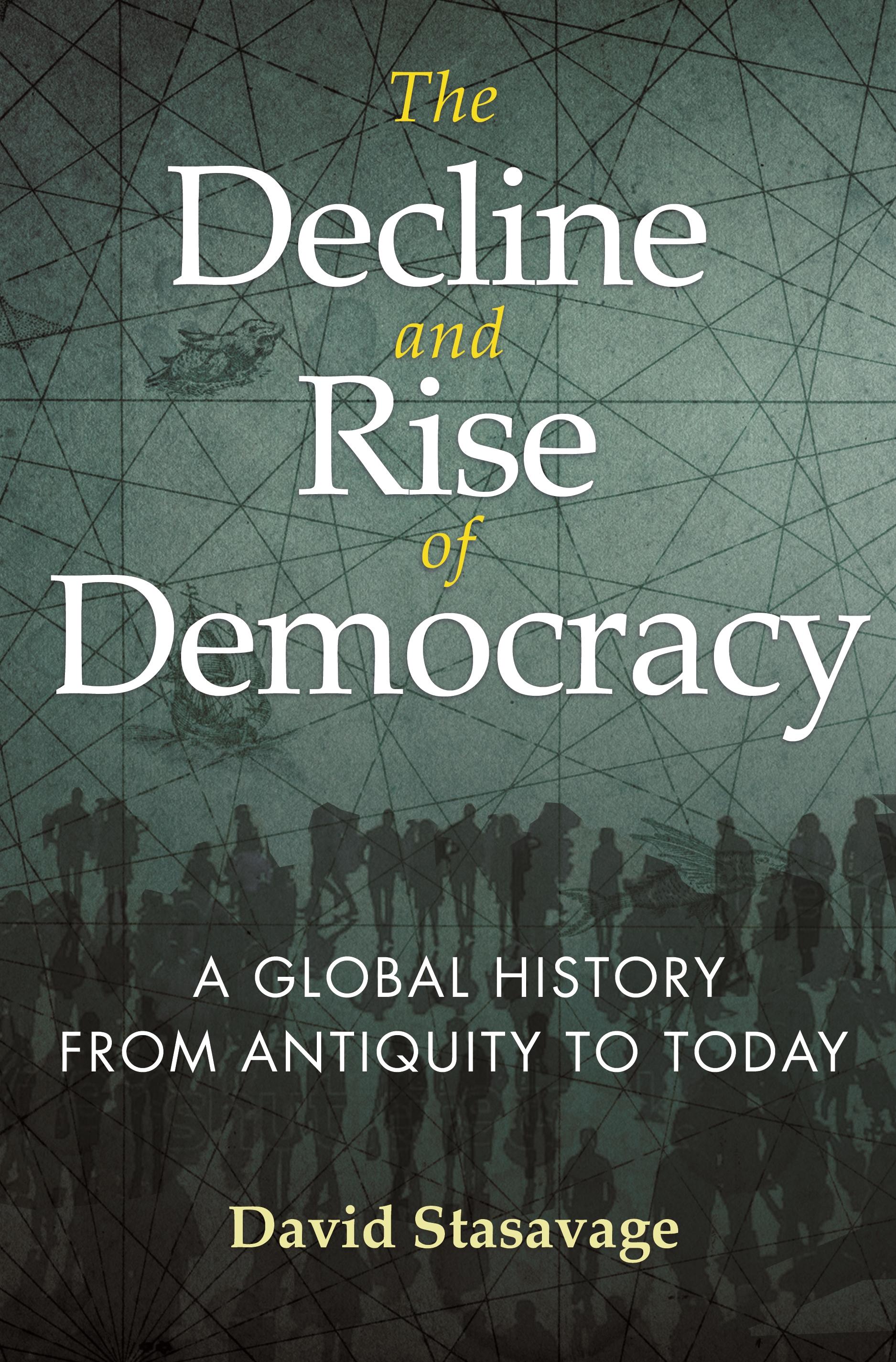
A new understanding of how and why early democracy took hold, how modern democracy evolved, and what this history teaches us about the future
Historical accounts of democracy’s rise tend to focus on ancient Greece and pre-Renaissance Europe. The Decline and Rise of Democracy draws from global evidence to show that the story is much richer—democratic practices were present in many places, at many other times, from the Americas before European conquest, to ancient Mesopotamia, to precolonial Africa. Delving into the prevalence of early democracy throughout the world, David Stasavage makes the case that understanding how and where these democracies flourished—and when and why they declined—can provide crucial information not just about the history of governance, but also about the ways modern democracies work and where they could manifest in the future.
Drawing from examples spanning several millennia, Stasavage first considers why states developed either democratic or autocratic styles of governance and argues that early democracy tended to develop in small places with a weak state and, counterintuitively, simple technologies. When central state institutions (such as a tax bureaucracy) were absent—as in medieval Europe—rulers needed consent from their populace to govern. When central institutions were strong—as in China or the Middle East—consent was less necessary and autocracy more likely. He then explores the transition from early to modern democracy, which first took shape in England and then the United States, illustrating that modern democracy arose as an effort to combine popular control with a strong state over a large territory. Democracy has been an experiment that has unfolded over time and across the world—and its transformation is ongoing.
Amidst rising democratic anxieties, The Decline and Rise of Democracy widens the historical lens on the growth of political institutions and offers surprising lessons for all who care about governance.
Before Memmo my notes were scattered across PDFs. Now a workspace pulls everything into one place — I see exactly what's still left to study.
Memmo's summaries are gold before exams. I don't have to re-read 800 pages two weeks before — just the important parts.
The AI chat has saved me the night before an exam more than once. I just keep asking until I get it — no waiting on a study group to reply.
The quizzes hit exactly what I need to know. Memmo tracks what I get stuck on — so I only practice what's worth it.
Flashcards with spaced repetition are magic. Memmo knows when I'm about to forget something and brings it back.
The AI podcasts are my favorite. I listen on my way to school and get a recap without sitting at a computer.

Handbok i kvalitativa metoder
281 kr

Hållbar utveckling: en introduktion för ingenjörer och andra problemlösare
334 kr

Brymans Samhällsvetenskapliga metoder
390 kr

Projektledning
491 kr

Den orättvisa hälsan: om socioekonomiska skillnader i hälsa och livslängd
326 kr

Vetenskapsteori för nybörjare
196 kr

Organizational Leadership
429 kr

På väg mot läraryrket
172 kr

Det sociala livet i skolan: Socialpsykologiska perspektiv
253 kr

Betygsättningens didaktik
151 kr

Personality
402 kr

Studying Leadership
404 kr

Managing Innovation
477 kr

Introduktion till samhällsvetenskaplig metod
347 kr

The Psychology of Sex and Gender
698 kr

Evidens och kunskap för socialt arbete
207 kr

Introduction to Leadership
605 kr