
Before Memmo my notes were scattered across PDFs. Now a workspace pulls everything into one place — I see exactly what's still left to study.
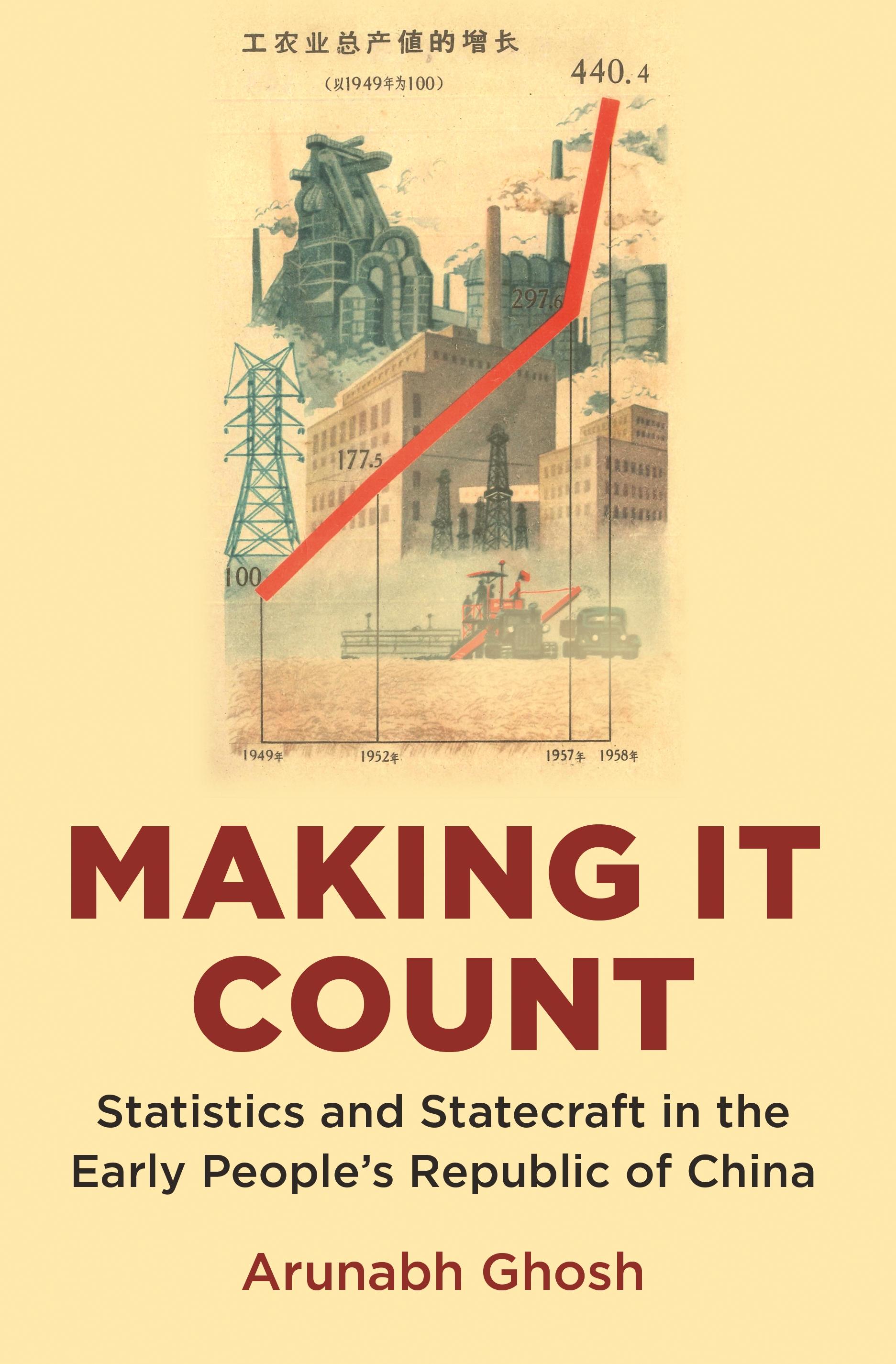
A history of how Chinese officials used statistics to define a new society in the early years of the People’s Republic of China
In 1949, at the end of a long period of wars, one of the biggest challenges facing leaders of the new People’s Republic of China was how much they did not know. The government of one of the world’s largest nations was committed to fundamentally reengineering its society and economy via socialist planning while having almost no reliable statistical data about their own country. Making It Count is the history of efforts to resolve this “crisis in counting.” Drawing on a wealth of sources culled from China, India, and the United States, Arunabh Ghosh explores the choices made by political leaders, statisticians, academics, statistical workers, and even literary figures in attempts to know the nation through numbers.
Ghosh shows that early reliance on Soviet-inspired methods of exhaustive enumeration became increasingly untenable in China by the mid-1950s. Unprecedented and unexpected exchanges with Indian statisticians followed, as the Chinese sought to learn about the then-exciting new technology of random sampling. These developments were overtaken by the tumult of the Great Leap Forward (1958–61), when probabilistic and exhaustive methods were rejected and statistics was refashioned into an ethnographic enterprise. By acknowledging Soviet and Indian influences, Ghosh not only revises existing models of Cold War science but also globalizes wider developments in the history of statistics and data.
Anchored in debates about statistics and its relationship to state building, Making It Count offers fresh perspectives on China’s transition to socialism.
Before Memmo my notes were scattered across PDFs. Now a workspace pulls everything into one place — I see exactly what's still left to study.
Memmo's summaries are gold before exams. I don't have to re-read 800 pages two weeks before — just the important parts.
The AI chat has saved me the night before an exam more than once. I just keep asking until I get it — no waiting on a study group to reply.
The quizzes hit exactly what I need to know. Memmo tracks what I get stuck on — so I only practice what's worth it.
Flashcards with spaced repetition are magic. Memmo knows when I'm about to forget something and brings it back.
The AI podcasts are my favorite. I listen on my way to school and get a recap without sitting at a computer.

Handbok i kvalitativa metoder
281 kr

Hållbar utveckling: en introduktion för ingenjörer och andra problemlösare
334 kr

Brymans Samhällsvetenskapliga metoder
390 kr

Projektledning
491 kr

Den orättvisa hälsan: om socioekonomiska skillnader i hälsa och livslängd
326 kr

Vetenskapsteori för nybörjare
196 kr

Organizational Leadership
429 kr

På väg mot läraryrket
172 kr

Det sociala livet i skolan: Socialpsykologiska perspektiv
253 kr

Betygsättningens didaktik
151 kr

Personality
402 kr

Studying Leadership
404 kr

Managing Innovation
477 kr

Introduktion till samhällsvetenskaplig metod
347 kr

The Psychology of Sex and Gender
698 kr

Evidens och kunskap för socialt arbete
207 kr

Introduction to Leadership
605 kr