
Before Memmo my notes were scattered across PDFs. Now a workspace pulls everything into one place — I see exactly what's still left to study.
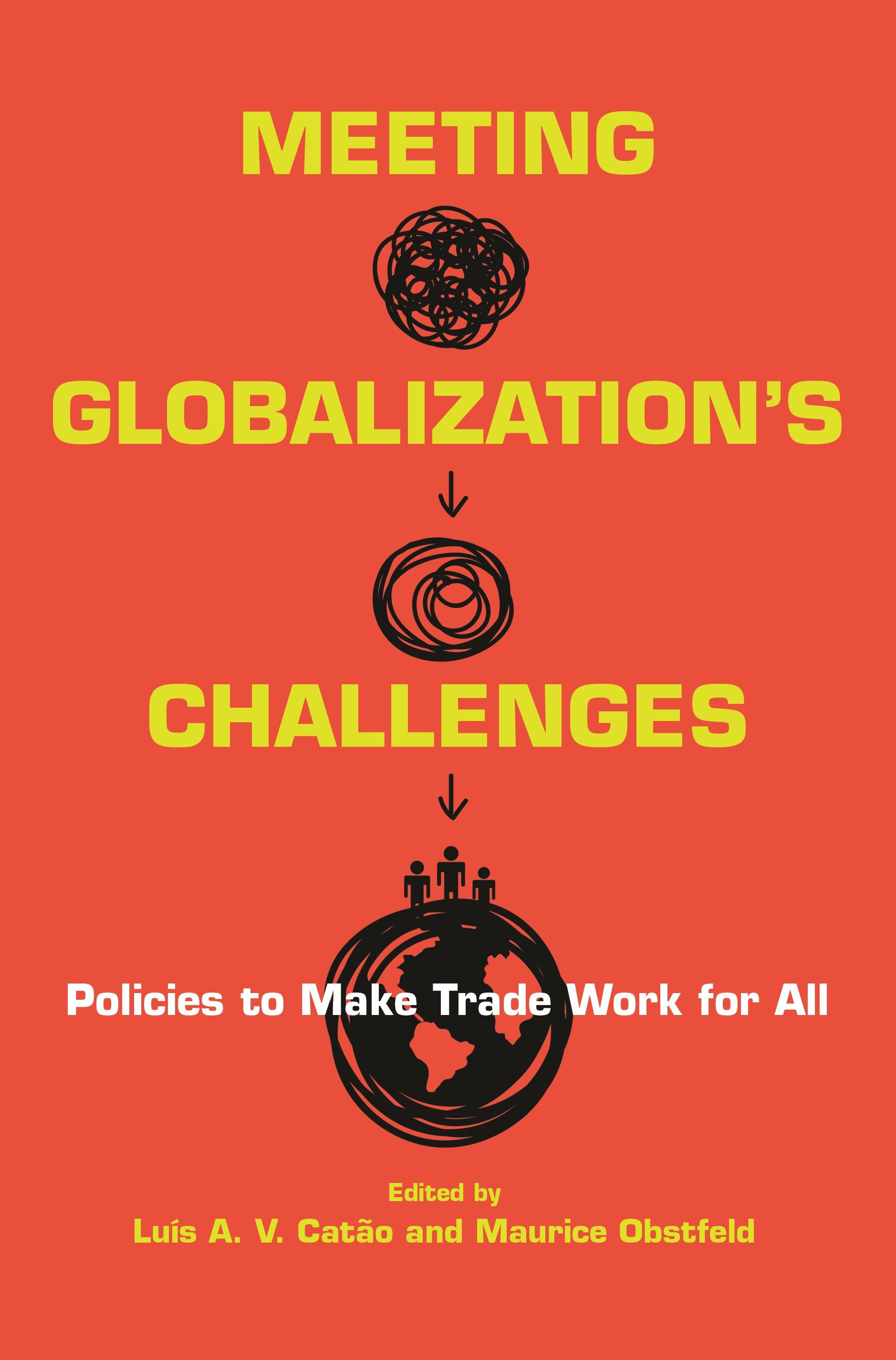
Leading economists propose solutions to the problems of globalization
Globalization has expanded economic opportunities throughout the world, but it has also left many people feeling dispossessed, disenfranchised, and angry. Luís Catão and Maurice Obstfeld bring together some of today's top economists to assess the benefits, costs, and daunting policy challenges of globalization. This timely and accessible book combines incisive analyses of the anatomy of globalization with innovative and practical policy ideas that can help to make it work better for everyone.
Meeting Globalization's Challenges draws on new research to examine the channels through which international trade and the diffusion of technology have enhanced the wealth of nations while also producing unequal benefits within and across countries. The book provides needed perspectives on the complex interplay of trade, deindustrialization, inequality, and the troubling surge of nationalism and populism—perspectives that are essential for crafting sound economic policies. It tackles the vexing issue of how to most effectively compensate globalization's losers and reintegrate them into job markets. The book also explores how to design social insurance policies that can mitigate the risks posed by automation and offshoring, such as mass unemployment and its inherent dangers to democracy.
With a foreword by International Monetary Fund Managing Director Christine Lagarde and a history-rich synthesis by Catão and Obstfeld of main policy takeaways, Meeting Globalization's Challenges features contributions by Ufuk Akcigit, Edward Alden, François Bourguignon, Angus Deaton, Rafael Dix-Carneiro, Jeffry Frieden, Gordon H. Hanson, Keyu Jin, Lori G. Kletzer, Anne Krueger, Paul Krugman, Nina Pavcnik, Andrés Rodríguez-Clare, Dani Rodrik, Michael Trebilcock, Laura D. Tyson, Martin Wolf, and Ernesto Zedillo.
Before Memmo my notes were scattered across PDFs. Now a workspace pulls everything into one place — I see exactly what's still left to study.
Memmo's summaries are gold before exams. I don't have to re-read 800 pages two weeks before — just the important parts.
The AI chat has saved me the night before an exam more than once. I just keep asking until I get it — no waiting on a study group to reply.
The quizzes hit exactly what I need to know. Memmo tracks what I get stuck on — so I only practice what's worth it.
Flashcards with spaced repetition are magic. Memmo knows when I'm about to forget something and brings it back.
The AI podcasts are my favorite. I listen on my way to school and get a recap without sitting at a computer.

Handbok i kvalitativa metoder
281 kr

Hållbar utveckling: en introduktion för ingenjörer och andra problemlösare
334 kr

Brymans Samhällsvetenskapliga metoder
390 kr

Projektledning
491 kr

Den orättvisa hälsan: om socioekonomiska skillnader i hälsa och livslängd
326 kr

Vetenskapsteori för nybörjare
196 kr

Organizational Leadership
429 kr

På väg mot läraryrket
172 kr

Det sociala livet i skolan: Socialpsykologiska perspektiv
253 kr

Betygsättningens didaktik
151 kr

Personality
402 kr

Studying Leadership
404 kr

Managing Innovation
477 kr

Introduktion till samhällsvetenskaplig metod
347 kr

The Psychology of Sex and Gender
698 kr

Evidens och kunskap för socialt arbete
207 kr

Introduction to Leadership
605 kr