
Before Memmo my notes were scattered across PDFs. Now a workspace pulls everything into one place — I see exactly what's still left to study.
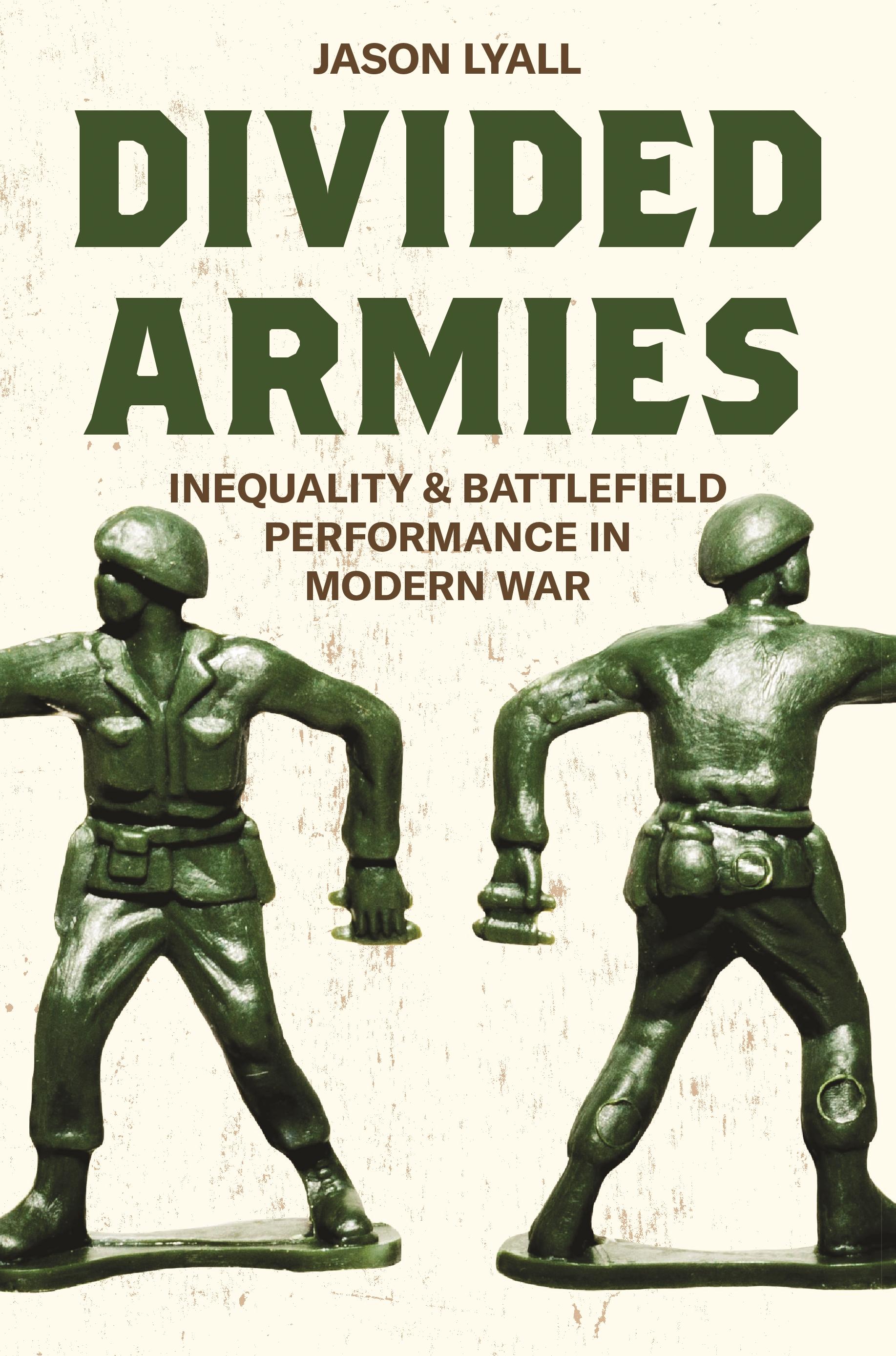
How do armies fight and what makes them victorious on the modern battlefield? In Divided Armies, Jason Lyall challenges long-standing answers to this classic question by linking the fate of armies to their levels of inequality. Introducing the concept of military inequality, Lyall demonstrates how a state's prewar choices about the citizenship status of ethnic groups within its population determine subsequent battlefield performance. Treating certain ethnic groups as second-class citizens, either by subjecting them to state-sanctioned discrimination or, worse, violence, undermines interethnic trust, fuels grievances, and leads victimized soldiers to subvert military authorities once war begins. The higher an army's inequality, Lyall finds, the greater its rates of desertion, side-switching, casualties, and use of coercion to force soldiers to fight.
In a sweeping historical investigation, Lyall draws on Project Mars, a new dataset of 250 conventional wars fought since 1800, to test this argument. Project Mars breaks with prior efforts by including overlooked non-Western wars while cataloguing new patterns of inequality and wartime conduct across hundreds of belligerents. Combining historical comparisons and statistical analysis, Lyall also marshals evidence from nine wars, ranging from the Eastern Fronts of World Wars I and II to less familiar wars in Africa and Central Asia, to illustrate inequality's effects.
Sounding the alarm on the dangers of inequality for battlefield performance, Divided Armies offers important lessons about warfare over the past two centuries—and for wars still to come.
Before Memmo my notes were scattered across PDFs. Now a workspace pulls everything into one place — I see exactly what's still left to study.
Memmo's summaries are gold before exams. I don't have to re-read 800 pages two weeks before — just the important parts.
The AI chat has saved me the night before an exam more than once. I just keep asking until I get it — no waiting on a study group to reply.
The quizzes hit exactly what I need to know. Memmo tracks what I get stuck on — so I only practice what's worth it.
Flashcards with spaced repetition are magic. Memmo knows when I'm about to forget something and brings it back.
The AI podcasts are my favorite. I listen on my way to school and get a recap without sitting at a computer.

Handbok i kvalitativa metoder
281 kr

Hållbar utveckling: en introduktion för ingenjörer och andra problemlösare
334 kr

Brymans Samhällsvetenskapliga metoder
390 kr

Projektledning
491 kr

Den orättvisa hälsan: om socioekonomiska skillnader i hälsa och livslängd
326 kr

Organizational Leadership
429 kr

Vetenskapsteori för nybörjare
196 kr

På väg mot läraryrket
172 kr

Det sociala livet i skolan: Socialpsykologiska perspektiv
253 kr

Betygsättningens didaktik
151 kr

Personality
402 kr

Studying Leadership
404 kr

Managing Innovation
477 kr

Introduktion till samhällsvetenskaplig metod
347 kr

The Psychology of Sex and Gender
698 kr

Evidens och kunskap för socialt arbete
207 kr

Introduction to Leadership
605 kr