
Before Memmo my notes were scattered across PDFs. Now a workspace pulls everything into one place — I see exactly what's still left to study.
"Made me look at the industrial revolution, invention, sleeping beauties, contexts and the forces that shape our societies differently."—David Byrne, New York Times Book Review
How the history of technological revolutions can help us better understand economic and political polarization in the age of automation
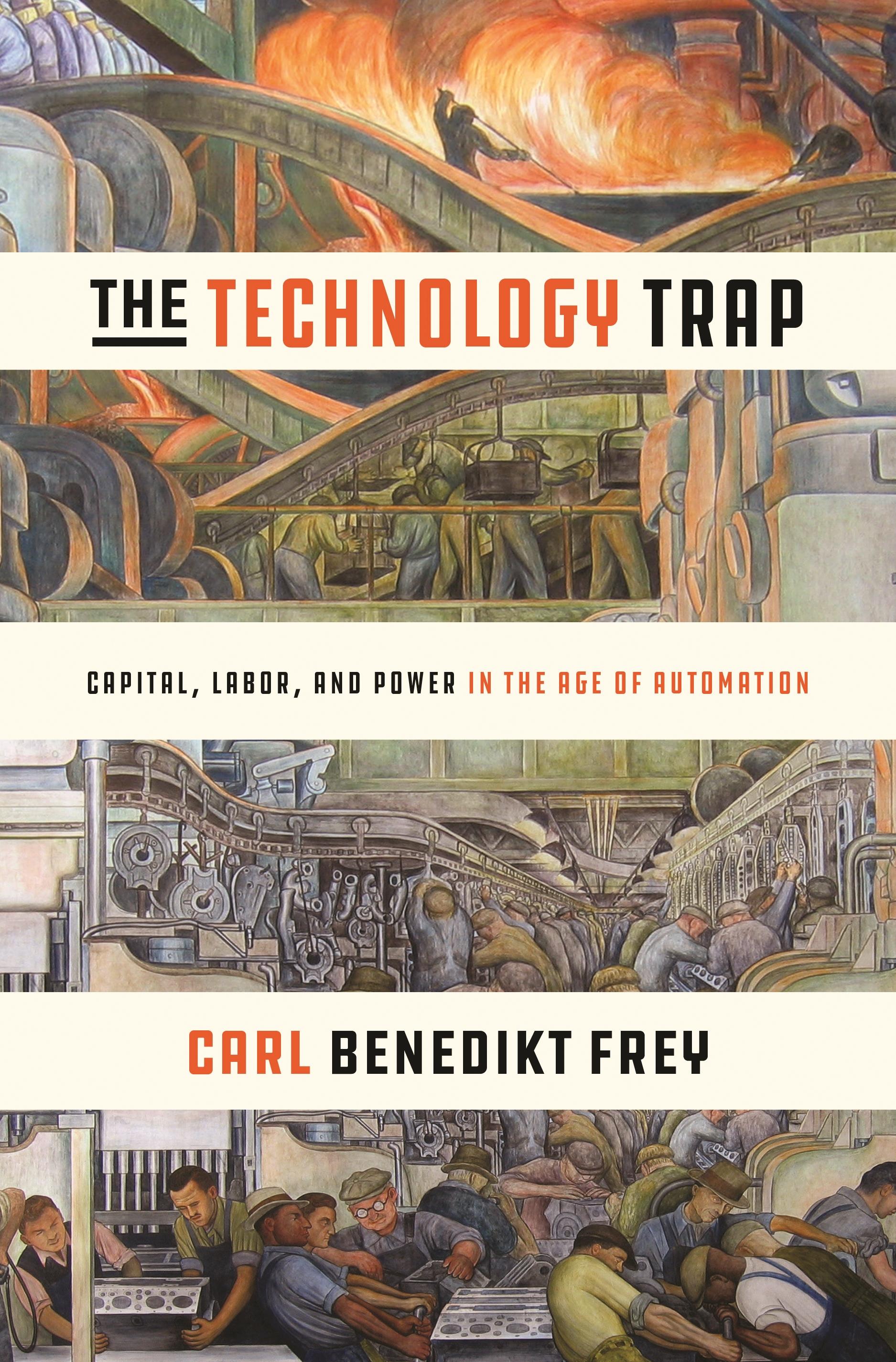
From the Industrial Revolution to the age of artificial intelligence, The Technology Trap takes a sweeping look at the history of technological progress and how it has radically shifted the distribution of economic and political power among society’s members. As Carl Benedikt Frey shows, the Industrial Revolution created unprecedented wealth and prosperity over the long run, but the immediate consequences of mechanization were devastating for large swaths of the population. Middle-income jobs withered, wages stagnated, the labor share of income fell, profits surged, and economic inequality skyrocketed. These trends, Frey documents, broadly mirror those in our current age of automation, which began with the Computer Revolution.
Just as the Industrial Revolution eventually brought about extraordinary benefits for society, artificial intelligence systems have the potential to do the same. But Frey argues that this depends on how the short term is managed. In the nineteenth century, workers violently expressed their concerns over machines taking their jobs. The Luddite uprisings joined a long wave of machinery riots that swept across Europe and China. Today’s despairing middle class has not resorted to physical force, but their frustration has led to rising populism and the increasing fragmentation of society. As middle-class jobs continue to come under pressure, there’s no assurance that positive attitudes to technology will persist.
The Industrial Revolution was a defining moment in history, but few grasped its enormous consequences at the time. The Technology Trap demonstrates that in the midst of another technological revolution, the lessons of the past can help us to more effectively face the present.
Before Memmo my notes were scattered across PDFs. Now a workspace pulls everything into one place — I see exactly what's still left to study.
Memmo's summaries are gold before exams. I don't have to re-read 800 pages two weeks before — just the important parts.
The AI chat has saved me the night before an exam more than once. I just keep asking until I get it — no waiting on a study group to reply.
The quizzes hit exactly what I need to know. Memmo tracks what I get stuck on — so I only practice what's worth it.
Flashcards with spaced repetition are magic. Memmo knows when I'm about to forget something and brings it back.
The AI podcasts are my favorite. I listen on my way to school and get a recap without sitting at a computer.

Handbok i kvalitativa metoder
281 kr

Hållbar utveckling: en introduktion för ingenjörer och andra problemlösare
334 kr

Brymans Samhällsvetenskapliga metoder
390 kr

Projektledning
491 kr

Den orättvisa hälsan: om socioekonomiska skillnader i hälsa och livslängd
326 kr

Vetenskapsteori för nybörjare
196 kr

Organizational Leadership
429 kr

På väg mot läraryrket
172 kr

Det sociala livet i skolan: Socialpsykologiska perspektiv
253 kr

Betygsättningens didaktik
151 kr

Personality
402 kr

Studying Leadership
404 kr

Managing Innovation
477 kr

Introduktion till samhällsvetenskaplig metod
347 kr

The Psychology of Sex and Gender
698 kr

Evidens och kunskap för socialt arbete
207 kr

Introduction to Leadership
605 kr