
Before Memmo my notes were scattered across PDFs. Now a workspace pulls everything into one place — I see exactly what's still left to study.
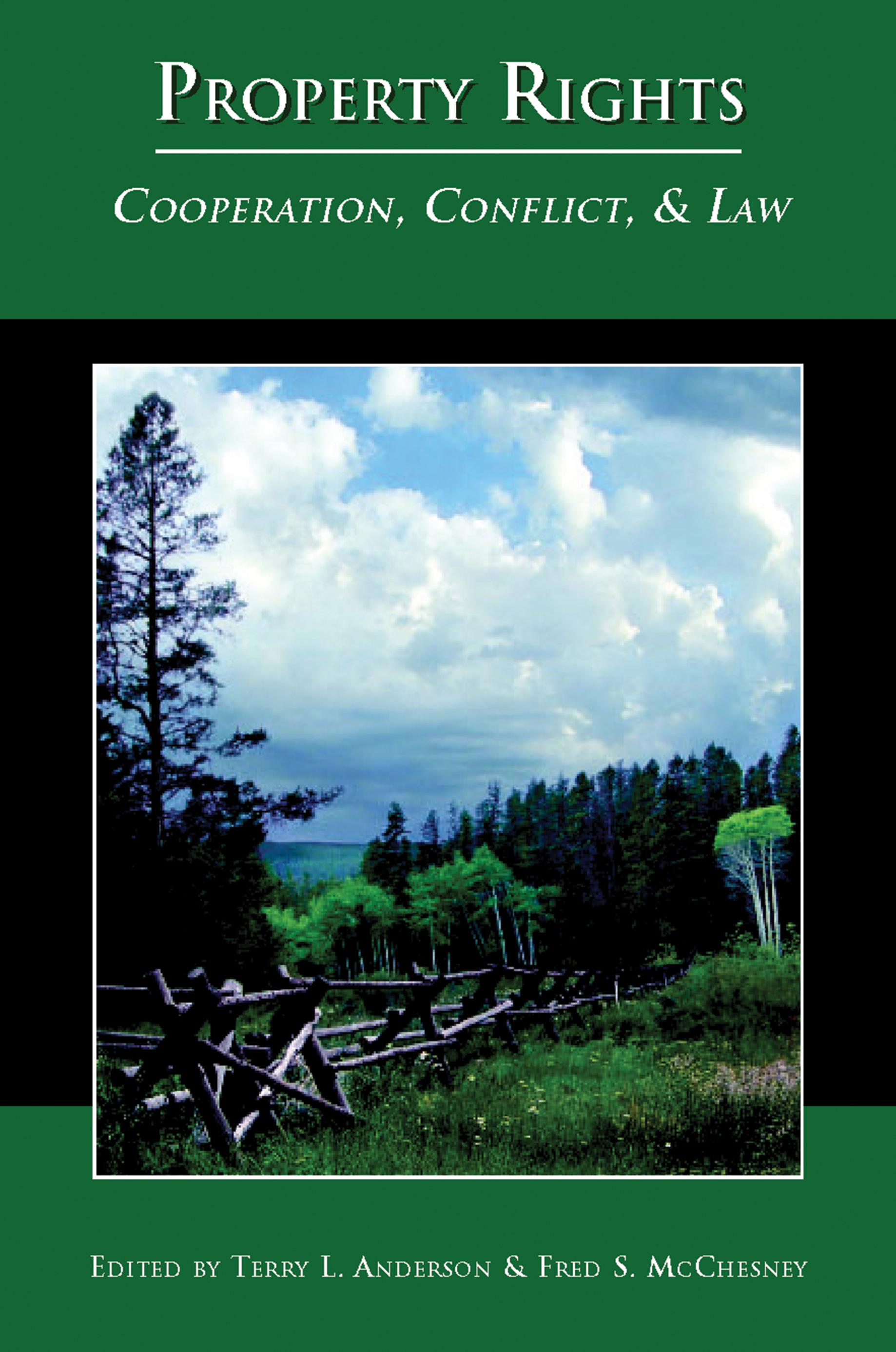
The institution of property is as old as mankind, and property rights are today deemed vital to a prosperous economic system. Much has been written in the last decade on the economics of the legal institutions protecting such rights. This unprecedented book provides a magnificent introduction to the subject. Terry Anderson and Fred McChesney have gathered twelve leading thinkers to explore how property rights arise, and how they bolster economic development. As the subtitle indicates, the book examines as well how controversies over valuable property rights are resolved: by agreement, by violence, or by law.
The essays begin by surveying the approaches to property taken by early political economists and move to colorful applications of property rights theory concerning the Wild West, the Amazon, endangered species, and the broadcast spectrum. These examples illustrate the process of defining and defending property rights, and demonstrate what difference property rights make. The book then considers a number of topics raised by private property rights, analytically complex topics concerning pollution externalities, government taking of property, and land use management policies such as zoning.
Overall, the book is intended as an introduction to the economics and law of property rights. It is divided into six parts, with each featuring an introduction by the editors that integrates prior chapters and material in coming chapters. In the end, the book provides a fresh, comprehensive overview of an intriguing subject, accessible to anyone with a minimal background in economics. With chapters written by noted experts on the subject, Property Rights offers the first primer on the subject ever produced. In addition to the editors, the contributors are Louise De Alessi, Yoram Barzel, Harold Demsetz, Thráinn Eggertsson, Richard A. Epstein, William A. Fischel, David D. Haddock, Peter J. Hill, Gary D. Libecap, Dean Lueck, Edwin G. West, and Bruce Yandle.
Before Memmo my notes were scattered across PDFs. Now a workspace pulls everything into one place — I see exactly what's still left to study.
Memmo's summaries are gold before exams. I don't have to re-read 800 pages two weeks before — just the important parts.
The AI chat has saved me the night before an exam more than once. I just keep asking until I get it — no waiting on a study group to reply.
The quizzes hit exactly what I need to know. Memmo tracks what I get stuck on — so I only practice what's worth it.
Flashcards with spaced repetition are magic. Memmo knows when I'm about to forget something and brings it back.
The AI podcasts are my favorite. I listen on my way to school and get a recap without sitting at a computer.

Handbok i kvalitativa metoder
281 kr

Hållbar utveckling: en introduktion för ingenjörer och andra problemlösare
334 kr

Brymans Samhällsvetenskapliga metoder
390 kr

Projektledning
491 kr

Den orättvisa hälsan: om socioekonomiska skillnader i hälsa och livslängd
326 kr

Vetenskapsteori för nybörjare
196 kr

Organizational Leadership
429 kr

På väg mot läraryrket
172 kr

Det sociala livet i skolan: Socialpsykologiska perspektiv
253 kr

Betygsättningens didaktik
151 kr

Personality
402 kr

Studying Leadership
404 kr

Managing Innovation
477 kr

Introduktion till samhällsvetenskaplig metod
347 kr

The Psychology of Sex and Gender
698 kr

Evidens och kunskap för socialt arbete
207 kr

Introduction to Leadership
605 kr