
Before Memmo my notes were scattered across PDFs. Now a workspace pulls everything into one place — I see exactly what's still left to study.
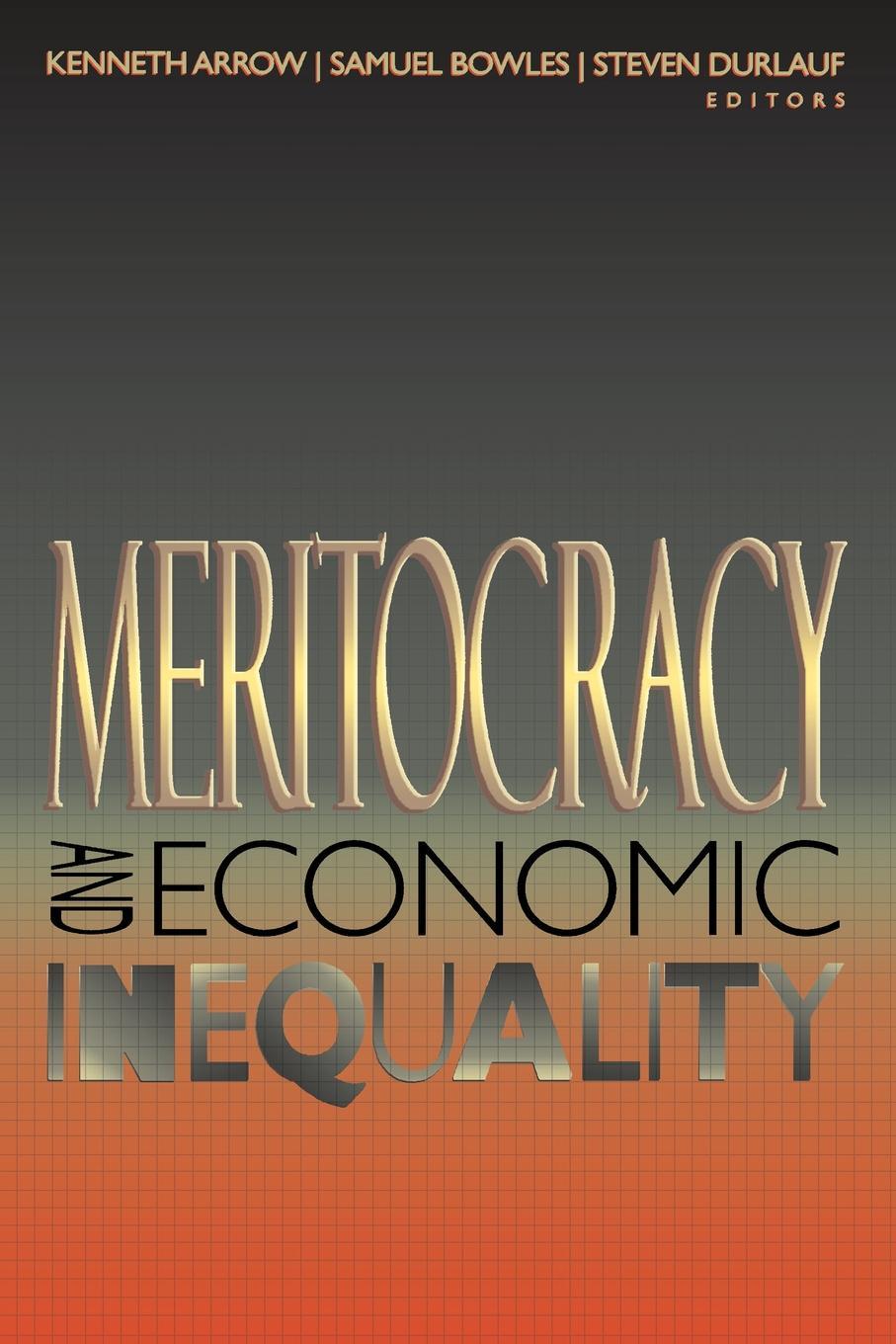
Most Americans strongly favor equality of opportunity if not outcome, but many are weary of poverty's seeming immunity to public policy. This helps to explain the recent attention paid to cultural and genetic explanations of persistent poverty, including claims that economic inequality is a function of intellectual ability, as well as more subtle depictions of the United States as a meritocracy where barriers to achievement are personal--either voluntary or inherited--rather than systemic. This volume of original essays by luminaries in the economic, social, and biological sciences, however, confirms mounting evidence that the connection between intelligence and inequality is surprisingly weak and demonstrates that targeted educational and economic reforms can reduce the income gap and improve the country's aggregate productivity and economic well-being. It also offers a novel agenda of equal access to valuable associations.
Amartya Sen, John Roemer, Robert M. Hauser, Glenn Loury, Orley Ashenfelter, and others sift and analyze the latest arguments and quantitative findings on equality in order to explain how merit is and should be defined, how economic rewards are distributed, and how patterns of economic success persist across generations. Moving well beyond exploration, they draw specific conclusions that are bold yet empirically grounded, finding that schooling improves occupational success in ways unrelated to cognitive ability, that IQ is not a strong independent predictor of economic success, and that people's associations--their neighborhoods, working groups, and other social ties--significantly explain many of the poverty traps we observe.
The optimistic message of this beautifully edited book is that important violations of equality of opportunity do exist but can be attenuated by policies that will serve the general economy. Policy makers will read with interest concrete suggestions for crafting economically beneficial anti-discrimination measures, enhancing educational and associational opportunity, and centering economic reforms in community-based institutions. Here is an example of some of our most brilliant social thinkers using the most advanced techniques that their disciplines have to offer to tackle an issue of great social importance.
Before Memmo my notes were scattered across PDFs. Now a workspace pulls everything into one place — I see exactly what's still left to study.
Memmo's summaries are gold before exams. I don't have to re-read 800 pages two weeks before — just the important parts.
The AI chat has saved me the night before an exam more than once. I just keep asking until I get it — no waiting on a study group to reply.
The quizzes hit exactly what I need to know. Memmo tracks what I get stuck on — so I only practice what's worth it.
Flashcards with spaced repetition are magic. Memmo knows when I'm about to forget something and brings it back.
The AI podcasts are my favorite. I listen on my way to school and get a recap without sitting at a computer.

Handbok i kvalitativa metoder
281 kr

Hållbar utveckling: en introduktion för ingenjörer och andra problemlösare
334 kr

Brymans Samhällsvetenskapliga metoder
390 kr

Projektledning
491 kr

Den orättvisa hälsan: om socioekonomiska skillnader i hälsa och livslängd
326 kr

Vetenskapsteori för nybörjare
196 kr

Organizational Leadership
429 kr

På väg mot läraryrket
172 kr

Det sociala livet i skolan: Socialpsykologiska perspektiv
253 kr

Betygsättningens didaktik
151 kr

Personality
402 kr

Studying Leadership
404 kr

Managing Innovation
477 kr

Introduktion till samhällsvetenskaplig metod
347 kr

The Psychology of Sex and Gender
698 kr

Evidens och kunskap för socialt arbete
207 kr

Introduction to Leadership
605 kr