
Before Memmo my notes were scattered across PDFs. Now a workspace pulls everything into one place — I see exactly what's still left to study.
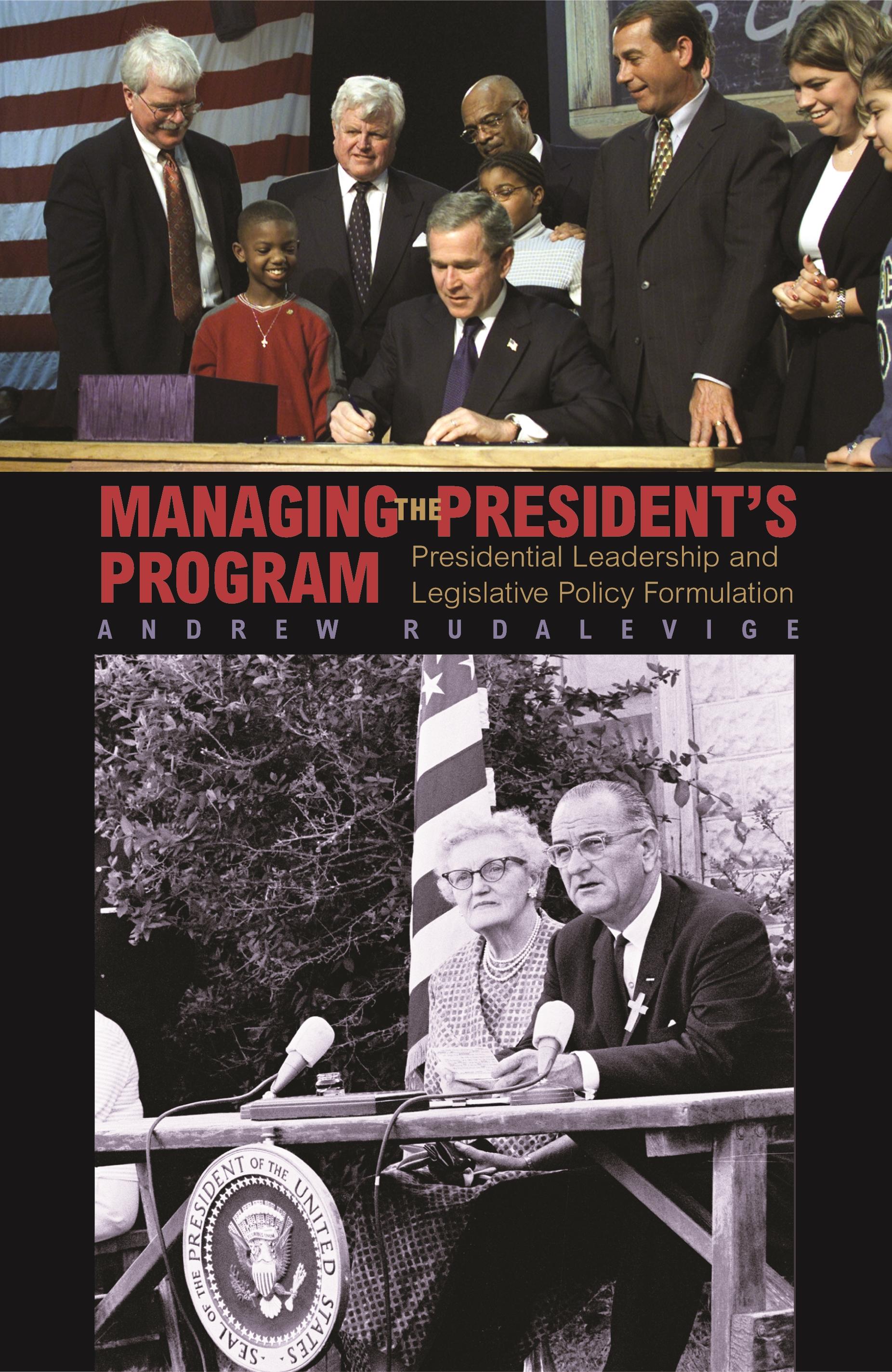
The belief that U.S. presidents' legislative policy formation has centralized over time, shifting inexorably out of the executive departments and into the White House, is shared by many who have studied the American presidency. Andrew Rudalevige argues that such a linear trend is neither at all certain nor necessary for policy promotion. In Managing the President's Program, he presents a far more complex and interesting picture of the use of presidential staff. Drawing on transaction cost theory, Rudalevige constructs a framework of "contingent centralization" to predict when presidents will use White House and/or departmental staff resources for policy formulation. He backs his assertions through an unprecedented quantitative analysis of a new data set of policy proposals covering almost fifty years of the postwar era from Truman to Clinton.
Rudalevige finds that presidents are not bound by a relentless compulsion to centralize but follow a more subtle strategy of staff allocation that makes efficient use of limited bargaining resources. New items and, for example, those spanning agency jurisdictions, are most likely to be centralized; complex items follow a mixed process. The availability of expertise outside the White House diminishes centralization. However, while centralization is a management strategy appropriate for engaging the wider executive branch, it can imperil an item's fate in Congress. Thus, as this well-written book makes plain, presidential leadership hinges on hard choices as presidents seek to simultaneously manage the executive branch and attain legislative success.
Before Memmo my notes were scattered across PDFs. Now a workspace pulls everything into one place — I see exactly what's still left to study.
Memmo's summaries are gold before exams. I don't have to re-read 800 pages two weeks before — just the important parts.
The AI chat has saved me the night before an exam more than once. I just keep asking until I get it — no waiting on a study group to reply.
The quizzes hit exactly what I need to know. Memmo tracks what I get stuck on — so I only practice what's worth it.
Flashcards with spaced repetition are magic. Memmo knows when I'm about to forget something and brings it back.
The AI podcasts are my favorite. I listen on my way to school and get a recap without sitting at a computer.

Handbok i kvalitativa metoder
281 kr

Hållbar utveckling: en introduktion för ingenjörer och andra problemlösare
334 kr

Brymans Samhällsvetenskapliga metoder
390 kr

Projektledning
491 kr

Den orättvisa hälsan: om socioekonomiska skillnader i hälsa och livslängd
326 kr

Organizational Leadership
429 kr

Vetenskapsteori för nybörjare
196 kr

På väg mot läraryrket
172 kr

Det sociala livet i skolan: Socialpsykologiska perspektiv
253 kr

Betygsättningens didaktik
151 kr

Personality
402 kr

Studying Leadership
404 kr

Managing Innovation
477 kr

Introduktion till samhällsvetenskaplig metod
347 kr

The Psychology of Sex and Gender
698 kr

Evidens och kunskap för socialt arbete
207 kr

Introduction to Leadership
605 kr