
Before Memmo my notes were scattered across PDFs. Now a workspace pulls everything into one place — I see exactly what's still left to study.
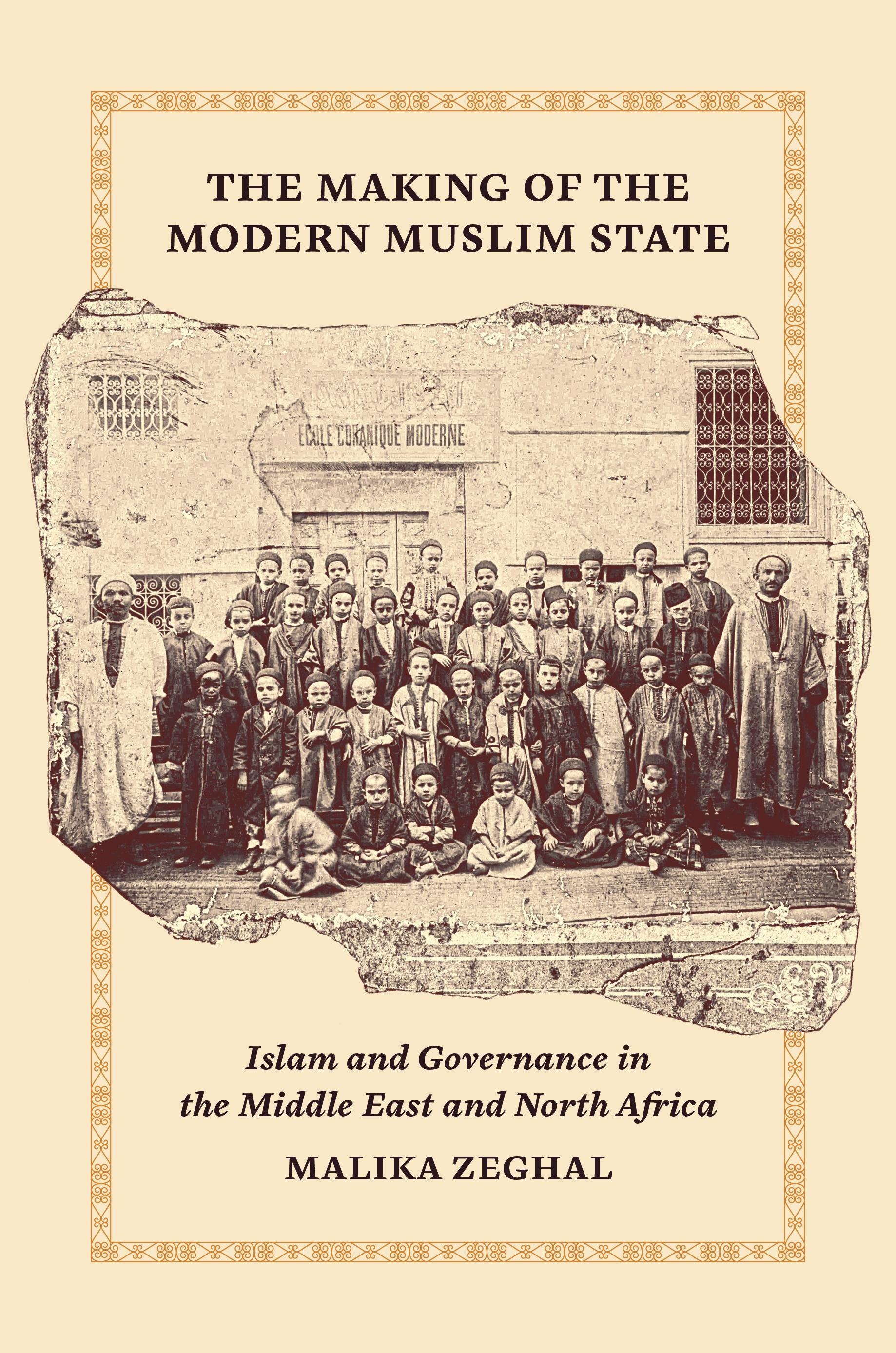
An innovative analysis that traces the continuity of the state’s custodianship of Islam as the preferred religion in the Middle East and North Africa
In The Making of the Modern Muslim State, Malika Zeghal reframes the role of Islam in modern Middle East governance. Challenging other accounts that claim that Middle Eastern states turned secular in modern times, Zeghal shows instead the continuity of the state’s custodianship of Islam as the preferred religion. Drawing on intellectual, political, and economic history, she traces this custodianship from early forms of constitutional governance in the nineteenth century through post–Arab Spring experiments in democracy. Zeghal argues that the intense debates around the implementation and meaning of state support for Islam led to a political cleavage between conservatives and their opponents that long predated the polarization of the twentieth century that accompanied the emergence of mass politics and Islamist movements.
Examining constitutional projects, public spending, school enrollments, and curricula, Zeghal shows that although modern Muslim-majority polities have imported Western techniques of governance, the state has continued to protect and support the religion, community, and institutions of Islam. She finds that even as Middle Eastern states have expanded their nonreligious undertakings, they have dramatically increased their per capita supply of public religious provisions, especially Islamic education—further feeding the political schism between Islamists and their adversaries. Zeghal illuminates the tensions inherent in the partnerships between states and the body of Muslim scholars known as the ulama, whose normative power has endured through a variety of political regimes. Her detailed and groundbreaking analysis, which spans Tunisia, Morocco, Egypt, Turkey, Syria, and Lebanon, makes clear the deep historical roots of current political divisions over Islam in governance.
Before Memmo my notes were scattered across PDFs. Now a workspace pulls everything into one place — I see exactly what's still left to study.
Memmo's summaries are gold before exams. I don't have to re-read 800 pages two weeks before — just the important parts.
The AI chat has saved me the night before an exam more than once. I just keep asking until I get it — no waiting on a study group to reply.
The quizzes hit exactly what I need to know. Memmo tracks what I get stuck on — so I only practice what's worth it.
Flashcards with spaced repetition are magic. Memmo knows when I'm about to forget something and brings it back.
The AI podcasts are my favorite. I listen on my way to school and get a recap without sitting at a computer.

Handbok i kvalitativa metoder
281 kr

Hållbar utveckling: en introduktion för ingenjörer och andra problemlösare
334 kr

Brymans Samhällsvetenskapliga metoder
390 kr

Projektledning
491 kr

Den orättvisa hälsan: om socioekonomiska skillnader i hälsa och livslängd
326 kr

Vetenskapsteori för nybörjare
196 kr

Organizational Leadership
429 kr

På väg mot läraryrket
172 kr

Det sociala livet i skolan: Socialpsykologiska perspektiv
253 kr

Betygsättningens didaktik
151 kr

Personality
402 kr

Studying Leadership
404 kr

Managing Innovation
477 kr

Introduktion till samhällsvetenskaplig metod
347 kr

The Psychology of Sex and Gender
698 kr

Evidens och kunskap för socialt arbete
207 kr

Introduction to Leadership
605 kr