
Before Memmo my notes were scattered across PDFs. Now a workspace pulls everything into one place — I see exactly what's still left to study.
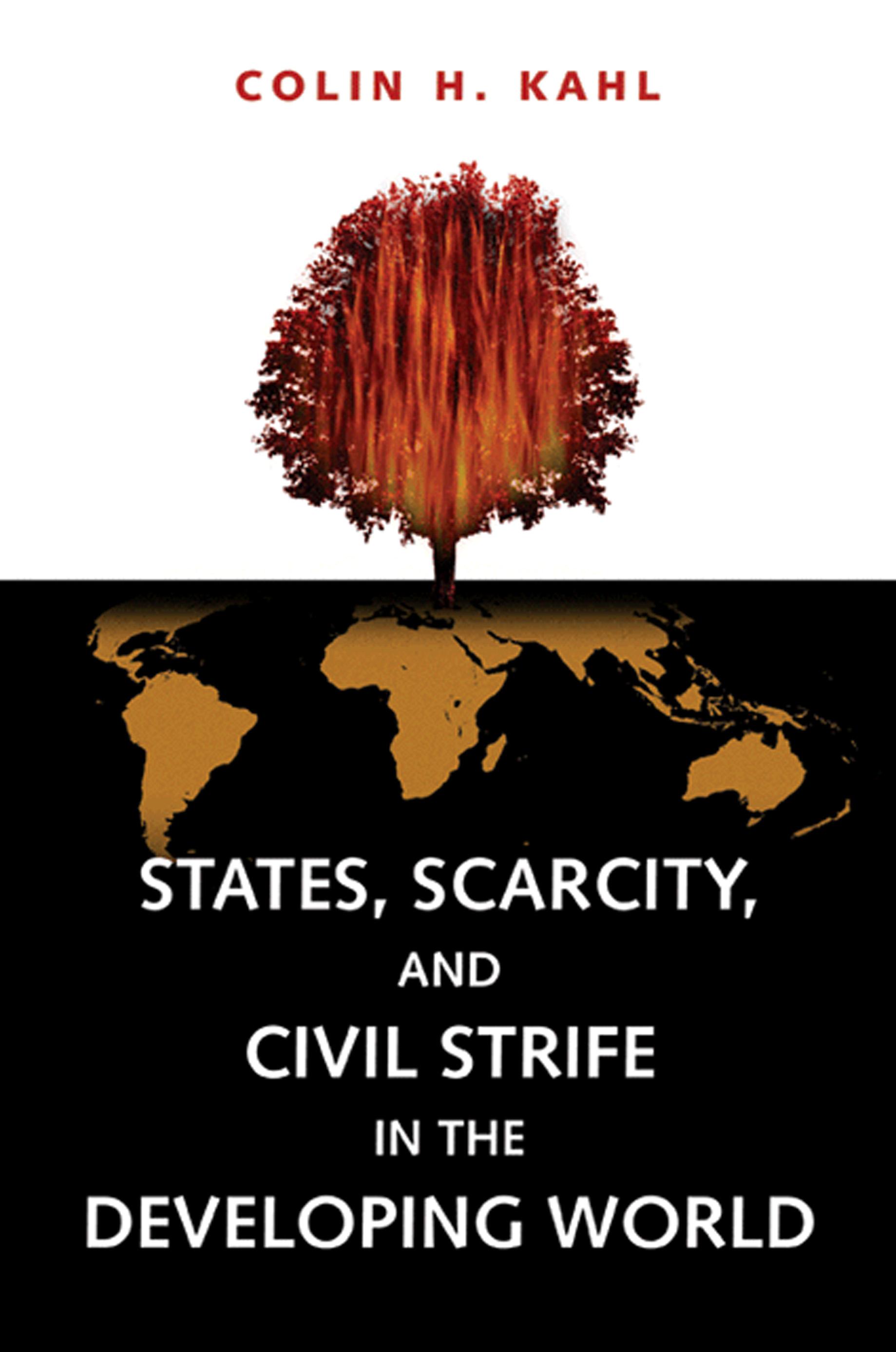
Over the past several decades, civil and ethnic wars have undermined prospects for economic and political development, destabilized entire regions of the globe, and left millions dead. States, Scarcity, and Civil Strife in the Developing World argues that demographic and environmental stress--the interactions among rapid population growth, environmental degradation, inequality, and emerging scarcities of vital natural resources--represents one important source of turmoil in today's world.
Kahl contends that this type of stress places enormous strains on both societies and governments in poor countries, increasing their vulnerability to armed conflict. He identifies two pathways whereby this process unfolds: state failure and state exploitation. State failure conflicts occur when population growth, environmental degradation, and resource inequality weaken the capacity, legitimacy, and cohesion of governments, thereby expanding the opportunities and incentives for rebellion and intergroup violence. State exploitation conflicts, in contrast, occur when political leaders themselves capitalize on the opportunities arising from population pressures, natural resource scarcities, and related social grievances to instigate violence that serves their parochial interests.
Drawing on a wide array of social science theory, this book argues that demographically and environmentally induced conflicts are most likely to occur in countries that are deeply split along ethnic, religious, regional, or class lines, and which have highly exclusive and discriminatory political systems. The empirical portion of the book evaluates the theoretical argument through in-depth case studies of civil strife in the Philippines, Kenya, and numerous other countries. The book concludes with an analysis of the challenges demographic and environmental change will pose to international security in the decades ahead.
Before Memmo my notes were scattered across PDFs. Now a workspace pulls everything into one place — I see exactly what's still left to study.
Memmo's summaries are gold before exams. I don't have to re-read 800 pages two weeks before — just the important parts.
The AI chat has saved me the night before an exam more than once. I just keep asking until I get it — no waiting on a study group to reply.
The quizzes hit exactly what I need to know. Memmo tracks what I get stuck on — so I only practice what's worth it.
Flashcards with spaced repetition are magic. Memmo knows when I'm about to forget something and brings it back.
The AI podcasts are my favorite. I listen on my way to school and get a recap without sitting at a computer.

Handbok i kvalitativa metoder
281 kr

Hållbar utveckling: en introduktion för ingenjörer och andra problemlösare
334 kr

Brymans Samhällsvetenskapliga metoder
390 kr

Projektledning
491 kr

Den orättvisa hälsan: om socioekonomiska skillnader i hälsa och livslängd
326 kr

Vetenskapsteori för nybörjare
196 kr

Organizational Leadership
429 kr

På väg mot läraryrket
172 kr

Det sociala livet i skolan: Socialpsykologiska perspektiv
253 kr

Betygsättningens didaktik
151 kr

Personality
402 kr

Studying Leadership
404 kr

Managing Innovation
477 kr

Introduktion till samhällsvetenskaplig metod
347 kr

The Psychology of Sex and Gender
698 kr

Evidens och kunskap för socialt arbete
207 kr

Introduction to Leadership
605 kr