
Before Memmo my notes were scattered across PDFs. Now a workspace pulls everything into one place — I see exactly what's still left to study.
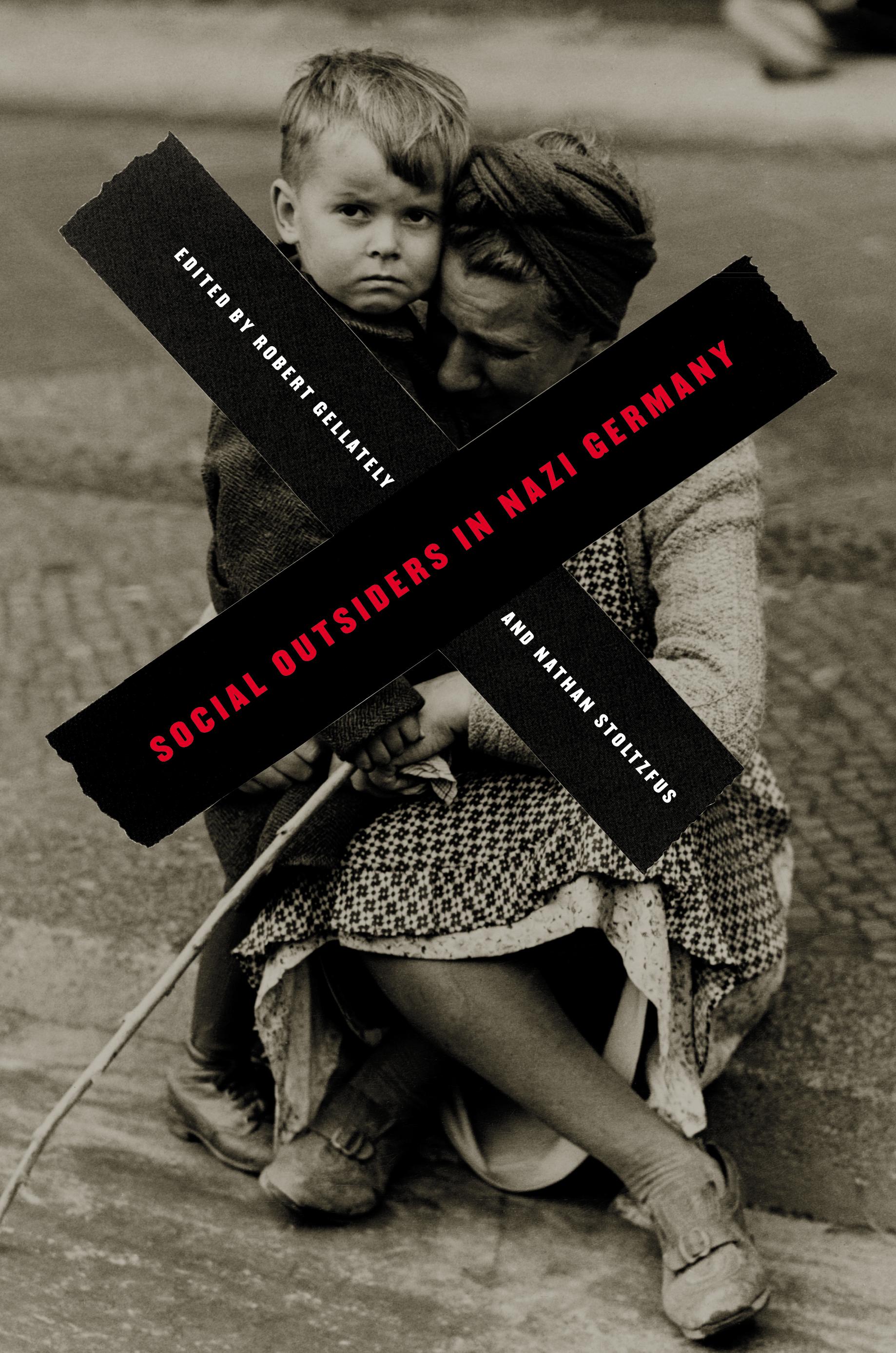
When Hitler assumed power in 1933, he and other Nazis had firm ideas on what they called a racially pure "community of the people." They quickly took steps against those whom they wanted to isolate, deport, or destroy. In these essays informed by the latest research, leading scholars offer rich histories of the people branded as "social outsiders" in Nazi Germany: Communists, Jews, "Gypsies," foreign workers, prostitutes, criminals, homosexuals, and the homeless, unemployed, and chronically ill. Although many works have concentrated exclusively on the relationship between Jews and the Third Reich, this collection also includes often-overlooked victims of Nazism while reintegrating the Holocaust into its wider social context.
The Nazis knew what attitudes and values they shared with many other Germans, and most of their targets were individuals and groups long regarded as outsiders, nuisances, or "problem cases." The identification, the treatment, and even the pace of their persecution of political opponents and social outsiders illustrated that the Nazis attuned their law-and-order policies to German society, history, and traditions. Hitler's personal convictions, Nazi ideology, and what he deemed to be the wishes and hopes of many people, came together in deciding where it would be politically most advantageous to begin.
The first essay explores the political strategies used by the Third Reich to gain support for its ideologies and programs, and each following essay concentrates on one group of outsiders. Together the contributions debate the motivations behind the purges. For example, was the persecution of Jews the direct result of intense, widespread anti-Semitism, or was it part of a more encompassing and arbitrary persecution of "unwanted populations" that intensified with the war? The collection overall offers a nuanced portrayal of German citizens, showing that many supported the Third Reich while some tried to resist, and that the war radicalized social thinking on nearly everyone's part.
In addition to the editors, the contributors are Frank Bajohr, Omer Bartov, Doris L. Bergen, Richard J. Evans, Henry Friedlander, Geoffrey J. Giles, Marion A. Kaplan, Sybil H. Milton, Alan E. Steinweis, Annette F. Timm, and Nikolaus Wachsmann.
Before Memmo my notes were scattered across PDFs. Now a workspace pulls everything into one place — I see exactly what's still left to study.
Memmo's summaries are gold before exams. I don't have to re-read 800 pages two weeks before — just the important parts.
The AI chat has saved me the night before an exam more than once. I just keep asking until I get it — no waiting on a study group to reply.
The quizzes hit exactly what I need to know. Memmo tracks what I get stuck on — so I only practice what's worth it.
Flashcards with spaced repetition are magic. Memmo knows when I'm about to forget something and brings it back.
The AI podcasts are my favorite. I listen on my way to school and get a recap without sitting at a computer.

Handbok i kvalitativa metoder
281 kr

Hållbar utveckling: en introduktion för ingenjörer och andra problemlösare
334 kr

Brymans Samhällsvetenskapliga metoder
390 kr

Projektledning
491 kr

Den orättvisa hälsan: om socioekonomiska skillnader i hälsa och livslängd
326 kr

Vetenskapsteori för nybörjare
196 kr

Organizational Leadership
429 kr

På väg mot läraryrket
172 kr

Det sociala livet i skolan: Socialpsykologiska perspektiv
253 kr

Betygsättningens didaktik
151 kr

Personality
402 kr

Studying Leadership
404 kr

Managing Innovation
477 kr

Introduktion till samhällsvetenskaplig metod
347 kr

The Psychology of Sex and Gender
698 kr

Evidens och kunskap för socialt arbete
207 kr

Introduction to Leadership
605 kr