
Before Memmo my notes were scattered across PDFs. Now a workspace pulls everything into one place — I see exactly what's still left to study.
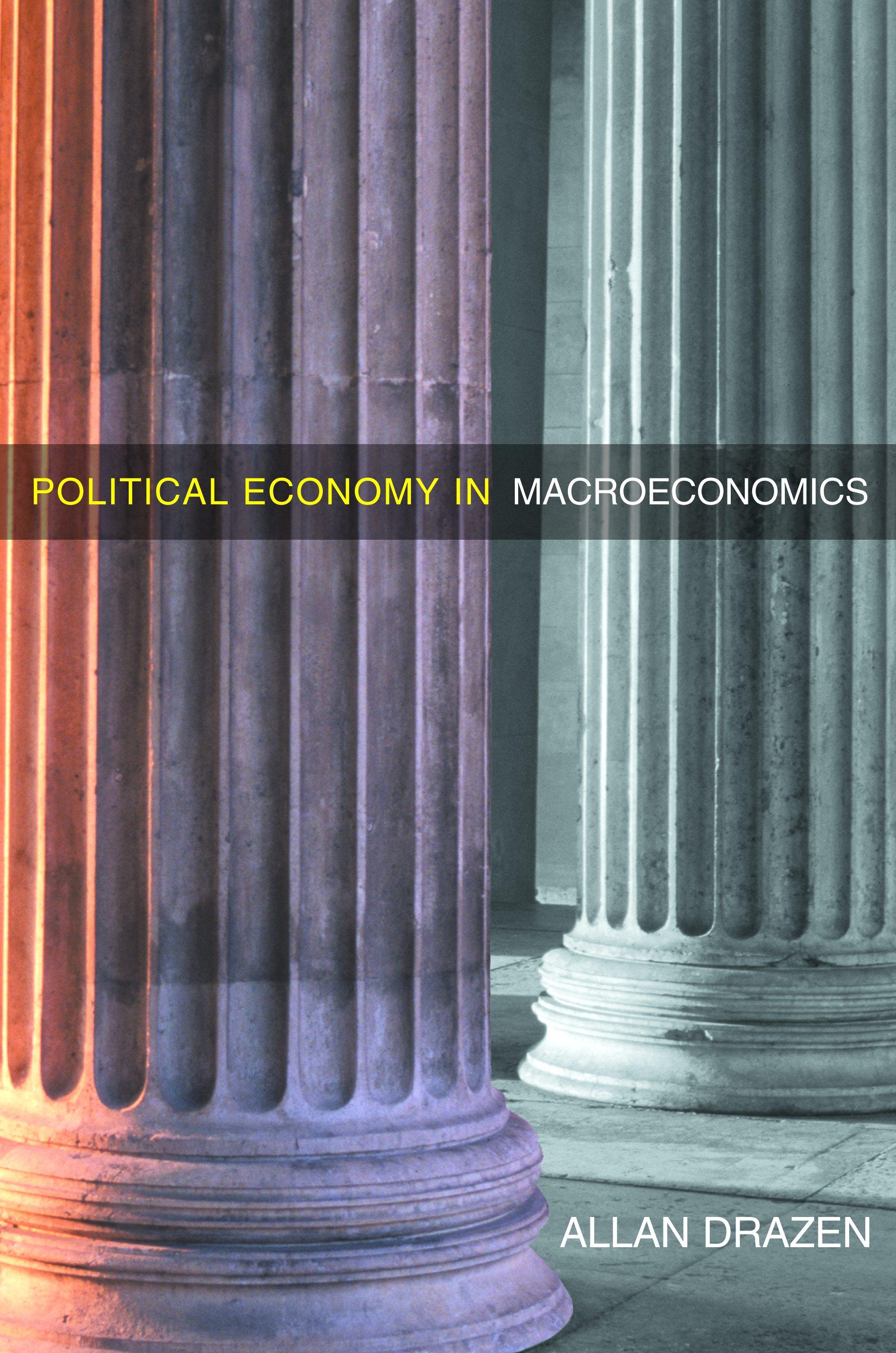
Originally, economics was called political economy, and those studying it readily accepted that economic decisions are made in a political world. But economics eventually separated itself from politics to pursue rigorous methods of analyzing individual behavior and markets. Recently, an increasing number of economists have turned their attention to the old question of how politics shape economic outcomes. To date, however, this growing literature has lacked a cogent organization and a unified approach. Here, in the first full-length examination of how political forces affect economic policy decisions, Allan Drazen provides a systematic treatment, organizing the increasingly influential "new political economy" as a more established field at the highly productive intersection of economics and political science.
Although he provides an extraordinarily helpful guide to the recent explosion of papers on political economy in macroeconomics, Drazen moves far beyond survey, giving definition and structure to the field. He proposes that conflict or heterogeneity of interests should be the field's essential organizing principle, because political questions arise only when people disagree over which economic policies should be enacted or how economic costs and benefits should be distributed. Further, he illustrates how heterogeneity of interests is crucial in every part of political economy. Drazen's approach allows innovative treatment--using rigorous economic models--of public goods and finance, economic growth, the open economy, economic transition, political business cycles, and all of the traditional topics of macroeconomics.
This major text will have an enormous impact on students and professionals in political science as well as economics, redefining how decision makers on several continents think about the full range of macroeconomic issues and informing the approaches of the next generation of economists.
Before Memmo my notes were scattered across PDFs. Now a workspace pulls everything into one place — I see exactly what's still left to study.
Memmo's summaries are gold before exams. I don't have to re-read 800 pages two weeks before — just the important parts.
The AI chat has saved me the night before an exam more than once. I just keep asking until I get it — no waiting on a study group to reply.
The quizzes hit exactly what I need to know. Memmo tracks what I get stuck on — so I only practice what's worth it.
Flashcards with spaced repetition are magic. Memmo knows when I'm about to forget something and brings it back.
The AI podcasts are my favorite. I listen on my way to school and get a recap without sitting at a computer.

Handbok i kvalitativa metoder
281 kr

Hållbar utveckling: en introduktion för ingenjörer och andra problemlösare
334 kr

Brymans Samhällsvetenskapliga metoder
390 kr

Projektledning
491 kr

Den orättvisa hälsan: om socioekonomiska skillnader i hälsa och livslängd
326 kr

Vetenskapsteori för nybörjare
196 kr

Organizational Leadership
429 kr

På väg mot läraryrket
172 kr

Det sociala livet i skolan: Socialpsykologiska perspektiv
253 kr

Betygsättningens didaktik
151 kr

Personality
402 kr

Studying Leadership
404 kr

Managing Innovation
477 kr

Introduktion till samhällsvetenskaplig metod
347 kr

The Psychology of Sex and Gender
698 kr

Evidens och kunskap för socialt arbete
207 kr

Introduction to Leadership
605 kr