
Before Memmo my notes were scattered across PDFs. Now a workspace pulls everything into one place — I see exactly what's still left to study.
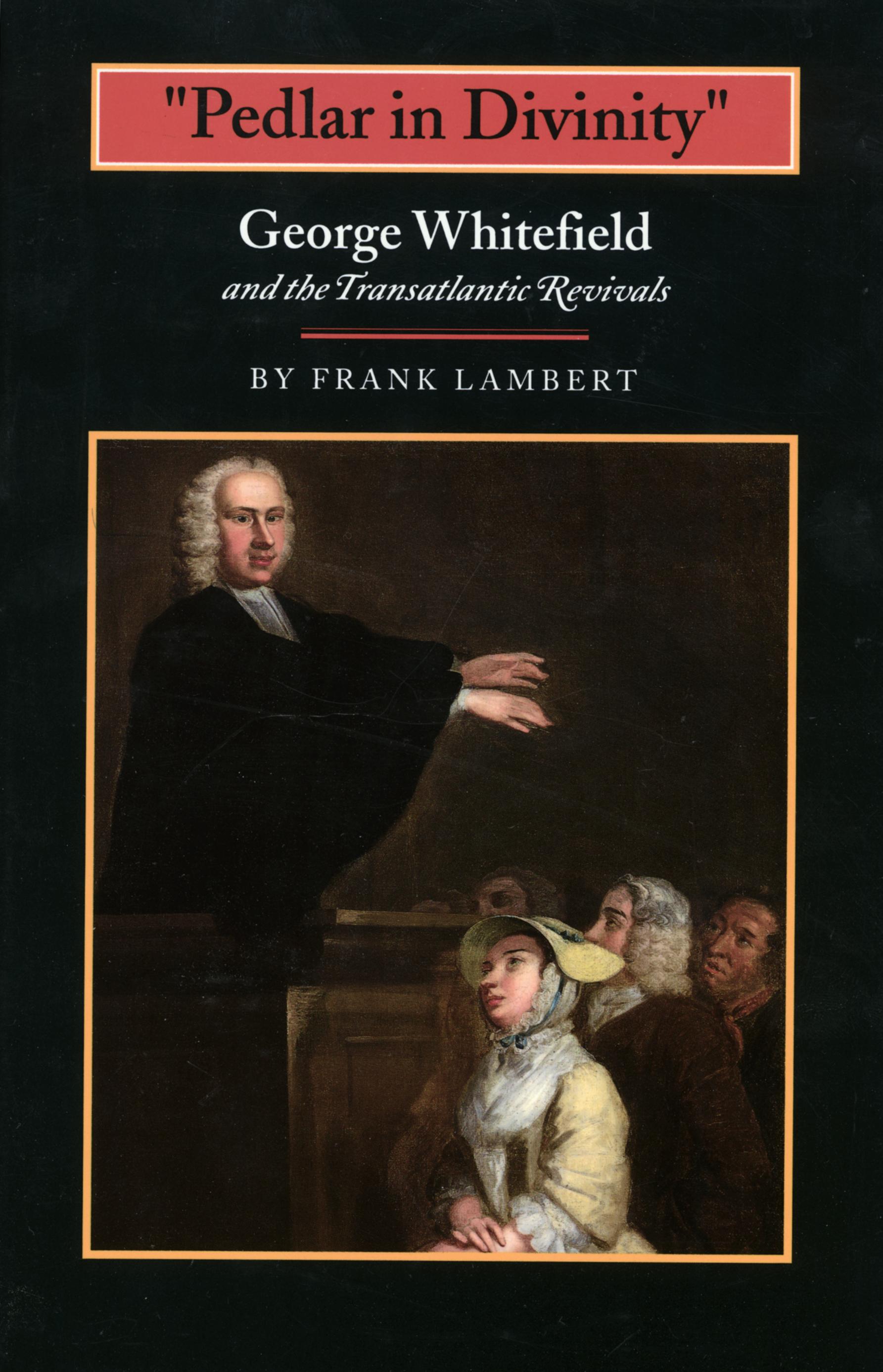
A pioneer in the commercialization of religion, George Whitefield (1714-1770) is seen by many as the most powerful leader of the Great Awakening in America: through his passionate ministry he united local religious revivals into a national movement before there was a nation. An itinerant British preacher who spent much of his adult life in the American colonies, Whitefield was an immensely popular speaker. Crossing national boundaries and ignoring ecclesiastical controls, he preached outdoors or in public houses and guild halls. In London, crowds of more than thirty thousand gathered to hear him, and his audiences exceeded twenty thousand in Philadelphia and Boston. In this fresh interpretation of Whitefield and his age, Frank Lambert focuses not so much on the evangelist's oratorical skills as on the marketing techniques that he borrowed from his contemporaries in the commercial world. What emerges is a fascinating account of the birth of consumer culture in the eighteenth century, especially the new advertising methods available to those selling goods and services--or salvation.
Whitefield faced a problem similar to that of the new Atlantic merchants: how to reach an ever-expanding audience of anonymous strangers, most of whom he would never see face-to-face. To contact this mass "congregation," Whitefield exploited popular print, especially newspapers. In addition, he turned to a technique later imitated by other evangelists such as Dwight L. Moody, Billy Sunday, and Billy Graham: the deployment of advance publicity teams to advertise his coming presentations. Immersed in commerce themselves, Whitefield's auditors appropriated him as a well-publicized English import. He preached against the excesses and luxuries of the spreading consumer society, but he drew heavily on the new commercialism to explain his mission to himself and to his transatlantic audience.
Before Memmo my notes were scattered across PDFs. Now a workspace pulls everything into one place — I see exactly what's still left to study.
Memmo's summaries are gold before exams. I don't have to re-read 800 pages two weeks before — just the important parts.
The AI chat has saved me the night before an exam more than once. I just keep asking until I get it — no waiting on a study group to reply.
The quizzes hit exactly what I need to know. Memmo tracks what I get stuck on — so I only practice what's worth it.
Flashcards with spaced repetition are magic. Memmo knows when I'm about to forget something and brings it back.
The AI podcasts are my favorite. I listen on my way to school and get a recap without sitting at a computer.

Handbok i kvalitativa metoder
281 kr

Hållbar utveckling: en introduktion för ingenjörer och andra problemlösare
334 kr

Brymans Samhällsvetenskapliga metoder
390 kr

Projektledning
491 kr

Den orättvisa hälsan: om socioekonomiska skillnader i hälsa och livslängd
326 kr

Vetenskapsteori för nybörjare
196 kr

Organizational Leadership
429 kr

På väg mot läraryrket
172 kr

Det sociala livet i skolan: Socialpsykologiska perspektiv
253 kr

Betygsättningens didaktik
151 kr

Personality
402 kr

Studying Leadership
404 kr

Managing Innovation
477 kr

Introduktion till samhällsvetenskaplig metod
347 kr

The Psychology of Sex and Gender
698 kr

Evidens och kunskap för socialt arbete
207 kr

Introduction to Leadership
605 kr