
Before Memmo my notes were scattered across PDFs. Now a workspace pulls everything into one place — I see exactly what's still left to study.
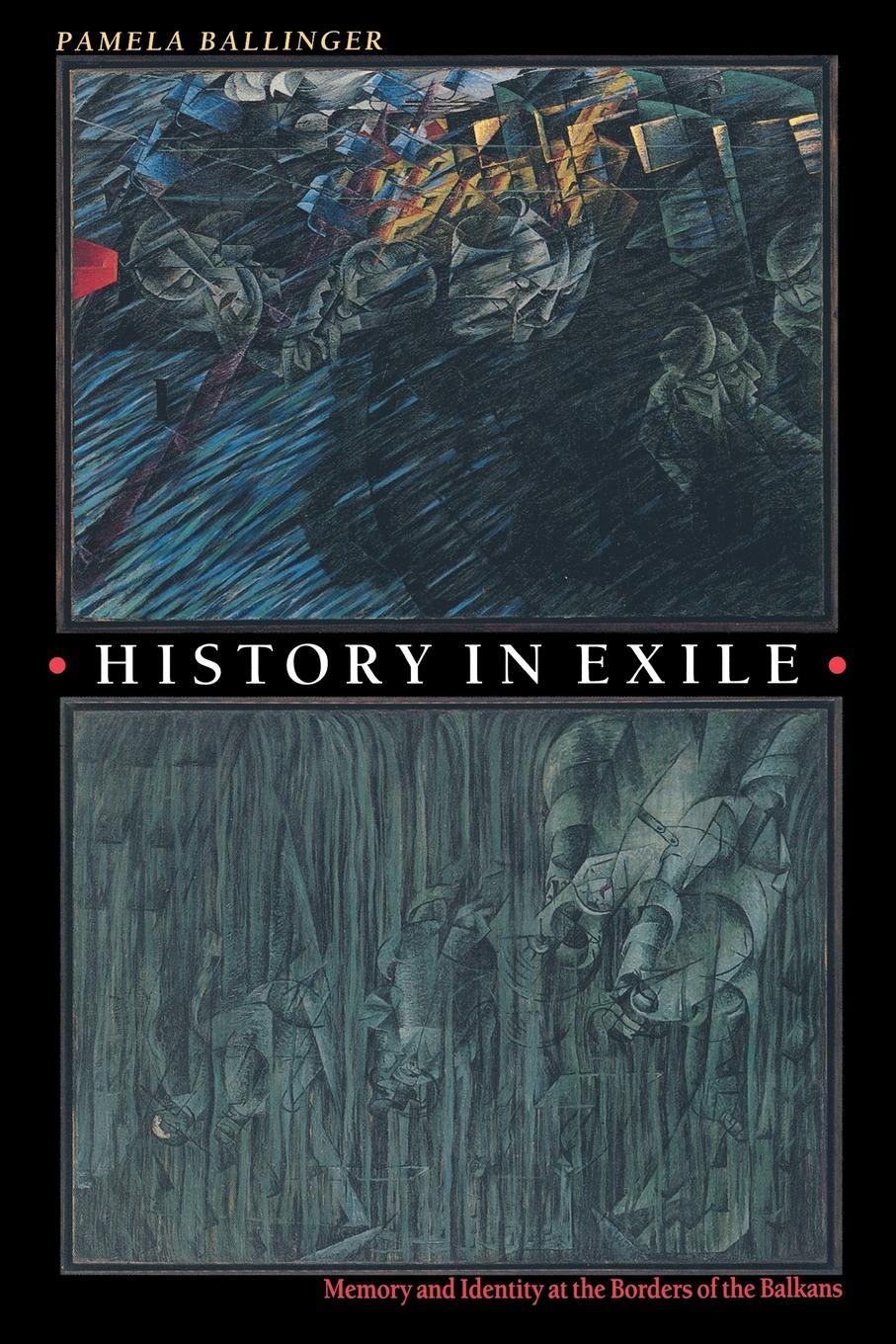
In the decade after World War II, up to 350,000 ethnic Italians were displaced from the border zone between Italy and Yugoslavia known as the Julian March. History in Exile reveals the subtle yet fascinating contemporary repercussions of this often overlooked yet contentious episode of European history. Pamela Ballinger asks: What happens to historical memory and cultural identity when state borders undergo radical transformation? She explores displacement from both the viewpoints of the exiles and those who stayed behind. Yugoslavia's breakup and Italy's political transformation in the early 1990s, she writes, allowed these people to bring their histories to the public eye after nearly half a century.
Examining the political and cultural contexts in which this understanding of historical consciousness has been formed, Ballinger undertakes the most extensive fieldwork ever done on this subject--not only around Trieste, where most of the exiles settled, but on the Istrian Peninsula (Croatia and Slovenia), where those who stayed behind still live. Complementing this with meticulous archival research, she examines two sharply contrasting models of historical identity yielded by the "Istrian exodus": those who left typically envision Istria as a "pure" Italian land stolen by the Slavs, whereas those who remained view it as ethnically and linguistically "hybrid." We learn, for example, how members of the same family, living a short distance apart and speaking the same language, came to develop a radically different understanding of their group identities. Setting her analysis in engaging, jargon-free prose, Ballinger concludes that these ostensibly very different identities in fact share a startling degree of conceptual logic.
Before Memmo my notes were scattered across PDFs. Now a workspace pulls everything into one place — I see exactly what's still left to study.
Memmo's summaries are gold before exams. I don't have to re-read 800 pages two weeks before — just the important parts.
The AI chat has saved me the night before an exam more than once. I just keep asking until I get it — no waiting on a study group to reply.
The quizzes hit exactly what I need to know. Memmo tracks what I get stuck on — so I only practice what's worth it.
Flashcards with spaced repetition are magic. Memmo knows when I'm about to forget something and brings it back.
The AI podcasts are my favorite. I listen on my way to school and get a recap without sitting at a computer.

Handbok i kvalitativa metoder
281 kr

Hållbar utveckling: en introduktion för ingenjörer och andra problemlösare
334 kr

Brymans Samhällsvetenskapliga metoder
390 kr

Projektledning
491 kr

Den orättvisa hälsan: om socioekonomiska skillnader i hälsa och livslängd
326 kr

Organizational Leadership
429 kr

Vetenskapsteori för nybörjare
196 kr

På väg mot läraryrket
172 kr

Det sociala livet i skolan: Socialpsykologiska perspektiv
253 kr

Betygsättningens didaktik
151 kr

Personality
402 kr

Studying Leadership
404 kr

Managing Innovation
477 kr

Introduktion till samhällsvetenskaplig metod
347 kr

The Psychology of Sex and Gender
698 kr

Evidens och kunskap för socialt arbete
207 kr

Introduction to Leadership
605 kr