
Before Memmo my notes were scattered across PDFs. Now a workspace pulls everything into one place — I see exactly what's still left to study.
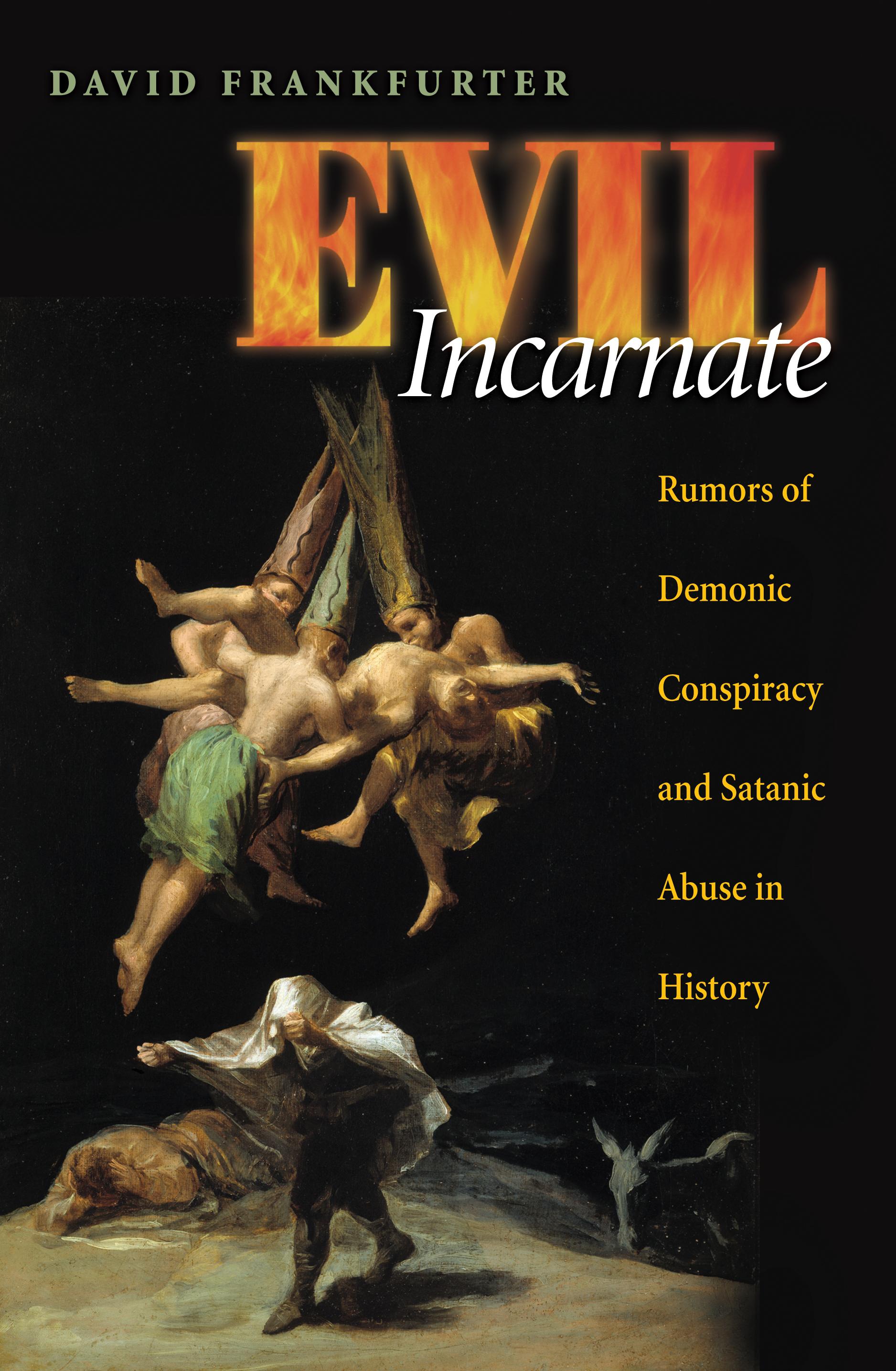
In the 1980s, America was gripped by widespread panics about Satanic cults. Conspiracy theories abounded about groups who were allegedly abusing children in day-care centers, impregnating girls for infant sacrifice, brainwashing adults, and even controlling the highest levels of government. As historian of religions David Frankfurter listened to these sinister theories, it occurred to him how strikingly similar they were to those that swept parts of the early Christian world, early modern Europe, and postcolonial Africa. He began to investigate the social and psychological patterns that give rise to these myths. Thus was born Evil Incarnate, a riveting analysis of the mythology of evilconspiracy.
The first work to provide an in-depth analysis of the topic, the book uses anthropology, the history of religion, sociology, and psychoanalytic theory, to answer the questions "What causes people collectively to envision evil and seek to exterminate it?" and "Why does the representation of evil recur in such typical patterns?"
Frankfurter guides the reader through such diverse subjects as witch-hunting, the origins of demonology, cannibalism, and the rumors of Jewish ritual murder, demonstrating how societies have long expanded upon their fears of such atrocities to address a collective anxiety. Thus, he maintains, panics over modern-day infant sacrifice are really not so different from rumors about early Christians engaging in infant feasts during the second and third centuries in Rome.
In Evil Incarnate, Frankfurter deepens historical awareness that stories of Satanic atrocities are both inventions of the mind and perennial phenomena, not authentic criminal events. True evil, as he so artfully demonstrates, is not something organized and corrupting, but rather a social construction that inspires people to brutal acts in the name of moral order.
Before Memmo my notes were scattered across PDFs. Now a workspace pulls everything into one place — I see exactly what's still left to study.
Memmo's summaries are gold before exams. I don't have to re-read 800 pages two weeks before — just the important parts.
The AI chat has saved me the night before an exam more than once. I just keep asking until I get it — no waiting on a study group to reply.
The quizzes hit exactly what I need to know. Memmo tracks what I get stuck on — so I only practice what's worth it.
Flashcards with spaced repetition are magic. Memmo knows when I'm about to forget something and brings it back.
The AI podcasts are my favorite. I listen on my way to school and get a recap without sitting at a computer.

Handbok i kvalitativa metoder
281 kr

Hållbar utveckling: en introduktion för ingenjörer och andra problemlösare
334 kr

Brymans Samhällsvetenskapliga metoder
390 kr

Projektledning
491 kr

Den orättvisa hälsan: om socioekonomiska skillnader i hälsa och livslängd
326 kr

Vetenskapsteori för nybörjare
196 kr

Organizational Leadership
429 kr

På väg mot läraryrket
172 kr

Det sociala livet i skolan: Socialpsykologiska perspektiv
253 kr

Betygsättningens didaktik
151 kr

Personality
402 kr

Studying Leadership
404 kr

Managing Innovation
477 kr

Introduktion till samhällsvetenskaplig metod
347 kr

The Psychology of Sex and Gender
698 kr

Evidens och kunskap för socialt arbete
207 kr

Introduction to Leadership
605 kr