
Before Memmo my notes were scattered across PDFs. Now a workspace pulls everything into one place — I see exactly what's still left to study.
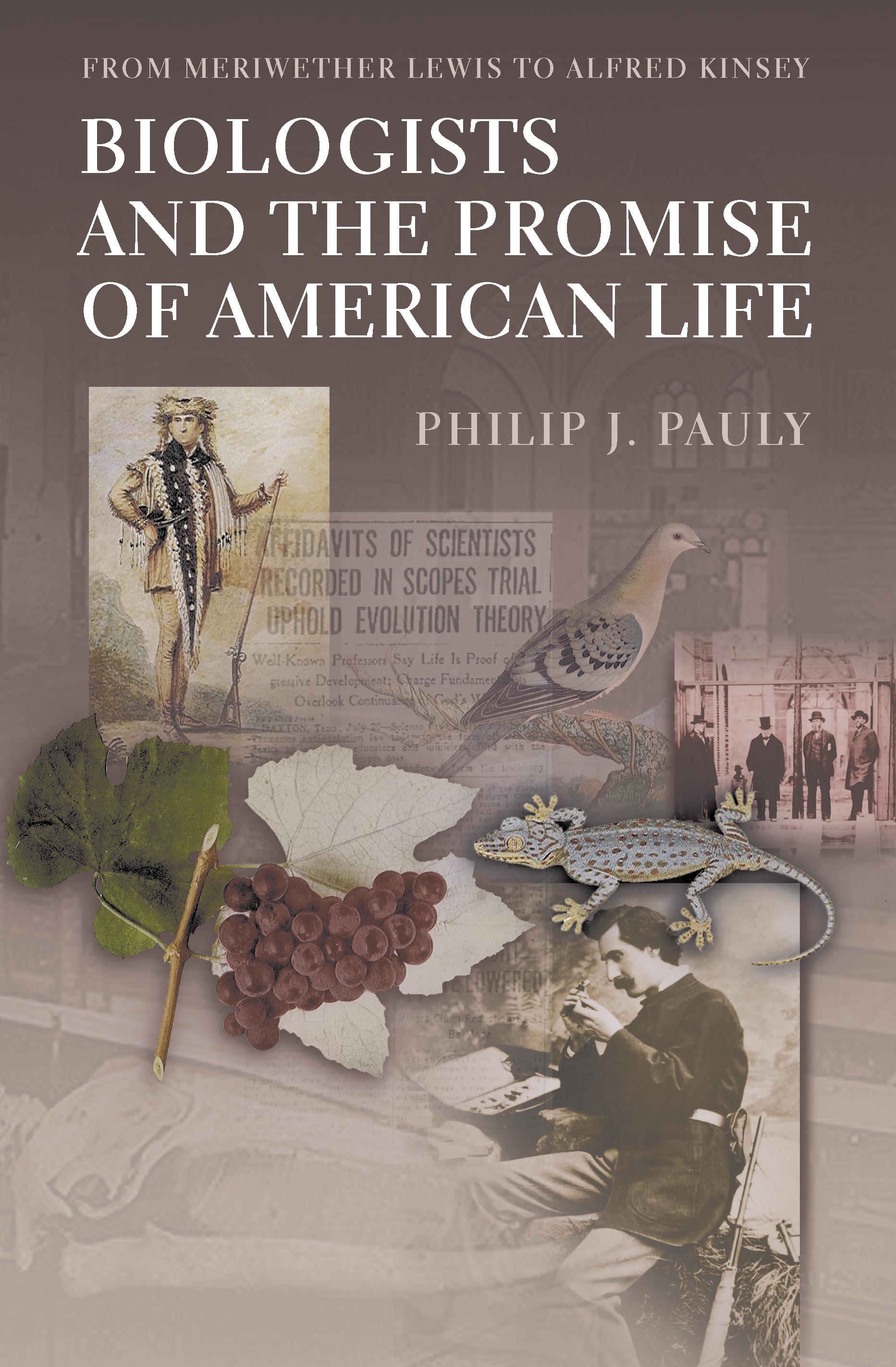
Explorers, evolutionists, eugenicists, sexologists, and high school biology teachers--all have contributed to the prominence of the biological sciences in American life. In this book, Philip Pauly weaves their stories together into a fascinating history of biology in America over the last two hundred years.
Beginning with the return of the Lewis and Clark expedition in 1806, botanists and zoologists identified science with national culture, linking their work to continental imperialism and the creation of an industrial republic. Pauly examines this nineteenth-century movement in local scientific communities with national reach: the partnership of Asa Gray and Louis Agassiz at Harvard University, the excitement of work at the Smithsonian Institution and the Geological Survey, and disputes at the Agriculture Department over the continent's future. He then describes the establishment of biology as an academic discipline in the late nineteenth century, and the retreat of life scientists from the problems of American nature. The early twentieth century, however, witnessed a new burst of public-oriented activity among biologists. Here Pauly chronicles such topics as the introduction of biology into high school curricula, the efforts of eugenicists to alter the "breeding" of Americans, and the influence of sexual biology on Americans' most private lives.
Throughout much of American history, Pauly argues, life scientists linked their study of nature with a desire to culture--to use intelligence and craft to improve American plants, animals, and humans. They often disagreed and frequently overreached, but they sought to build a nation whose people would be prosperous, humane, secular, and liberal. Life scientists were significant participants in efforts to realize what Progressive Era oracle Herbert Croly called "the promise of American life." Pauly tells their story in its entirety and explains why now, in a society that is rapidly returning to a complex ethnic mix similar to the one that existed for a hundred years prior to the Cold War, it is important to reconnect with the progressive creators of American secular culture.
Before Memmo my notes were scattered across PDFs. Now a workspace pulls everything into one place — I see exactly what's still left to study.
Memmo's summaries are gold before exams. I don't have to re-read 800 pages two weeks before — just the important parts.
The AI chat has saved me the night before an exam more than once. I just keep asking until I get it — no waiting on a study group to reply.
The quizzes hit exactly what I need to know. Memmo tracks what I get stuck on — so I only practice what's worth it.
Flashcards with spaced repetition are magic. Memmo knows when I'm about to forget something and brings it back.
The AI podcasts are my favorite. I listen on my way to school and get a recap without sitting at a computer.

Handbok i kvalitativa metoder
281 kr

Hållbar utveckling: en introduktion för ingenjörer och andra problemlösare
334 kr

Brymans Samhällsvetenskapliga metoder
390 kr

Projektledning
491 kr

Den orättvisa hälsan: om socioekonomiska skillnader i hälsa och livslängd
326 kr

Vetenskapsteori för nybörjare
196 kr

Organizational Leadership
429 kr

På väg mot läraryrket
172 kr

Det sociala livet i skolan: Socialpsykologiska perspektiv
253 kr

Betygsättningens didaktik
151 kr

Personality
402 kr

Studying Leadership
404 kr

Managing Innovation
477 kr

Introduktion till samhällsvetenskaplig metod
347 kr

The Psychology of Sex and Gender
698 kr

Evidens och kunskap för socialt arbete
207 kr

Introduction to Leadership
605 kr