
Before Memmo my notes were scattered across PDFs. Now a workspace pulls everything into one place — I see exactly what's still left to study.
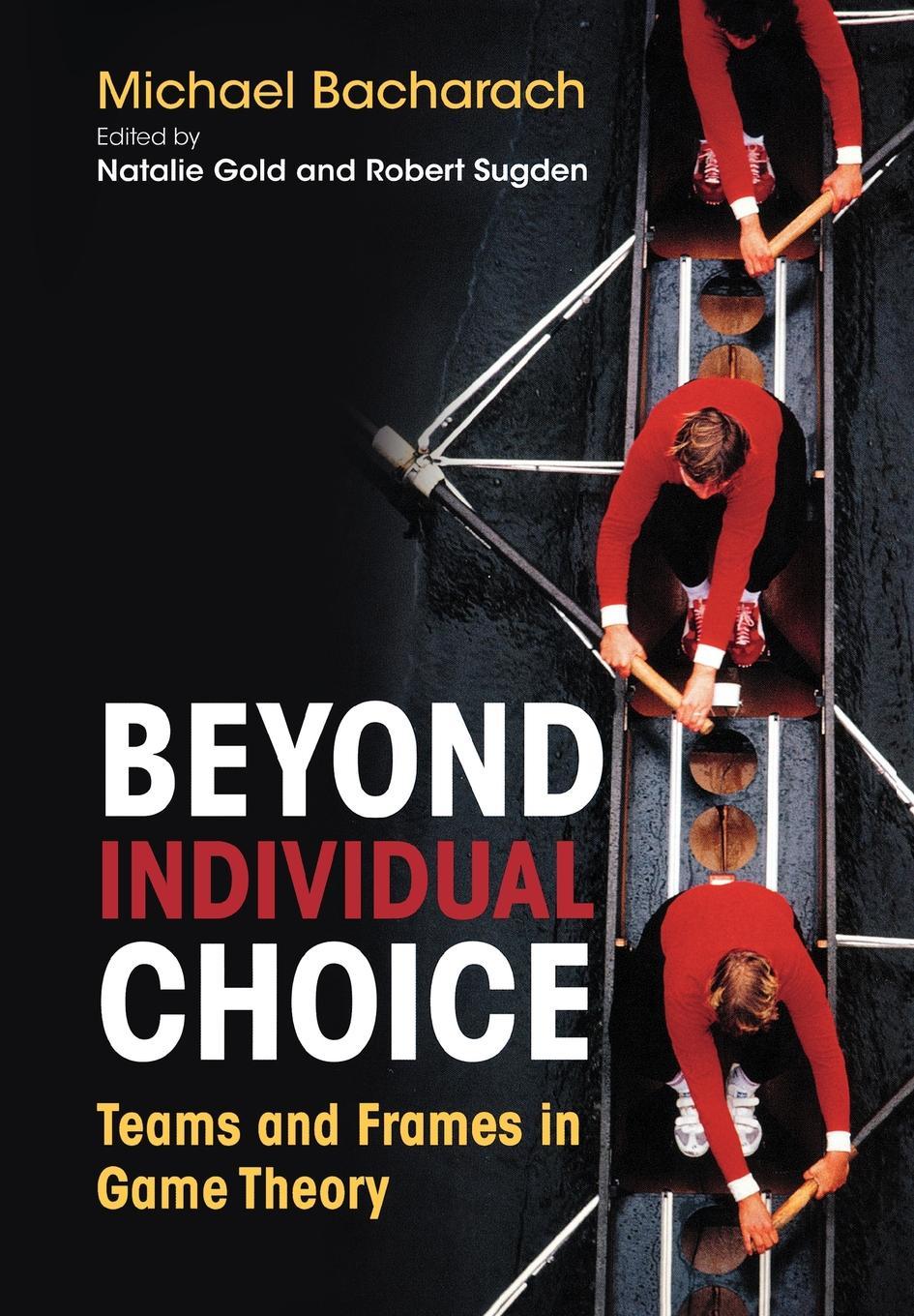
Game theory is central to modern understandings of how people deal with problems of coordination and cooperation. Yet, ironically, it cannot give a straightforward explanation of some of the simplest forms of human coordination and cooperation--most famously, that people can use the apparently arbitrary features of "focal points" to solve coordination problems, and that people sometimes cooperate in "prisoner's dilemmas." Addressing a wide readership of economists, sociologists, psychologists, and philosophers, Michael Bacharach here proposes a revision of game theory that resolves these long-standing problems.
In the classical tradition of game theory, Bacharach models human beings as rational actors, but he revises the standard definition of rationality to incorporate two major new ideas. He enlarges the model of a game so that it includes the ways agents describe to themselves (or "frame") their decision problems. And he allows the possibility that people reason as members of groups (or "teams"), each taking herself to have reason to perform her component of the combination of actions that best achieves the group's common goal. Bacharach shows that certain tendencies for individuals to engage in team reasoning are consistent with recent findings in social psychology and evolutionary biology.
As the culmination of Bacharach's long-standing program of pathbreaking work on the foundations of game theory, this book has been eagerly awaited. Following Bacharach's premature death, Natalie Gold and Robert Sugden edited the unfinished work and added two substantial chapters that allow the book to be read as a coherent whole.
Before Memmo my notes were scattered across PDFs. Now a workspace pulls everything into one place — I see exactly what's still left to study.
Memmo's summaries are gold before exams. I don't have to re-read 800 pages two weeks before — just the important parts.
The AI chat has saved me the night before an exam more than once. I just keep asking until I get it — no waiting on a study group to reply.
The quizzes hit exactly what I need to know. Memmo tracks what I get stuck on — so I only practice what's worth it.
Flashcards with spaced repetition are magic. Memmo knows when I'm about to forget something and brings it back.
The AI podcasts are my favorite. I listen on my way to school and get a recap without sitting at a computer.

Handbok i kvalitativa metoder
281 kr

Hållbar utveckling: en introduktion för ingenjörer och andra problemlösare
334 kr

Brymans Samhällsvetenskapliga metoder
390 kr

Projektledning
491 kr

Den orättvisa hälsan: om socioekonomiska skillnader i hälsa och livslängd
326 kr

Organizational Leadership
429 kr

Vetenskapsteori för nybörjare
196 kr

På väg mot läraryrket
172 kr

Det sociala livet i skolan: Socialpsykologiska perspektiv
253 kr

Betygsättningens didaktik
151 kr

Personality
402 kr

Studying Leadership
404 kr

Managing Innovation
477 kr

Introduktion till samhällsvetenskaplig metod
347 kr

The Psychology of Sex and Gender
698 kr

Evidens och kunskap för socialt arbete
207 kr

Introduction to Leadership
605 kr