
Before Memmo my notes were scattered across PDFs. Now a workspace pulls everything into one place — I see exactly what's still left to study.
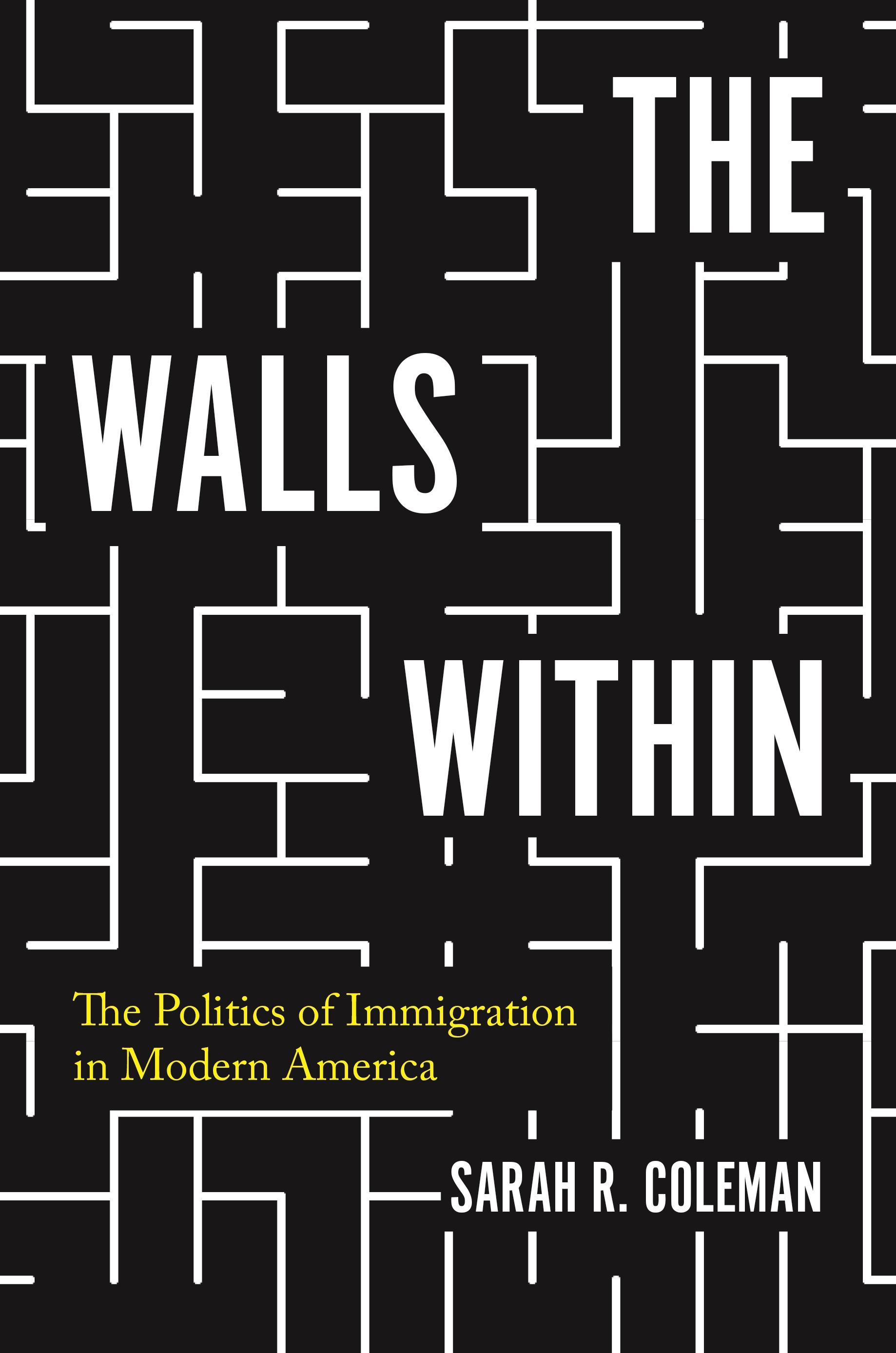
A history of the battles over US immigrants’ rights since 1965—and how these conflicts reshaped access to education, employment, civil liberties, and more
The 1965 Hart-Celler Act transformed the American immigration system by abolishing national quotas in favor of a seemingly egalitarian approach. But subsequent demographic shifts resulted in a backlash over the social contract and the rights of citizens versus noncitizens. In The Walls Within, Sarah Coleman explores those political clashes, focusing not on attempts to stop immigration at the border, but on efforts to limit immigrants’ rights within the United States through domestic policy. Drawing on new materials from the Carter, Reagan, and Clinton administrations, and immigration and civil rights organizations, Coleman exposes how the politics of immigration control has undermined the idea of citizenship for all.
Coleman shows that immigration politics was not just about building or tearing down walls, but about employer sanctions, access to schools, welfare, and the role of local authorities in implementing policies. In the years after 1965, a rising restrictionist movement sought to marginalize immigrants in realms like public education and the labor market. Yet throughout the 1970s and 1980s, restrictionists faced countervailing forces committed to an expansive notion of immigrants’ rights. In the 1990s, with national politics gridlocked, anti-immigrant groups turned to statehouses to enact their agenda. Achieving strength at the local level, conservatives supporting immigration restriction actually acquired more influence under the Clinton presidency than even during the so-called Reagan revolution, resulting in dire consequences for millions of immigrants.
Revealing the roots behind much of today’s nativist sentiment, The Walls Within examines debates about who is entitled to the American dream, and how such dreams can be subverted for those already calling the country home.
Before Memmo my notes were scattered across PDFs. Now a workspace pulls everything into one place — I see exactly what's still left to study.
Memmo's summaries are gold before exams. I don't have to re-read 800 pages two weeks before — just the important parts.
The AI chat has saved me the night before an exam more than once. I just keep asking until I get it — no waiting on a study group to reply.
The quizzes hit exactly what I need to know. Memmo tracks what I get stuck on — so I only practice what's worth it.
Flashcards with spaced repetition are magic. Memmo knows when I'm about to forget something and brings it back.
The AI podcasts are my favorite. I listen on my way to school and get a recap without sitting at a computer.

Handbok i kvalitativa metoder
281 kr

Hållbar utveckling: en introduktion för ingenjörer och andra problemlösare
334 kr

Brymans Samhällsvetenskapliga metoder
390 kr

Projektledning
491 kr

Den orättvisa hälsan: om socioekonomiska skillnader i hälsa och livslängd
326 kr

Vetenskapsteori för nybörjare
196 kr

Organizational Leadership
429 kr

På väg mot läraryrket
172 kr

Det sociala livet i skolan: Socialpsykologiska perspektiv
253 kr

Betygsättningens didaktik
151 kr

Personality
402 kr

Studying Leadership
404 kr

Managing Innovation
477 kr

Introduktion till samhällsvetenskaplig metod
347 kr

The Psychology of Sex and Gender
698 kr

Evidens och kunskap för socialt arbete
207 kr

Introduction to Leadership
605 kr