
Before Memmo my notes were scattered across PDFs. Now a workspace pulls everything into one place — I see exactly what's still left to study.
"A very timely book."—Anne-Marie Slaughter, CEO of New America
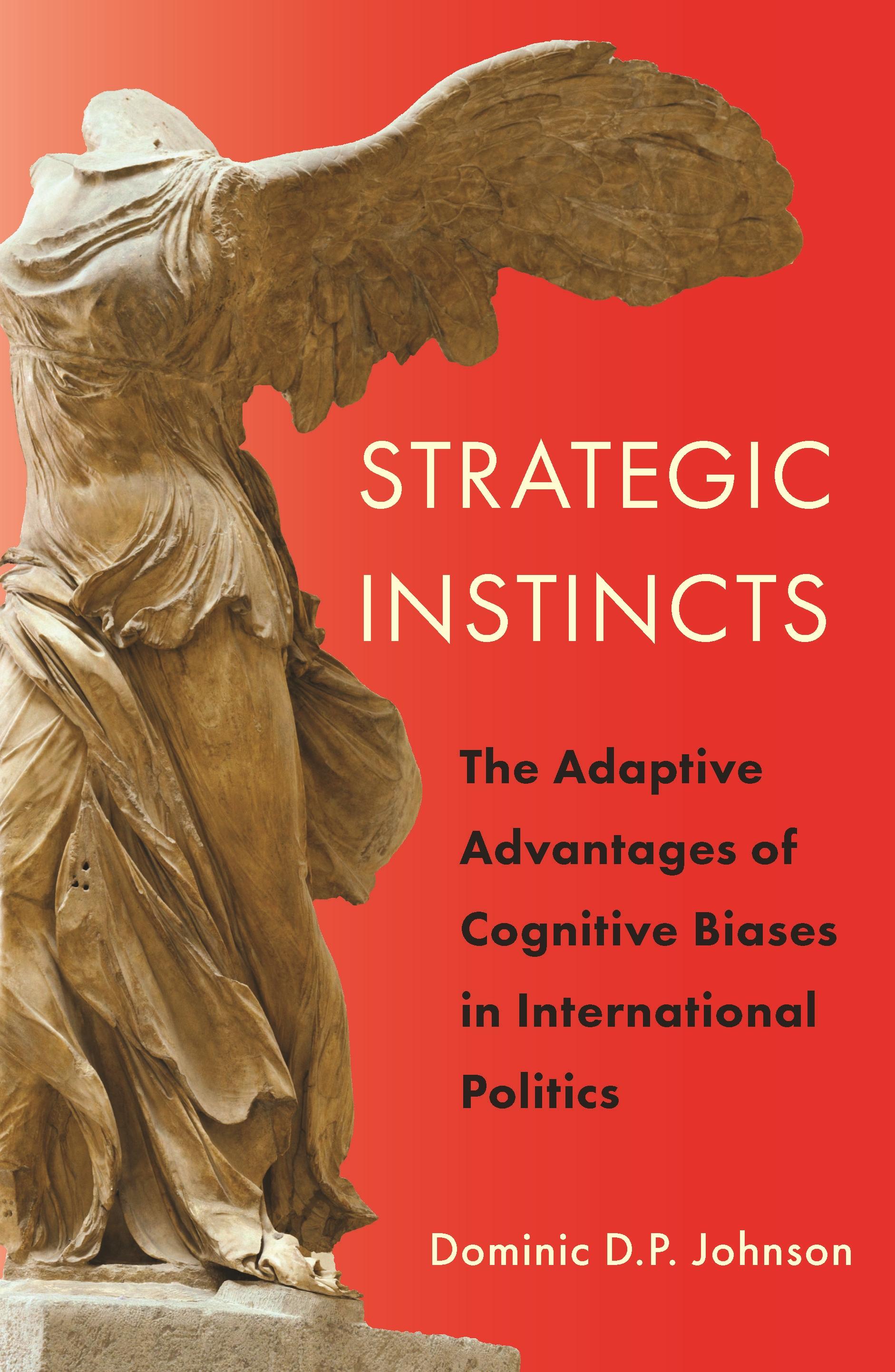
How cognitive biases can guide good decision making in politics and international relations
A widespread assumption in political science and international relations is that cognitive biases—quirks of the brain we all share as human beings—are detrimental and responsible for policy failures, disasters, and wars. In Strategic Instincts, Dominic Johnson challenges this assumption, explaining that these nonrational behaviors can actually support favorable results in international politics and contribute to political and strategic success. By studying past examples, he considers the ways that cognitive biases act as “strategic instincts,” lending a competitive edge in policy decisions, especially under conditions of unpredictability and imperfect information.
Drawing from evolutionary theory and behavioral sciences, Johnson looks at three influential cognitive biases—overconfidence, the fundamental attribution error, and in-group/out-group bias. He then examines the advantageous as well as the detrimental effects of these biases through historical case studies of the American Revolution, the Munich Crisis, and the Pacific campaign in World War II. He acknowledges the dark side of biases—when confidence becomes hubris, when attribution errors become paranoia, and when group bias becomes prejudice. Ultimately, Johnson makes a case for a more nuanced understanding of the causes and consequences of cognitive biases and argues that in the complex world of international relations, strategic instincts can, in the right context, guide better performance.
Strategic Instincts shows how an evolutionary perspective can offer the crucial next step in bringing psychological insights to bear on foundational questions in international politics.
Before Memmo my notes were scattered across PDFs. Now a workspace pulls everything into one place — I see exactly what's still left to study.
Memmo's summaries are gold before exams. I don't have to re-read 800 pages two weeks before — just the important parts.
The AI chat has saved me the night before an exam more than once. I just keep asking until I get it — no waiting on a study group to reply.
The quizzes hit exactly what I need to know. Memmo tracks what I get stuck on — so I only practice what's worth it.
Flashcards with spaced repetition are magic. Memmo knows when I'm about to forget something and brings it back.
The AI podcasts are my favorite. I listen on my way to school and get a recap without sitting at a computer.

Handbok i kvalitativa metoder
281 kr

Hållbar utveckling: en introduktion för ingenjörer och andra problemlösare
334 kr

Brymans Samhällsvetenskapliga metoder
390 kr

Projektledning
491 kr

Den orättvisa hälsan: om socioekonomiska skillnader i hälsa och livslängd
326 kr

Organizational Leadership
429 kr

Vetenskapsteori för nybörjare
196 kr

På väg mot läraryrket
172 kr

Det sociala livet i skolan: Socialpsykologiska perspektiv
253 kr

Betygsättningens didaktik
151 kr

Personality
402 kr

Studying Leadership
404 kr

Managing Innovation
477 kr

Introduktion till samhällsvetenskaplig metod
347 kr

The Psychology of Sex and Gender
698 kr

Evidens och kunskap för socialt arbete
207 kr

Introduction to Leadership
605 kr