
Before Memmo my notes were scattered across PDFs. Now a workspace pulls everything into one place — I see exactly what's still left to study.
"There is not one page of this enchanting book which does not contain something to interest the common reader as well as the serious student. Regarded simply as a history of flowers, it adds to the joys of the country." — B. E. Todd, Spectator.
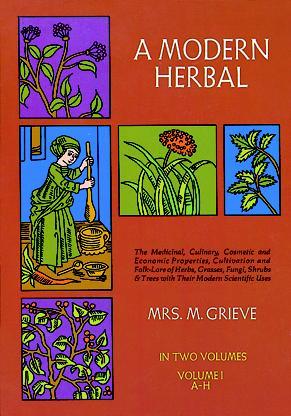
If you want to know how pleurisy root, lungwort, and abscess root got their names, how poison ivy used to treat rheumatism, or how garlic guarded against the Bubonic Plague, consult A Modern Herbal. This 20th-century version of the medieval Herbal is as rich in scientific fact and folklore as its predecessors and is equally encyclopedic in coverage. From aconite to zedoary, not an herb, grass, fungus, shrub or tree is overlooked; and strange and wonderful discoveries about even the most common of plants await the reader.
Traditionally, an herbal combined the folk beliefs and tales about plants, the medicinal properties (and parts used) of the herbs, and their botanical classification. But Mrs. Grieve has extended and enlarged the tradition; her coverage of asafetida, bearberry, broom, chamomile, chickweed, dandelion, dock, elecampane, almond, eyebright, fenugreek, moss, fern, figwort, gentian, Hart's tongue, indigo, acacia, jaborandi, kava kava, lavender, pimpernel, rhubarb, squill, sage, thyme, sarsaparilla, unicorn root, valerian, woundwort, yew, etc. — more than 800 varieties in all — includes in addition methods of cultivation; the chemical constituents, dosages, and preparations of extracts and tinctures, unknown to earlier herbalists; possible economic and cosmetic properties, and detailed illustrations, from root to bud, of 161 plants.
Of the many exceptional plants covered in Herbal, perhaps the most fascinating are the poisonous varieties — hemlock, poison oak, aconite, etc. — whose poisons, in certain cases, serve medical purposes and whose antidotes (if known) are given in detail. And of the many unique features, perhaps the most interesting are the hundreds of recipes and instructions for making ointments, lotions, sauces, wines, and fruit brandies like bilberry and carrot jam, elderberry and mint vinegar, sagina sauce, and cucumber lotion for sunburn; and the hundreds of prescriptions for tonics and liniments for bronchitis, arthritis, dropsy, jaundice, nervous tension, skin disease, and other ailments. 96 plates, 161 illustrations.
Before Memmo my notes were scattered across PDFs. Now a workspace pulls everything into one place — I see exactly what's still left to study.
Memmo's summaries are gold before exams. I don't have to re-read 800 pages two weeks before — just the important parts.
The AI chat has saved me the night before an exam more than once. I just keep asking until I get it — no waiting on a study group to reply.
The quizzes hit exactly what I need to know. Memmo tracks what I get stuck on — so I only practice what's worth it.
Flashcards with spaced repetition are magic. Memmo knows when I'm about to forget something and brings it back.
The AI podcasts are my favorite. I listen on my way to school and get a recap without sitting at a computer.

Handbok i kvalitativa metoder
281 kr

Hållbar utveckling: en introduktion för ingenjörer och andra problemlösare
334 kr

Brymans Samhällsvetenskapliga metoder
390 kr

Projektledning
491 kr

Den orättvisa hälsan: om socioekonomiska skillnader i hälsa och livslängd
326 kr

Vetenskapsteori för nybörjare
196 kr

Organizational Leadership
429 kr

På väg mot läraryrket
172 kr

Det sociala livet i skolan: Socialpsykologiska perspektiv
253 kr

Betygsättningens didaktik
151 kr

Personality
402 kr

Studying Leadership
404 kr

Managing Innovation
477 kr

Introduktion till samhällsvetenskaplig metod
347 kr

The Psychology of Sex and Gender
698 kr

Evidens och kunskap för socialt arbete
207 kr

Introduction to Leadership
605 kr